In the early months of retirement, my mornings were the worst part of the day. I’d wake up with a jolt of anxiety — that familiar rush of cortisol that used to propel me into a packed schedule — only now there was nothing to propel towards. The alarm in my body was still going off, but the building was empty.
It took me a while to realise that the problem wasn’t the lack of things to do. It was the lack of intention. My mornings had no shape, so my days had no anchor. And without an anchor, the anxiety just floated around looking for something to attach to.
Over time, I built a set of morning rituals that genuinely changed how I experience each day. They’re not complicated. They don’t require discipline or willpower. They just require a small amount of intention — and that turns out to be enough.
1. I wake up without an alarm
This is one of the genuine gifts of retirement, and I’d encourage you to treat it as one. Your circadian rhythm — the internal clock regulated by your suprachiasmatic nucleus — actually becomes more reliable when you stop overriding it with alarms. Letting your body wake naturally improves sleep quality over time and reduces that cortisol spike that comes with being jolted awake. It took me a few weeks to trust it, but now I wake at roughly the same time each morning, rested rather than startled.
2. I don’t check my phone for the first 30 minutes
This was hard at first. The phone had been my command centre for decades. But research on attention and dopamine shows that checking email and news first thing puts your brain into a reactive state — you’re responding to other people’s priorities before you’ve even connected with your own. Now the phone stays on the bedside table until I’ve had my coffee and my quiet time. That half hour of mental stillness sets the tone for everything that follows.
3. I write three lines in a journal
Not three pages. Three lines. I write what I’m noticing, what I’m feeling, or what I’m looking forward to. That’s it. This tiny practice activates what neuroscientists call the “observer function” of the prefrontal cortex — it puts a small gap between you and your emotions, which is particularly helpful if you’re someone (like me) whose brain tends to default to worry. On my most anxious mornings, even three lines can interrupt the spiral.
4. I step outside before I do anything productive
Even if it’s just standing on the back step with my coffee. Morning light exposure within the first hour of waking has a significant effect on your body’s serotonin production and helps regulate your sleep-wake cycle. It also just feels good. There’s something grounding about feeling the air on your skin before the day pulls you indoors.
Related Stories from Jeanette Brown
- Why spending time alone can help you feel more like yourself in retirement
- The retirees who age with the most life in their eyes aren’t the ones who travel the most, they’re the ones who can still be genuinely surprised by something they didn’t know on a Tuesday afternoon
- When you strip away the title, the office, the team, and the routine, what remains isn’t nothing — it’s the person you were always too busy to meet
5. I move for 10 minutes (not exercise — movement)
I’m not talking about a gym session. I mean gentle, intentional movement — stretching, a short walk, some yoga. The distinction matters. Movement in the morning increases blood flow to the brain and triggers the release of BDNF (brain-derived neurotrophic factor), which supports mood regulation and cognitive function. But it doesn’t need to be strenuous. The goal is to wake your body up with kindness, not punishment.
6. I name one thing that matters today
Not a to-do list. One thing. It might be “finish the draft I’m working on” or “call my friend Margaret” or “just be present today.” This simple act gives the day a centre of gravity. Without it, I found my days would end and I’d feel like nothing happened — even though I’d been busy. With it, there’s always something I can point to and say, “that mattered.”
7. I do something that’s just for me
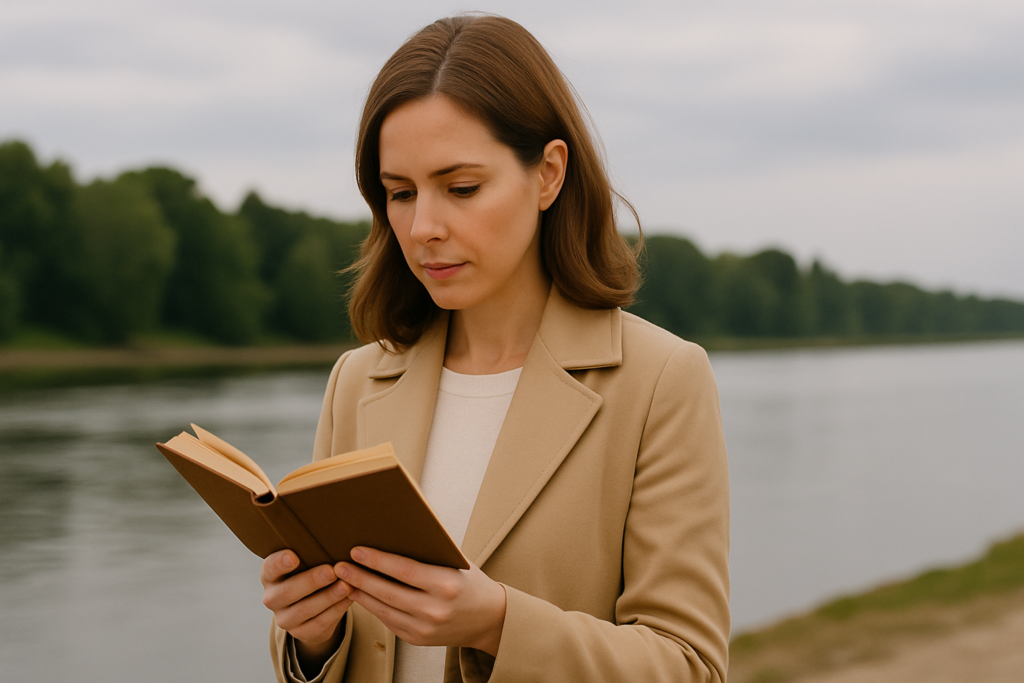
Reading a chapter of a book. Listening to a podcast while I make breakfast. Sitting in the garden with my thoughts. The specific activity doesn’t matter. What matters is that it’s chosen, not defaulted to. For someone who spent thirty years meeting other people’s needs, this was a surprisingly difficult thing to learn — that my morning could belong to me first, and that this wasn’t selfish. It was necessary.
The point isn’t perfection
I don’t do all seven of these every morning. Some days I wake up anxious and the journal gets skipped. Some days I reach for my phone before I even realise I’m doing it. The point isn’t a perfect routine — it’s a gentle structure that reminds your brain and body that this new life has its own rhythm, and that rhythm can feel good.
If retirement mornings feel aimless or unsettling, try starting with just one of these. Give it a week. Notice what shifts. Your mornings don’t need to be productive. They just need to be yours.
And if this resonates I’ve put together a free guide called Thrive In Your Retirement that addresses, among other things, how to rebuild the kind of intention to help you flourish in retirement. Learn more here.
Related Stories from Jeanette Brown
- Why spending time alone can help you feel more like yourself in retirement
- The retirees who age with the most life in their eyes aren’t the ones who travel the most, they’re the ones who can still be genuinely surprised by something they didn’t know on a Tuesday afternoon
- When you strip away the title, the office, the team, and the routine, what remains isn’t nothing — it’s the person you were always too busy to meet
Navigating Life’s Transitions with Jeanette Brown
Jeanette Brown is here to guide you through life’s transitions.
On her YouTube channel, she offers practical advice and supportive strategies to help you manage personal and career changes effectively.
Her videos focus on fostering resilience and equipping you with the skills needed for self-coaching.
Subscribe here to start mastering your life transitions today.
Related Stories from Jeanette Brown
- Why spending time alone can help you feel more like yourself in retirement
- The retirees who age with the most life in their eyes aren’t the ones who travel the most, they’re the ones who can still be genuinely surprised by something they didn’t know on a Tuesday afternoon
- When you strip away the title, the office, the team, and the routine, what remains isn’t nothing — it’s the person you were always too busy to meet
Navigating Life’s Transitions with Jeanette Brown
Jeanette Brown is here to guide you through life’s transitions.
On her YouTube channel, she offers practical advice and supportive strategies to help you manage personal and career changes effectively.
Her videos focus on fostering resilience and equipping you with the skills needed for self-coaching.
Subscribe here to start mastering your life transitions today.