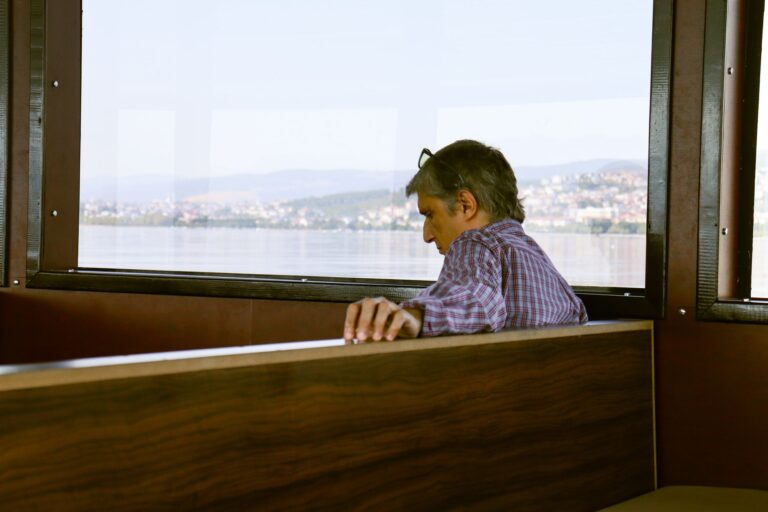
For years, many of us imagined retirement as a kind of permanent holiday.
No alarm clock.
No meetings.
No inbox.
No one asking for one more thing before the end of the day.
Just freedom.
And there is something beautiful about that image. After decades of working, caring, organising, leading, raising families, paying bills and carrying responsibility, the thought of having time to yourself can feel almost intoxicating.
You can travel. You can sleep in. You can read in the middle of the day. You can take your time over coffee. You can finally stop rushing.
But here is the part many people discover after the first few months.
A holiday is wonderful when it is a break from something.
It becomes less satisfying when it becomes the whole shape of your life.
Because human beings are not only wired for rest. We are also wired for meaning. We need pleasure, yes. We need freedom. We need beauty and fun and ease.
But we also need to feel that our presence matters somewhere.
We need something that asks something of us.
Not in the old exhausting way. Not in the way work may have demanded too much or taken too much. But in a quieter, healthier and more chosen way.
We need to feel needed.
The dream holiday is not the same as a meaningful life
I love travel. I love the idea of having space to explore, wander, sit in cafés, walk beside water, visit new places and let the day unfold without pressure.
For many people, retirement travel is one of the great gifts of this stage of life. After years of short holidays squeezed between work obligations, there is finally time to go slowly. To stay longer. To travel when you want, not when the annual leave calendar allows.
But even travel, wonderful as it is, cannot carry the whole weight of meaning.
You can be standing in a beautiful place and still feel a strange emptiness if your life has no deeper sense of direction.
You can tick off destinations and still feel unsure what the days are adding up to.
You can plan the next trip, and the next, and the next, and still find yourself wondering, “Is this enough?”
That does not mean travel is shallow. It is not. Travel can expand us, nourish us, wake us up, connect us with beauty and remind us that life is bigger than the routines we once lived inside.
But a life built only around escape can start to feel thin.
At some point, most of us need to feel we are not just consuming experiences. We are contributing something.
We are part of something.
Something would be different if we did not show up.
Being needed is not the same as being trapped
Of course, there is a complication here.
Many people arrive at retirement tired from being needed.
They have spent decades being responsible for children, partners, parents, employees, students, clients, patients, organisations, households, communities.
They may have been the dependable one for so long that the idea of being needed again sounds exhausting.
So let me be clear.
I am not talking about returning to the old pattern where everyone else’s needs come first and your own life disappears underneath them.
That is not purpose. That is depletion.
The kind of “needed” that helps people thrive in retirement is different.
It is chosen.
It is boundaried.
It gives energy as well as asks for energy.
It connects you to your strengths.
It allows you to contribute without losing yourself.
There is a world of difference between being needed because you cannot say no, and being needed because you have decided that something matters enough to give yourself to it.
That distinction is important.
Retirement is not an invitation to become useful at the expense of your own wellbeing.
It is an invitation to ask, “Where does my life still want to contribute?”
The people who thrive often have a reason to get up
When you look at people who seem to thrive in retirement, they are not all doing the same thing.
Some travel constantly. Some stay close to home. Some volunteer. Some care for grandchildren. Some start small businesses. Some garden. Some write. Some mentor. Some learn languages. Some join committees. Some quietly support neighbours. Some go back to study. Some become deeply involved in community groups. Some create art. Some walk every morning with the same friend.
There is no single formula.
But there is often a pattern.
They have something that gives their days a thread.
Not necessarily a grand purpose. Not necessarily a big public mission. Just a reason to get up and participate in life.
Someone expects them.
Something grows because they tend to it.
Someone learns because they share what they know.
A group is stronger because they are part of it.
A child feels loved because they show up.
A garden blooms because they care for it.
A cause moves forward because they contribute.
Their life is not just organised around passing time.
It is organised around meaning.
And this matters more than many of us realise.
Because once the structure of work falls away, we need new reasons to engage with the world. We need new ways to feel useful, connected and alive.
Without that, retirement can quietly become a life of pleasant activities with no real centre.
The loss of usefulness can be surprisingly painful
One of the hardest emotional shifts in retirement is the loss of usefulness.
This can feel uncomfortable to admit, because we are told we should enjoy not being needed anymore.
And sometimes we do.
There can be enormous relief in not being responsible for everything. Relief in not carrying the pressure. Relief in stepping away from constant demands.
But after a while, many people begin to miss the feeling that their skills matter.
They miss being asked.
They miss solving problems.
They miss being in the mix.
They miss knowing that their contribution made a difference.
This is especially true for people who spent their working lives in roles where others depended on them.
Teachers, nurses, managers, business owners, leaders, carers, tradespeople, administrators, professionals, parents who carried the household load — all of these roles offer a sense of being useful.
When that disappears, the silence can be unsettling.
You might not want the old job back.
But you may miss the version of yourself who mattered in a clear and visible way.
That does not mean you are vain. It means you are human.
We all need to feel that our lives have some weight in the world.
The danger of a retirement built only around leisure
There is nothing wrong with leisure.
In fact, many people need more of it. Especially those who have spent years pushing through exhaustion, meeting expectations and ignoring their own needs.
Rest is not laziness. Pleasure is not selfish. Enjoyment matters.
But leisure alone is rarely enough.
If every day is built around your own comfort, your own entertainment and your own preferences, something in the human spirit can begin to shrink.
We are not designed only to receive.
We are also designed to give.
That giving does not have to be dramatic. It does not have to be impressive. It does not have to become another job.
But it does need to feel real.
Related Stories from Jeanette Brown
- Psychology says people who reach retirement without a clear sense of purpose aren’t lazy or lost, they were often the ones who defined themselves entirely by their usefulness to others and forgot to want things for themselves
- The most grounded people in their 60s and 70s aren’t the ones who stayed busy, they’re the ones who let themselves be uncomfortable long enough to figure out what their life was actually for
- There’s a version of retirement nobody talks about — the one where everything is fine, but something still feels missing
Maybe it is helping one young person believe in themselves.
Maybe it is using your professional wisdom in a volunteer role.
Maybe it is caring for a patch of local environment.
Maybe it is writing family stories so they are not lost.
Maybe it is being the person who gathers others together.
Maybe it is sitting with someone who is lonely.
Maybe it is building something creative.
Maybe it is showing up consistently for a cause you care about.
The form matters less than the feeling underneath it.
This matters.
I matter here.
My life is still connected to something beyond myself.
Finding something that needs you can start small
Sometimes people hear the word purpose and immediately feel pressured.
They imagine they need to find one great calling. One major project. One impressive second act.
But most people do not find purpose that way.
They find it through noticing.
What keeps catching your attention?
What do people still ask you about?
What makes you feel quietly useful?
What kind of problem do you care about?
Who do you naturally want to encourage, teach, support or protect?
What would you keep doing even if no one applauded?
Purpose often begins as a tug, not a thunderclap.
You notice that you feel more alive after helping someone understand something. You notice that you care about lonely older people in your community. You notice that you light up when you are with children, animals, books, plants, music, history, ideas, young professionals, new migrants, creative projects or environmental causes.
Then you take one small step.
You make the call.
You attend the group.
You offer to help.
You write the first page.
You invite someone for coffee.
You volunteer once.
You try the class.
You mentor one person.
You plant the first thing.
You do not need to redesign your whole retirement in one dramatic decision.
You simply need to begin listening for where your energy and the world’s needs might meet.
A story about quiet purpose
I think of a man I’ll call Robert.
Robert had been looking forward to retirement for years. He and his wife had planned several trips. They had a caravan, a list of places they wanted to see, and the kind of freedom they had dreamed about during his working years.
For the first few months, it was wonderful.
They travelled. They visited friends. They walked on beaches in the middle of the week. They stayed longer in places they once would have rushed through.
But after a while, Robert noticed something he didn’t expect.
He was enjoying himself, but he didn’t feel particularly needed.
At work, people had come to him for advice. He had been the steady one. The person who could look at a situation, make sense of it, and help others move forward.
Now, no one was asking.
At first, he thought he was just bored. So he planned more trips. He booked more activities. He filled the calendar.
But the feeling stayed.
Then one day, almost by accident, he helped a neighbour’s teenage grandson with a job application. He sat with him at the kitchen table, talked through his strengths, helped him shape his experience, and encouraged him before the interview.
The young man got the job.
A week later, another parent asked if Robert might help their daughter too.
That small act turned into something informal but deeply meaningful. Once a fortnight, Robert began helping young people in his community prepare for work, interviews and apprenticeships.
It was not a business. It was not a grand project. It did not take over his life.
But it gave him back something he had been missing.
Not status.
Not pressure.
Not a job title.
Usefulness.
He still travelled. He still rested. He still enjoyed his freedom.
But now his life had another thread running through it.
Something needed him.
And that changed the way he felt about his days.
This is where the Retirement Thrive Score can help
If this article is making you think about your own retirement, I’ve created a free quiz called the Retirement Thrive Score.
It’s a simple reflection tool designed to help you see how you are travelling in four important areas of retirement: energy, connection, purpose and vision.
It is not about judging your retirement.
It is not about suggesting you should be doing more.
In fact, sometimes the quiz may help you see that you need more rest, more care, more connection or more space to dream.
But it may also help you notice whether your life is quietly asking for a deeper sense of purpose.
Because sometimes we don’t recognise what is missing.
We think we need another holiday, when what we really need is a reason to feel useful.
We think we need more activities, when what we really need is more meaning.
We think we need to keep busy, when what we really need is to feel connected to something that matters.
The Retirement Thrive Score gives you a gentle way to pause, take stock and notice which part of your life may need attention now.
Sometimes that kind of reflection is the first step toward a much richer next chapter.
Retirement asks a different question
In our working years, the question was often, “What do I have to do?”
What do I have to finish?
Who needs me?
What is expected?
What deadline is coming?
What problem must be solved?
In retirement, the question changes.
It becomes, “What do I choose to give myself to now?”
That is a very different question.
It is not driven by obligation in the same way. It is not shaped by a job description or an employer or a title on a business card.
It asks for more honesty.
What do I care about now?
Where do I still have something to offer?
What kind of contribution fits this season of my life?
How can I be useful without becoming exhausted?
What would make my days feel connected to something bigger than myself?
These are not always easy questions, but they are life-giving ones.
Because retirement is not only about having time.
It is about deciding what your time is for.
You are still allowed to be needed
Many people enter retirement with a deep desire to finally be free.
And that matters.
You are allowed to rest. You are allowed to enjoy yourself. You are allowed to travel, read, garden, walk, nap, explore, play and spend whole mornings doing very little.
But you are also allowed to matter.
You are allowed to bring your wisdom forward. You are allowed to use what life has taught you. You are allowed to contribute in ways that feel meaningful rather than draining.
You are allowed to be needed — not as a burden, but as a blessing.
The people who thrive in retirement are not always the ones with the busiest calendars or the most beautiful travel photos.
Often, they are the ones who have found a place where their presence makes a difference.
Something they care about.
Someone they can encourage.
A small corner of the world they can tend.
A reason to keep growing.
A thread of purpose that gives shape to their freedom.
Because in the end, retirement is not just about escaping what exhausted you.
It is about finding what calls you back to life.
And sometimes, the most nourishing thing in the world is not another holiday.
It is the quiet knowledge that somewhere, somehow, something still needs you.
Related Stories from Jeanette Brown
- Psychology says people who reach retirement without a clear sense of purpose aren’t lazy or lost, they were often the ones who defined themselves entirely by their usefulness to others and forgot to want things for themselves
- The most grounded people in their 60s and 70s aren’t the ones who stayed busy, they’re the ones who let themselves be uncomfortable long enough to figure out what their life was actually for
- There’s a version of retirement nobody talks about — the one where everything is fine, but something still feels missing
Feeling lost or unfulfilled?
Jeanette Brown’s “Your Life Review” video is designed to help you identify key areas in your life that need improvement.
Through a simple yet powerful exercise, you’ll assess your current satisfaction across different life domains, allowing you to pinpoint specific areas for growth.
This life review forms the foundation for creating a clear vision, setting aligned goals, and developing a personalized action plan.
Take the first step towards a more satisfying life. Start your Life Review now and gain immediate access to this transformative exercise.
Related Stories from Jeanette Brown
- Psychology says people who reach retirement without a clear sense of purpose aren’t lazy or lost, they were often the ones who defined themselves entirely by their usefulness to others and forgot to want things for themselves
- The most grounded people in their 60s and 70s aren’t the ones who stayed busy, they’re the ones who let themselves be uncomfortable long enough to figure out what their life was actually for
- There’s a version of retirement nobody talks about — the one where everything is fine, but something still feels missing
Feeling lost or unfulfilled?
Jeanette Brown’s “Your Life Review” video is designed to help you identify key areas in your life that need improvement.
Through a simple yet powerful exercise, you’ll assess your current satisfaction across different life domains, allowing you to pinpoint specific areas for growth.
This life review forms the foundation for creating a clear vision, setting aligned goals, and developing a personalized action plan.
Take the first step towards a more satisfying life. Start your Life Review now and gain immediate access to this transformative exercise.