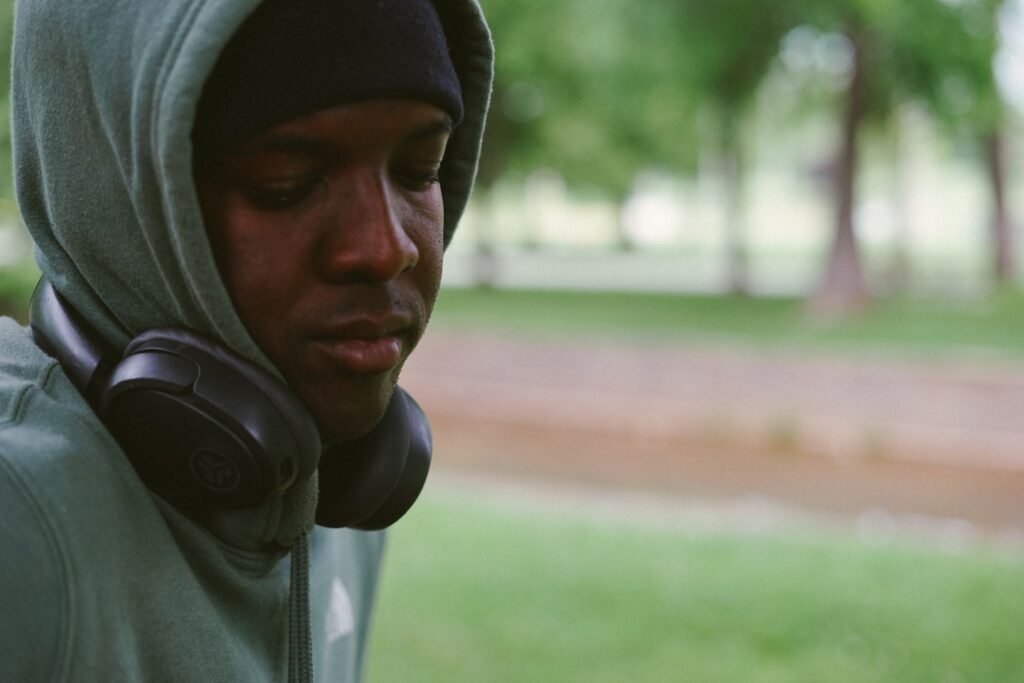
There’s a quiet paradox I’ve noticed more and more in later life — both in myself and in the people I work with.
Some of the kindest, most thoughtful people I know don’t have many close friends.
They’re the ones who listen carefully.
Who remember birthdays.
Who show up when someone is struggling.
And yet, beneath the surface, there’s often a quiet sense of loneliness. Not dramatic. Not obvious. Just a feeling that something is missing.
For a long time, this didn’t make sense to me. We’re told that kindness is the foundation of connection. Be a good person, be generous, be caring — and meaningful relationships will follow.
But life, especially in later years, is rarely that simple.
When the social landscape quietly changes
As we move into midlife and retirement, the social structures that once held our relationships together begin to fall away.
Work ends.
Children grow up.
Communities shift.
The friendships that once came from shared schedules and shared responsibilities don’t automatically carry over into this next chapter. And unless we’re paying attention, we can find ourselves surrounded by people — yet not deeply connected to anyone.
What I’ve come to understand is that for many naturally kind people, the issue isn’t a lack of warmth or goodwill. It’s a pattern that’s been quietly reinforced over decades.
The habit of being the strong one
Many kind people in later life have spent years being the dependable one.
At work, they were the calm presence.
In families, they were the organiser, the supporter, the steady hand.
In friendships, they were the listener rather than the sharer.
This role becomes familiar. Comfortable, even. Over time, it becomes part of how we see ourselves.
The problem is that closeness doesn’t grow from strength alone. It grows from mutuality — from letting others see our uncertainties, our doubts, our softer edges.
When we’ve spent years being the one who copes, it can feel strangely uncomfortable to need anything from others.
Kindness and the avoidance of discomfort
For many people of our generation, kindness was closely linked with keeping the peace.
Don’t rock the boat.
Don’t make a fuss.
Don’t burden others with your feelings.
So we learn to smooth things over, to let small hurts pass, to keep our opinions gentle and our needs modest.
This often works — on the surface.
But relationships that never stretch into emotional honesty tend to stay polite rather than intimate. Without shared vulnerability, there’s no real sense of being known.
Kindness keeps the relationship pleasant.
Honesty is what makes it close.
The quiet strength of emotional self-reliance
Later life often brings with it a deep capacity for self-regulation.
By this stage, many of us have navigated loss, change, disappointment, and uncertainty. We’ve learned how to steady ourselves internally. We think things through. We calm ourselves down. We carry on.
This is a genuine strength.
But connection doesn’t grow in isolation. Humans are wired for co-regulation — the shared experience of emotion, where being seen and understood by another person actually helps calm the nervous system.
When we appear endlessly capable, others assume we don’t need much. And without realising it, they stop offering.
Not because they don’t care — but because they think we’re fine.
Sensitivity and the narrowing of social energy
Another pattern I see often in later life is increasing social selectivity.
Related Stories from Jeanette Brown
- The retirees who age with the most life in their eyes aren’t the ones who travel the most, they’re the ones who can still be genuinely surprised by something they didn’t know on a Tuesday afternoon
- When you strip away the title, the office, the team, and the routine, what remains isn’t nothing — it’s the person you were always too busy to meet
- The version of you built around work doesn’t leave in a single moment — it fades in small disappearances: the rhythm, the urgency, the sense of being needed by people who won’t call again
As we age, many of us become less tolerant of superficial interaction. Small talk feels draining. Busy social environments feel overwhelming. We become more aware of what nourishes us — and what doesn’t.
For deeply empathetic people, this is amplified. Being around others requires emotional processing. Reading the room. Picking up on subtle cues. Holding space.
So we naturally limit our social contact to protect our energy.
The trade-off is that fewer interactions mean fewer opportunities for connection to deepen. And unless we’re intentional, solitude can slowly tip into isolation.
A rich inner world that remains mostly unseen
Later life is often a reflective time.
We think about meaning, purpose, and the shape of our lives. We revisit old memories. We ask different questions than we once did.
Many kind people do this work internally. Through journaling. Through walking. Through quiet reflection.
But when this inner world stays private, others may never glimpse its depth. Conversations stay practical rather than personal. Friendly — but not intimate.
The irony is that there is so much richness available for connection — if only it were shared.
Being liked versus being known
Perhaps the most subtle pattern of all is the preference for being liked.
Kind people are often socially attuned. They sense what’s needed. They adapt easily. They avoid imposing.
This makes them pleasant to be around. Appreciated. Valued.
But being liked is not the same as being known.
Being known requires a willingness to be imperfect, uncertain, and sometimes inconvenient. It means allowing others to see parts of us that may not land neatly.
And that takes courage — especially later in life, when we may feel more cautious about emotional risk.
Why this becomes more visible in retirement
Retirement removes the scaffolding of daily interaction.
Without built-in roles and routines, relationships need to be maintained deliberately. And the brain, ever efficient, defaults to what it knows best.
For many kind people, that default is self-reliance.
So loneliness doesn’t arrive suddenly. It seeps in quietly. Wrapped in independence. Disguised as “I’m fine.”
A gentle reframe
Here’s the reframe that feels most important to me.
There is nothing wrong with having a small circle.
Some people thrive with wide social networks. Others are wired for depth, not breadth. Connection doesn’t have a single shape, and it certainly doesn’t have a required number.
What matters isn’t how many friends you have — it’s how you connect.
One or two relationships where you feel safe, seen, and understood can be profoundly sustaining.
If you are kind and find yourself with few close friends in later life, it doesn’t mean you’ve failed socially. It may simply mean your nervous system, your values, and your life experience are oriented toward sincerity and depth.
The invitation isn’t to become more outgoing or to force yourself into social moulds that don’t fit.
It’s to gently allow yourself to be seen — in ways that feel authentic now.
And sometimes, that’s enough to change everything.
Related Stories from Jeanette Brown
- The retirees who age with the most life in their eyes aren’t the ones who travel the most, they’re the ones who can still be genuinely surprised by something they didn’t know on a Tuesday afternoon
- When you strip away the title, the office, the team, and the routine, what remains isn’t nothing — it’s the person you were always too busy to meet
- The version of you built around work doesn’t leave in a single moment — it fades in small disappearances: the rhythm, the urgency, the sense of being needed by people who won’t call again
Feeling lost or unfulfilled?
Jeanette Brown’s “Your Life Review” video is designed to help you identify key areas in your life that need improvement.
Through a simple yet powerful exercise, you’ll assess your current satisfaction across different life domains, allowing you to pinpoint specific areas for growth.
This life review forms the foundation for creating a clear vision, setting aligned goals, and developing a personalized action plan.
Take the first step towards a more satisfying life. Start your Life Review now and gain immediate access to this transformative exercise.
Related Stories from Jeanette Brown
- The retirees who age with the most life in their eyes aren’t the ones who travel the most, they’re the ones who can still be genuinely surprised by something they didn’t know on a Tuesday afternoon
- When you strip away the title, the office, the team, and the routine, what remains isn’t nothing — it’s the person you were always too busy to meet
- The version of you built around work doesn’t leave in a single moment — it fades in small disappearances: the rhythm, the urgency, the sense of being needed by people who won’t call again
Feeling lost or unfulfilled?
Jeanette Brown’s “Your Life Review” video is designed to help you identify key areas in your life that need improvement.
Through a simple yet powerful exercise, you’ll assess your current satisfaction across different life domains, allowing you to pinpoint specific areas for growth.
This life review forms the foundation for creating a clear vision, setting aligned goals, and developing a personalized action plan.
Take the first step towards a more satisfying life. Start your Life Review now and gain immediate access to this transformative exercise.