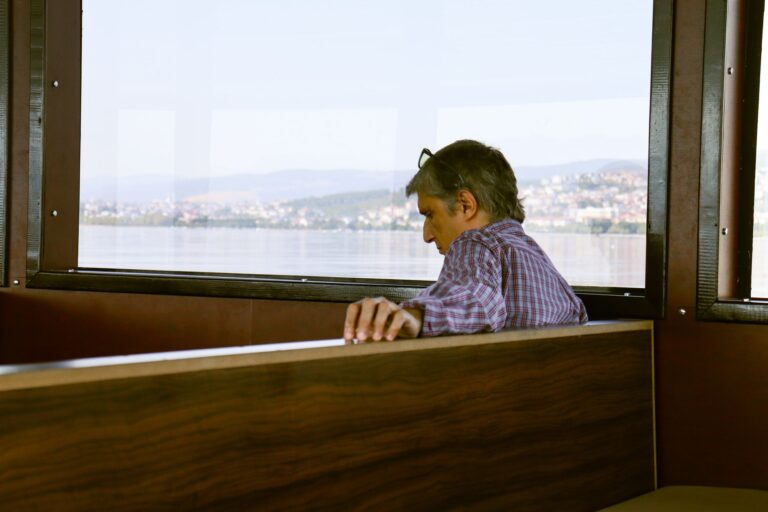
There is a version of retirement that looks almost impossible to complain about.
The house is comfortable. The bills are manageable. There is food in the fridge, time in the day, and no one asking you to be anywhere by 8.30 in the morning. You can sleep in if you want to. You can go for coffee on a Tuesday. You can book a holiday without filling in a leave form or checking whether someone else can cover your workload.
From the outside, it looks like success.
And yet, for some people, there is a quiet feeling they can’t quite name.
Nothing is terribly wrong. They are not falling apart. They are not necessarily lonely in the obvious sense. They may have a partner, friends, adult children, hobbies, a garden, and a calendar with enough in it to stop anyone worrying.
But still, something feels missing.
Not missing in a dramatic way. Not the kind of missing that makes people rush to fix your life. More like a small absence in the background. A sense that the days are pleasant, but not quite alive. Full, but not particularly meaningful. Peaceful, but strangely flat.
I think this is one of the least talked-about versions of retirement, because it is hard to explain without sounding ungrateful.
When “fine” becomes the problem
One of the strange things about retirement is that many people prepare for the practical side much more carefully than the emotional side.
They think about superannuation, downsizing, travel, health insurance, hobbies, and maybe whether they will join a walking group. All of that matters, of course. Money, health, and structure are not small things.
But once the initial relief wears off, another question can begin to rise quietly underneath everything else:
What is my life asking of me now?
That question can feel uncomfortable because retirement is often sold as the stage of life where life stops asking anything of you. You have done the work. Raised the family. Paid the mortgage. Attended the meetings. Carried the responsibilities. Now you are supposed to enjoy yourself.
And many people do enjoy themselves.
But enjoyment and meaning are not always the same thing.
A day can be pleasant and still feel thin. A calendar can be full and still not feel nourishing. A person can be grateful for their freedom and still miss the sense that their life has shape, direction, and consequence.
This doesn’t mean retirement has failed. It simply means that human beings usually need more than comfort.
We need rhythm. We need connection. We need to feel that our presence matters somewhere. We need reasons to get up that are not only based on pleasure or distraction.
The old structure disappeared faster than the inner self could adjust
For decades, work gives many people more than income.
It gives them a place to be. It gives them people who expect them. It gives them problems to solve, deadlines to meet, roles to perform, and a reason to organize the day.
Even when work is exhausting, it creates a kind of scaffolding around life.
Then retirement arrives, and the scaffolding is removed.
At first, that can feel wonderful. No alarm. No pressure. No constant demand.
But after a while, some people notice that the absence of pressure has also removed something else: the old cues that helped them feel useful, competent, and known.
This is where the “everything is fine” version of retirement can become confusing.
Because nothing terrible has happened. In fact, something many people dream about has happened. The person has gained freedom. But they may have lost the structure that used to hold their identity in place.
I have felt versions of this myself in life transitions. When a demanding role ends, there can be relief, yes, but also a strange emptiness. You don’t always miss the stress. You miss the clarity. You miss knowing who you were in that room, in that role, in that rhythm.
That is why simply filling the diary may not solve the deeper problem. A packed calendar can distract you from the missing feeling, but it may not answer it.
Meaning is not always grand
When people hear the word “meaning,” they sometimes imagine something enormous.
A new business. A charity. A late-life masterpiece. A spiritual awakening. A reinvention so impressive it could become a magazine profile.
But meaning in retirement does not have to be grand.
Sometimes it is much smaller and more ordinary.
It is having someone who is glad you turned up. It is tending something that would not be quite the same without you. It is learning something that wakes up your curiosity. It is contributing in a way that feels natural rather than performative. It is making soup for a neighbour, joining a local group, volunteering one morning a week, mentoring someone younger, writing family stories, or becoming the person who notices when someone else has gone quiet.
There is research suggesting that social connection and a sense of engagement are important for wellbeing as we age. The National Institute on Aging notes that loneliness and social isolation are associated with higher risks for several health problems, including depression and cognitive decline, while also emphasizing practical ways older adults can stay connected. (National Institute on Aging)
But I think the lived experience is even simpler than the research language.
We are not built to disappear into comfort.
We are built to belong somewhere.
The missing thing may be contribution
One of the patterns I notice again and again is that people often underestimate how much contribution mattered to them.
During working life, contribution is built in. You may complain about the workload, but the structure is there. Someone needs your decision. Someone needs your skill. Someone needs your steadiness, your humour, your knowledge, your presence.
In retirement, contribution has to be chosen more deliberately.
That can be surprisingly hard.
Not because people have nothing to give, but because the old channels for giving have closed. The school, office, clinic, workshop, business, classroom, or organisation no longer automatically receives their energy.
So the energy has nowhere obvious to go.
This is when a person may begin to feel oddly restless in the middle of a perfectly comfortable life. They may not want another job. They may not want pressure. They may not want to be needed in the same exhausting way they once were.
Related Stories from Jeanette Brown
- Psychology says people who reach retirement without a clear sense of purpose aren’t lazy or lost, they were often the ones who defined themselves entirely by their usefulness to others and forgot to want things for themselves
- People who thrive in retirement aren’t the ones who planned the most holidays — they’re the ones who found something that needed them
- The most grounded people in their 60s and 70s aren’t the ones who stayed busy, they’re the ones who let themselves be uncomfortable long enough to figure out what their life was actually for
But they may still want to matter.
There is a difference between being busy and being meaningfully involved. There is a difference between being entertained and being engaged. There is a difference between filling time and feeling connected to life.
That difference is often where the missing feeling lives.
The quiet ache of not being expected
One of the hardest adjustments after work is the loss of being expected somewhere.
It sounds small, but it is not.
Being expected gives a day shape. It tells you that your absence would be noticed. It gives your presence weight.
Many people don’t realize how much this mattered until it disappears.
You can have a lovely morning at home, a beautiful walk, and a peaceful afternoon, and still feel a faint sadness if no one particularly needed to know whether you showed up.
This is not about becoming dependent on external validation. It is about recognizing that human beings are social creatures. We are affected by whether we feel seen, included, and woven into the lives of others.
The long-running Harvard Study of Adult Development has often been discussed for its findings on relationships and wellbeing. Its researchers have consistently emphasized the importance of close relationships and social connection over the adult lifespan. (Harvard Gazette)
Again, this does not mean everyone needs a huge social circle. Some people are deeply content with a few close relationships. Others need a wider community. The point is not quantity. The point is whether your life still contains places where you feel genuinely met.
What to do when nothing is wrong, but something is missing
The first step is not to panic or judge yourself.
If retirement feels flatter than you expected, it does not mean you are ungrateful. It does not mean you made the wrong decision. It does not mean you are failing at this stage of life.
It may simply mean your outer life changed faster than your inner life could reorganize around it.
A useful question is not, “Why am I not happier?”
A better question might be, “What part of me has not yet found a place in this new life?”
Maybe it is the part of you that loved solving problems. Maybe it is the part that enjoyed being part of a team. Maybe it is the part that liked learning. Maybe it is the part that quietly enjoyed being respected for your competence. Maybe it is the part that felt alive when you were contributing to something bigger than your own comfort.
Once you identify what is missing, you can begin to rebuild it in a gentler form.
Not by recreating your old working life.
Not by filling every blank space.
But by designing a life that gives those important parts of you somewhere to go.
Start with one small thread
If you feel something is missing, you do not need to overhaul your retirement overnight.
Start with one thread.
One conversation you keep meaning to have. One group you could try. One skill you could learn. One person you could help. One place you could show up regularly. One small commitment that gives your week a bit more shape.
The aim is not to become busy again.
The aim is to feel connected to your own life again.
Ask yourself:
Where do I feel most like myself these days?
Where do I feel useful without feeling drained?
Who do I enjoy being around?
What do I miss from my working life that I could recreate in a healthier way?
What would give my week a little more meaning, not just more activity?
These questions sound simple, but they can begin to shift the way you see this stage of life.
Because retirement is not just the absence of work. It is the presence of a new kind of freedom. And freedom needs direction, or it can start to feel strangely weightless.
Retirement is not meant to be only comfortable
Comfort matters. Rest matters. Pleasure matters.
After decades of responsibility, there is nothing wrong with wanting ease.
But a life built only around ease can become too small for the human spirit.
We still need curiosity. We still need growth. We still need people. We still need moments that ask something of us. We still need to feel that our days are not simply passing, but forming a life we recognize as our own.
That is why the version of retirement where “everything is fine” deserves more honest conversation.
Because fine is not always enough.
Fine can keep you safe, but it may not keep you alive in the deeper sense. Fine can look good from the outside while something inside quietly waits to be invited back into the room.
For anyone trying to work out what this stage of life is supposed to feel like, I created a free guide called Thrive in Your Retirement. It offers reflective prompts and practical ideas to help you think about retirement not just as an ending, but as a life design project.
Because the goal is not to build a retirement that looks impressive from the outside.
The goal is to build one that feels quietly, honestly alive from within.
Related Stories from Jeanette Brown
- Psychology says people who reach retirement without a clear sense of purpose aren’t lazy or lost, they were often the ones who defined themselves entirely by their usefulness to others and forgot to want things for themselves
- People who thrive in retirement aren’t the ones who planned the most holidays — they’re the ones who found something that needed them
- The most grounded people in their 60s and 70s aren’t the ones who stayed busy, they’re the ones who let themselves be uncomfortable long enough to figure out what their life was actually for
Feeling lost or unfulfilled?
Jeanette Brown’s “Your Life Review” video is designed to help you identify key areas in your life that need improvement.
Through a simple yet powerful exercise, you’ll assess your current satisfaction across different life domains, allowing you to pinpoint specific areas for growth.
This life review forms the foundation for creating a clear vision, setting aligned goals, and developing a personalized action plan.
Take the first step towards a more satisfying life. Start your Life Review now and gain immediate access to this transformative exercise.
Related Stories from Jeanette Brown
- Psychology says people who reach retirement without a clear sense of purpose aren’t lazy or lost, they were often the ones who defined themselves entirely by their usefulness to others and forgot to want things for themselves
- People who thrive in retirement aren’t the ones who planned the most holidays — they’re the ones who found something that needed them
- The most grounded people in their 60s and 70s aren’t the ones who stayed busy, they’re the ones who let themselves be uncomfortable long enough to figure out what their life was actually for
Navigating Life’s Transitions with Jeanette Brown
Jeanette Brown is here to guide you through life’s transitions.
On her YouTube channel, she offers practical advice and supportive strategies to help you manage personal and career changes effectively.
Her videos focus on fostering resilience and equipping you with the skills needed for self-coaching.
Subscribe here to start mastering your life transitions today.