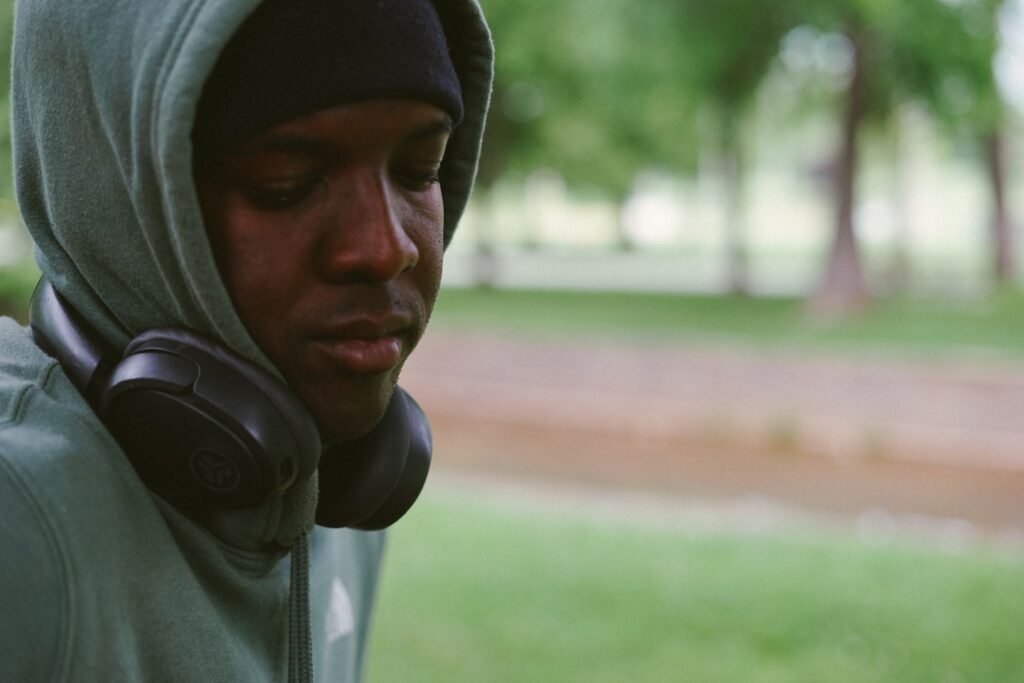
There’s an art to knowing when to speak and when to stay quiet. Often, saying nothing can be the most powerful statement of all.
Psychology suggests that there are certain moments in life where silence can be your ultimate weapon. It’s not about suppressing your voice, but about choosing your battles wisely.
In this article, we’ll delve into 7 specific times where, according to psychology, keeping quiet is the best course of action. Let’s explore when silence isn’t just golden, but also a smart strategy.
1) When emotions are running high
We’ve all been there. A heated argument, a tense discussion, or a moment of extreme emotion. During these times, our instinct is often to speak up, to argue our point, or to defend ourselves.
However, psychology suggests a different approach. In high-stress moments, our words can often be driven by emotion rather than logic. And this can lead us down a path of regrettable statements and hurt feelings.
Instead, opting for silence in these scenarios can be incredibly powerful. It allows for a cooling-off period where everyone involved can regain their composure.
Staying silent doesn’t mean you’re backing down. It’s about giving the emotional wave a chance to recede before you wade back in. It’s a strategic move that can prevent you from saying something you might later regret.
So next time when you’re in the heat of the moment, remember that sometimes silence can be the most eloquent response.
2) When you’re the newcomer
Stepping into a new environment can be daunting. Whether it’s a new job, a new school, or a new social circle, we often feel the need to prove ourselves and make our mark.
However, research shows that in these circumstances, it might be more beneficial to remain silent and observe. This is based on the principle that listening is one of the most effective ways to learn.
By staying quiet and observing, you’re able to gauge the dynamics of the group, understand the unspoken rules, and get a feel for how things work. This can help you navigate your new environment more effectively.
So next time you find yourself in a new setting, resist the urge to jump in with both feet. Instead, embrace the power of silence and observation. It might just give you the edge you need.
3) When you’re receiving criticism
Receiving criticism can be tough. Our natural reaction is often to get defensive and argue our point. But taking a step back and remaining silent can actually be a more beneficial response.
In the stillness of silence, we can really listen to what’s being said. This allows us to absorb the critique, understand it, and use it as a tool for growth and improvement. It’s not about accepting negativity, but about learning from it.
Silence also shows respect to the person giving the feedback. It demonstrates that you value their opinion and are taking their words into consideration.
Remember, constructive criticism is a key component of personal and professional growth. Embrace it with silence, and let your actions show that you’ve taken the feedback on board.
4) When comforting a loved one
Life can be difficult. At one point or another, we’ve all had to comfort a friend, family member, or loved one going through a tough time. In these moments, we often scramble for the right words to say, hoping to ease their pain.
But sometimes, words fall short. And in these moments, silence can be the most comforting response of all.
Related Stories from Jeanette Brown
- The older some people get, the more they realize the job wasn’t just a job — it was the container that held their friendships, their routine, and their reason to get up
- The most alive people in their second act aren’t the busiest or the calmest — they’re the ones whose weeks clearly reflect what they actually believe matters now
- Quote from Richard Leider: ‘The purpose of life is to live a life of purpose’ — and retirement is where that principle either saves you or exposes the gap you’ve been avoiding
Sitting silently with someone in pain shows that you’re there for them. It conveys empathy and understanding without the risk of saying something that might unintentionally hurt them further.
In the silence, we show our loved ones that we are there to share their burden, not to fix it. That we’re ready to listen if they want to talk, but we’re also comfortable in the quiet.
So when comforting a loved one, remember that sometimes your presence and your silence can offer more comfort than any words could express.
5) When you’re tempted to spread gossip
Let’s be honest, we’ve all been in a situation where we’ve heard a juicy piece of gossip. It can be tempting to share it, to be the one with the inside scoop. However, spreading gossip can cause hurt and harm. It can damage relationships and reputations. And once words are out there, you can’t take them back.
Moreover, silence in these situations speaks volumes about your character. It shows integrity, discretion, and respect for others’ privacy.
So if you find yourself in possession of gossip, consider the potential consequences. Opt for silence and show that you’re someone who can be trusted with sensitive information.
6) When you’re unsure
In a world where being knowledgeable and quick-witted is often prized, it can feel uncomfortable to admit when we don’t know something. But the truth is, it’s impossible to know everything.
Instead of trying to bluff your way through a situation, psychology suggests that silence is a better approach when you’re unsure. This allows you the time to think, reflect and perhaps even research before you respond.
Silence in these situations shows humility and a willingness to learn. It can also prevent the spread of misinformation or misunderstanding.
So the next time you’re unsure about something, don’t be afraid to pause and take a moment of silence. It’s a small act that can lead to greater understanding and clarity.
7) When listening is more important
There are times in life where the most powerful thing we can do is simply to listen. To hear someone out, to genuinely consider their words, can be a profound act of respect and understanding.
In these moments, silence on our part allows the other person’s voice to truly be heard. It signals that we value their thoughts and feelings, and that we’re not just waiting for our turn to speak.
Listening isn’t a passive act. It requires focus, empathy, and yes, silence. Remember, in some conversations, the most important voice isn’t your own. It’s the one you’re listening to.
Final thoughts: The power of silence
Delving into the realm of silence, we’ve discovered that it’s not merely the absence of noise. It’s an active presence, a tool we can wield, a choice we can make.
Silence speaks volumes in situations where words might falter. It demonstrates empathy, respect, and wisdom. It’s a testament to our personal growth and emotional intelligence.
The beauty of silence lies in its subtlety and its strength. It’s about knowing when to voice your thoughts and when to simply let the silence do the talking.
As the ancient philosopher Lao Tzu once said, “Silence is a source of great strength.” And this strength lies within each one of us, waiting to be tapped into.
So next time you find yourself in a situation where words seem inadequate or unnecessary, remember the power of silence. It could be the most eloquent response you can give.
Related Stories from Jeanette Brown
- The older some people get, the more they realize the job wasn’t just a job — it was the container that held their friendships, their routine, and their reason to get up
- The most alive people in their second act aren’t the busiest or the calmest — they’re the ones whose weeks clearly reflect what they actually believe matters now
- Quote from Richard Leider: ‘The purpose of life is to live a life of purpose’ — and retirement is where that principle either saves you or exposes the gap you’ve been avoiding
Navigating Life’s Transitions with Jeanette Brown
Jeanette Brown is here to guide you through life’s transitions.
On her YouTube channel, she offers practical advice and supportive strategies to help you manage personal and career changes effectively.
Her videos focus on fostering resilience and equipping you with the skills needed for self-coaching.
Subscribe here to start mastering your life transitions today.
Related Stories from Jeanette Brown
- The older some people get, the more they realize the job wasn’t just a job — it was the container that held their friendships, their routine, and their reason to get up
- The most alive people in their second act aren’t the busiest or the calmest — they’re the ones whose weeks clearly reflect what they actually believe matters now
- Quote from Richard Leider: ‘The purpose of life is to live a life of purpose’ — and retirement is where that principle either saves you or exposes the gap you’ve been avoiding
Feeling lost or unfulfilled?
Jeanette Brown’s “Your Life Review” video is designed to help you identify key areas in your life that need improvement.
Through a simple yet powerful exercise, you’ll assess your current satisfaction across different life domains, allowing you to pinpoint specific areas for growth.
This life review forms the foundation for creating a clear vision, setting aligned goals, and developing a personalized action plan.
Take the first step towards a more satisfying life. Start your Life Review now and gain immediate access to this transformative exercise.