Julie used to wake up with purpose already waiting for her.
For decades, her days were shaped by timetables, meetings, decisions, and people who needed her. She began her career as a high school teacher—someone who showed up every day not just to deliver lessons, but to guide, support, and steady young lives in all their complexity.
Later, she moved into senior management. The stakes became higher, the responsibilities heavier. There were teams to lead, policies to shape, problems to solve. She became known as someone reliable, thoughtful, capable. Someone who could hold things together when others couldn’t.
And at home, there was another life entirely.
Julie had a family. When her children were young, she made a deliberate choice to work part-time. It wasn’t easy—juggling professional identity with motherhood rarely is—but she did it with the same quiet determination she brought to everything. She was present where she needed to be. She adapted. She carried the invisible load that so many women do without ever naming it.
Looking back, those years were full. Demanding, yes—but also structured, meaningful, and clear.
There was always somewhere to be. Someone to respond to. Something that mattered.
And then… it stopped.
The moment the structure disappears
Retirement didn’t arrive with a dramatic shift. It came gently, almost politely.
A final meeting. A few farewell speeches. Warm words. A sense of completion.
And then the next morning, Julie woke up—and there was nothing.
No emails.
No meetings.
No urgency.
At first, she told herself this was what she had been working towards.
Freedom.
But what she hadn’t anticipated was the silence.
Because when the structure of your life disappears, something else often goes with it: the framework that tells you who you are.
When identity has been quietly outsourced
For most of her adult life, Julie didn’t need to ask herself, What should I do today?
The answer was always obvious.
Her work provided not just income, but identity. It gave her a role, a sense of direction, and a steady stream of feedback that she mattered.
Neuroscience tells us that the brain craves this kind of structure.
The prefrontal cortex—the part of the brain responsible for decision-making and planning—works best when there are clear goals and defined parameters. When those disappear, the brain doesn’t automatically relax. In fact, it often does the opposite.
It becomes unsettled.
That feeling Julie couldn’t quite name in the early weeks of retirement? It wasn’t boredom.
It was cognitive overload.
Suddenly, she had to decide everything.
What time to get up.
How to spend the day.
What mattered enough to fill the hours.
And without external cues, even small decisions began to feel strangely heavy.
The hidden weight of freedom
We tend to think of freedom as light.
Expansive. Liberating.
But there’s another side to it that people rarely talk about.
Freedom requires self-direction.
And self-direction requires energy, clarity, and a strong sense of identity.
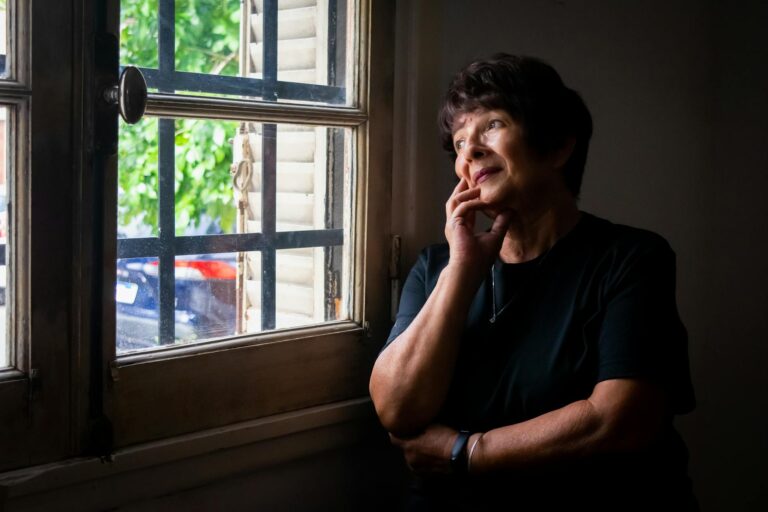
Julie found herself standing in her kitchen one morning, coffee in hand, staring out the window. She could go anywhere. Do anything.
And yet, she didn’t know where to begin.
That’s when the uncomfortable thought surfaced:
What if I don’t actually know how to live this life?
It wasn’t that she lacked capability. Quite the opposite.
But for years, her life had been organised around what was needed—from her, by others, in specific roles.
Now, no one was asking.
And the question shifted from What’s required of me? to What do I want?
Which, it turns out, is a much harder question to answer.
Why this feels so unsettling (and why it’s completely normal)
There’s a concept in psychology known as “role exit”—the process of leaving a role that has defined you for a long time.
Research shows that the more invested we are in a role, the more disorienting it is to step away from it.
And for people like Julie—people who were deeply committed, capable, and relied upon—that transition can feel particularly intense.
Because the qualities that made them successful in their careers—discipline, responsibility, a strong sense of duty—don’t automatically translate into a life without external demands.
In fact, they can make purposelessness feel almost unbearable.
There’s also a neurological layer to this.
Our brains are wired through repetition. Over years—decades—Julie’s neural pathways were shaped by routines, responsibilities, and patterns of thinking tied to her work and family life.
When those patterns suddenly stop, the brain doesn’t instantly rewire.
There’s a gap.
A kind of “neutral zone,” where the old identity has loosened but the new one hasn’t yet formed.
And that space can feel deeply uncomfortable.
The quiet grief no one talks about
Julie didn’t expect to feel grief.
Related Stories from Jeanette Brown
- This remarkable centenarian is still contributing at 100 — and when I read his story, I realised he embodies all four ingredients of a truly fulfilling life
- I didn’t suddenly find myself alone in my 60s—the connections that had held my life together simply began to disappear
- Dolly Parton never let age decide what came next—her extraordinary second act shows us how purpose, connection, energy and vision can keep life moving forward
After all, nothing bad had happened.
She had a good career. A loving family. Her health. Options.
And yet, there were moments—small, unexpected ones—when something felt lost.
Not the job itself, exactly.
But the version of herself that existed within it.
The woman who was needed. The woman who knew what her days were for. The woman who moved through the world with a clear sense of direction.
This kind of grief is rarely acknowledged.
Because from the outside, retirement looks like a reward.
But internally, it can feel like a quiet unraveling.
Relearning how to live on your own terms
The turning point for Julie didn’t come through a grand decision.
It came through something much smaller.
She started asking herself one simple question each morning:
What would make today feel meaningful—not productive, not useful—but meaningful?
At first, the answers were tentative.
A walk.
A coffee with a friend.
Time spent reading something that sparked curiosity.
These didn’t feel significant in the way her previous work had.
But over time, something began to shift.
She wasn’t trying to recreate her old life.
She was beginning to build a new one—slowly, intentionally, and on her own terms.
The neuroscience of starting again
One of the most hopeful things we know from neuroscience is that the brain remains adaptable throughout life.
This is called neuroplasticity.
Even after decades of living one way, it’s possible to create new neural pathways—new habits, new ways of thinking, new sources of meaning.
But this doesn’t happen through sudden transformation.
It happens through small, repeated actions.
Each time Julie chose to engage in something that felt even slightly meaningful, she was reinforcing new patterns in her brain.
Curiosity.
Connection.
Exploration.
These became the building blocks of her new identity.
From being needed to choosing what matters
Perhaps the biggest shift for Julie was this:
She began to separate being needed from being fulfilled.
For most of her life, the two had been intertwined.
Now, she had to learn a different way of relating to her time—and to herself.
She started volunteering in a small capacity, not out of obligation, but because she wanted to. She reconnected with interests she had long put aside. She allowed her days to have a rhythm, but not a rigid structure.
And gradually, the weight of that overwhelming freedom began to soften.
It didn’t disappear entirely.
But it became something she could work with, rather than something that worked against her.
A different kind of peace
Julie still has moments where she misses the clarity of her old life.
The sense of being needed. The immediate feedback. The structure.
But she’s also beginning to experience a different kind of peace.
One that doesn’t come from meeting expectations—but from creating a life that feels aligned with who she is now.
And that’s the key point so many people miss.
Retirement isn’t just a change in schedule.
It’s a transition in identity.
And like any transition, it requires time, reflection, and a willingness to sit in the uncertainty for a while.
If this feels familiar to you
If you recognise yourself in Julie’s story, there is nothing wrong with you.
What you’re feeling isn’t a failure to “enjoy retirement.”
It’s the natural result of stepping out of a life that was structured for you—and into one that you now have to design.
And that’s not a small task.
It’s a profound one.
If you’re navigating this transition, I’ve put together a free guide that walks you through the emotional phases of retirement and helps you start designing what comes next in a way that feels meaningful and grounded.
You can access it here: A Guide to Thriving in Your Retirement Years
Because the goal isn’t just to have more time. It’s to create a life that actually feels like yours.
And that takes a different kind of courage than meeting any deadline ever did.
Related Stories from Jeanette Brown
- This remarkable centenarian is still contributing at 100 — and when I read his story, I realised he embodies all four ingredients of a truly fulfilling life
- I didn’t suddenly find myself alone in my 60s—the connections that had held my life together simply began to disappear
- Dolly Parton never let age decide what came next—her extraordinary second act shows us how purpose, connection, energy and vision can keep life moving forward
Navigating Life’s Transitions with Jeanette Brown
Jeanette Brown is here to guide you through life’s transitions.
On her YouTube channel, she offers practical advice and supportive strategies to help you manage personal and career changes effectively.
Her videos focus on fostering resilience and equipping you with the skills needed for self-coaching.
Subscribe here to start mastering your life transitions today.
Related Stories from Jeanette Brown
- This remarkable centenarian is still contributing at 100 — and when I read his story, I realised he embodies all four ingredients of a truly fulfilling life
- I didn’t suddenly find myself alone in my 60s—the connections that had held my life together simply began to disappear
- Dolly Parton never let age decide what came next—her extraordinary second act shows us how purpose, connection, energy and vision can keep life moving forward
Navigating Life’s Transitions with Jeanette Brown
Jeanette Brown is here to guide you through life’s transitions.
On her YouTube channel, she offers practical advice and supportive strategies to help you manage personal and career changes effectively.
Her videos focus on fostering resilience and equipping you with the skills needed for self-coaching.
Subscribe here to start mastering your life transitions today.