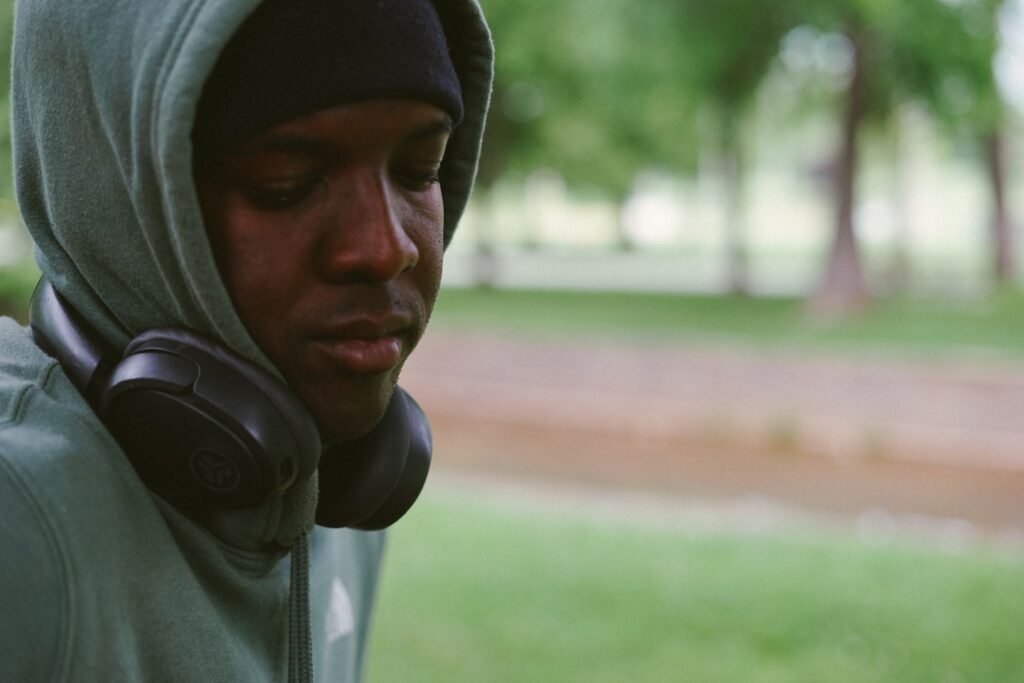
It’s a feeling that sneaks up on us in life’s biggest moments.
You finally leave the job you’ve been dreaming of quitting — and cry on the drive home.
You watch your adult child walk into their new life — and feel your heart swell and ache at the same time.
You step into the freedom of retirement — and then wake up one morning wondering who you even are anymore.
If you’ve ever felt a strange tangle of happiness and sadness at once, you’re not alone. And you’re definitely not broken.
In fact, neuroscience confirms what many of us have learned through experience: mixed emotions are not only normal — they’re a sign that your brain is doing something meaningful.
They often show up in times of transition. And while they might feel confusing or contradictory, they’re actually helping you process change, find clarity, and build resilience.
Let’s explore why your brain can hold joy and grief in the same breath — and why that’s something to embrace, not resist.
Why transitions stir up emotional whiplash
When you’re moving from one chapter of life to another, emotions rarely come one at a time. Instead, they arrive in waves — often crashing into each other.
Take retirement, for example. It’s something many people look forward to for years. More time, more freedom, fewer obligations.
But when the day comes, it can also feel like a loss — of identity, of routine, of relevance.
The same happens when children leave home, or we change careers, or even move to a new town. There’s excitement, sure. But also grief. Also doubt. Also nostalgia.
Psychologists call this experience liminality — a state of “in-betweenness,” where one role or identity is ending, but the next hasn’t fully formed. You’re not who you were… but you’re not quite sure who you’re becoming yet.
That space is fertile ground for emotional contradiction.
You’re letting go while leaning in.
You’re grieving what was, while reaching for what’s next.
And it’s all happening in the same breath.
What neuroscience says about mixed emotions
Your brain is designed to feel more than one emotion at a time.
Different feelings arise in different regions of the brain — and those regions can activate simultaneously.
For instance:
- Sadness and loss often engage the amygdala and anterior cingulate cortex.
- Joy and reward light up areas like the ventral striatum and prefrontal cortex.
So yes — neurologically speaking, it’s entirely possible (and very common) to feel a surge of pride and a wash of sorrow in the exact same moment.
In fact, the ability to feel emotionally complex experiences is a sign of emotional intelligence. Researchers call it emotional granularity — the skill of identifying and differentiating between nuanced emotional states.
Related Stories from Jeanette Brown
- The older some people get, the more they realize the job wasn’t just a job — it was the container that held their friendships, their routine, and their reason to get up
- The most alive people in their second act aren’t the busiest or the calmest — they’re the ones whose weeks clearly reflect what they actually believe matters now
- Quote from Richard Leider: ‘The purpose of life is to live a life of purpose’ — and retirement is where that principle either saves you or exposes the gap you’ve been avoiding
Studies have shown that people with higher emotional granularity are better at regulating their emotions and coping with stress. They’re less likely to feel overwhelmed, and more likely to navigate transitions with resilience.
That bittersweet ache? It means your brain is doing the deep work of integrating your past, present, and future.
Why it’s healthy to feel conflicted
We live in a culture that often prefers emotional clarity. We’re expected to “choose a lane”: Are you happy or not? Excited or scared? Ready or hesitant?
But that’s not how real transformation works.
When you’re stepping into something new, it’s perfectly natural to feel multiple truths at once:
- I’m ready to move on.
- I’m heartbroken to leave this behind.
- I’m proud of what I’ve achieved.
- I’m terrified I won’t find this feeling again.
Feeling both doesn’t mean you’re confused or indecisive. It means you’re alive. Awake. Present with your own humanity.
Suppressing one side of the equation — pretending you’re only excited, or only grieving — can actually prolong the discomfort. It’s the tension between emotions that helps you process them.
Think of it like walking through a doorway. You have to be willing to hold both the place you’re leaving and the place you’re going… until you’re ready to step fully into the new room.
What to do when it feels like too much
Mixed emotions can feel heavy — especially when they show up out of nowhere.
Here are a few ways to make space for them, instead of resisting or ignoring them:
1. Name the feelings
The simple act of labeling what you’re feeling — “I’m sad and grateful” or “I’m relieved and uncertain” — helps calm the brain. Neuroscientists call this “name it to tame it.” It engages the prefrontal cortex, where you can process rather than react.
2. Journal it out
Writing is a powerful way to untangle complex emotions. Try using sentence starters like:
- “I didn’t expect to feel…”
- “What I’m leaving behind is…”
- “What I hope I’m stepping into is…”
This kind of reflection can help you honor both sides of the emotional equation.
3. Let the emotions exist together
Don’t try to resolve the contradiction. Let it live. Sometimes, sitting with the paradox — without needing to fix it — is the most healing thing you can do.
4. Talk to someone who gets it
Sometimes all we need is for someone else to say, “Yes, me too.” Reach out to a friend, coach, or community where emotional complexity is welcomed, not shut down.
Final thoughts: Bittersweet is a beautiful thing
The next time you find yourself smiling through tears, or mourning even as you move forward, pause.
Take a breath.
Remember: this is what change feels like. This is what it means to grow, to care, to be in motion.
Your brain isn’t failing you. It’s helping you process a chapter of life that mattered.
Susan Cain writes in Bittersweet that when we don’t honor our tears or hold the dark with the light, we miss the full spectrum of what it means to be alive.
So go gently. Let the joy rise. Let the sorrow speak.
And trust that you’re exactly where you need to be — in the beautiful, bittersweet heart of being fully human.
Related Stories from Jeanette Brown
- The older some people get, the more they realize the job wasn’t just a job — it was the container that held their friendships, their routine, and their reason to get up
- The most alive people in their second act aren’t the busiest or the calmest — they’re the ones whose weeks clearly reflect what they actually believe matters now
- Quote from Richard Leider: ‘The purpose of life is to live a life of purpose’ — and retirement is where that principle either saves you or exposes the gap you’ve been avoiding
Feeling lost or unfulfilled?
Jeanette Brown’s “Your Life Review” video is designed to help you identify key areas in your life that need improvement.
Through a simple yet powerful exercise, you’ll assess your current satisfaction across different life domains, allowing you to pinpoint specific areas for growth.
This life review forms the foundation for creating a clear vision, setting aligned goals, and developing a personalized action plan.
Take the first step towards a more satisfying life. Start your Life Review now and gain immediate access to this transformative exercise.
Related Stories from Jeanette Brown
- The older some people get, the more they realize the job wasn’t just a job — it was the container that held their friendships, their routine, and their reason to get up
- The most alive people in their second act aren’t the busiest or the calmest — they’re the ones whose weeks clearly reflect what they actually believe matters now
- Quote from Richard Leider: ‘The purpose of life is to live a life of purpose’ — and retirement is where that principle either saves you or exposes the gap you’ve been avoiding
Navigating Life’s Transitions with Jeanette Brown
Jeanette Brown is here to guide you through life’s transitions.
On her YouTube channel, she offers practical advice and supportive strategies to help you manage personal and career changes effectively.
Her videos focus on fostering resilience and equipping you with the skills needed for self-coaching.
Subscribe here to start mastering your life transitions today.