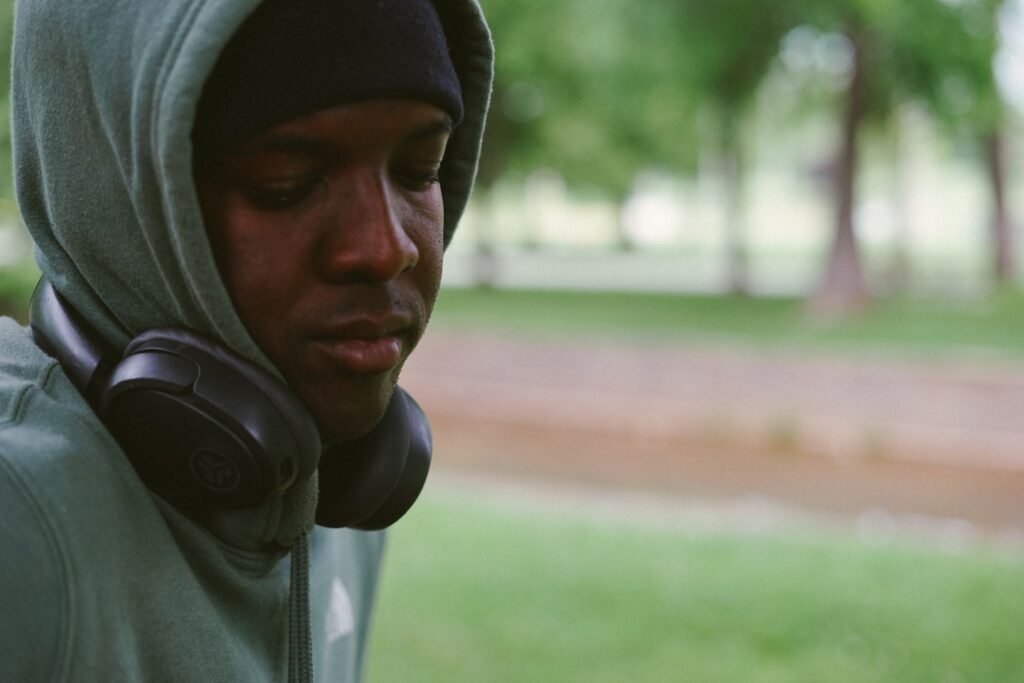
Fear of the unknown can be paralyzing. It’s that nagging feeling you get when you’re about to step into unfamiliar territory, and it can stop you in your tracks.
The good news is, there are strategies to help you overcome this fear. To make the uncertain less daunting and to equip yourself with the right mindset to face anything that comes your way.
In this article, I will share with you 9 strategies that can help you bravely embrace the unknown. So, buckle up and get ready to conquer your fears.
1) Embrace uncertainty
Facing the unknown can be a scary prospect. The uncertainty of what lies ahead can often feel overwhelming, causing us to freeze in fear.
But here’s the reality – life is uncertain. There’s no way to predict what the future holds for us with 100% accuracy.
So, instead of fearing the unknown, why not embrace it? Accept that uncertainty is a part of life and it’s okay not to have all the answers.
By embracing uncertainty, you’re taking a big step towards conquering your fear of the unknown. This doesn’t mean you have to like uncertainty or be comfortable with it right away. It just means you acknowledge it as a part of life.
The more you practice this, the easier it will become. And soon, you’ll find yourself more at ease when faced with the unknown. This is your first strategy towards conquering the fear of the unknown.
2) Take small steps
One thing I’ve learned in my personal journey of facing the unknown is the power of taking small steps.
A few years back, I was faced with a major career decision. I had a stable job, but there was this new opportunity that was very appealing yet extremely unfamiliar. The unknown factors scared me, and I found myself paralyzed by indecision.
That’s when I decided to take small steps. Instead of making a drastic leap, I started by researching the new role, talking to people who were already in that position, and even shadowing a few of them.
By taking these small steps, the unknown slowly became known. It didn’t seem so scary anymore. And eventually, I was able to make the transition with confidence.
This approach can be applied to any situation where the unknown scares you. Instead of jumping in headfirst, take small steps. Gradually expose yourself to the unknown, and it will become less intimidating over time.
3) Practice mindfulness
Our minds have a tendency to dwell in the past or fret about the future, both of which can fuel our fear of the unknown. Mindfulness, which is being fully present and engaged in the current moment, can be an effective strategy to combat this.
A study published in the Journal of Clinical Psychology found that individuals who practiced mindfulness experienced lower levels of anxiety and depression. This is because mindfulness allows us to focus on what’s happening right now, rather than worrying about what might happen in the future.
When faced with the unknown, draw your attention back to the present moment. Focus on your breath, your surroundings, or even the task at hand. By practicing mindfulness, you can reduce your fear of the unknown and develop a more balanced perspective.
4) Use positive affirmations
Positive affirmations can be powerful tools in combating fear of the unknown. These are positive statements that we repeat to ourselves in order to change our mindset and overcome negative thoughts.
For instance, instead of dwelling on thoughts like “I can’t handle the unknown,” you could use positive affirmations like “I am capable of handling whatever comes my way” or “Every experience is an opportunity for growth.”
By consistently practicing these affirmations, you can rewire your brain to think more positively and feel more confident when faced with uncertainty. The key is to make your affirmations believable and relevant to your situation, and to repeat them regularly.
So next time you’re faced with the unknown, remind yourself of your capabilities and trust in your ability to navigate through whatever comes your way.
5) Seek support
Even the bravest of us can feel overwhelmed when faced with the unknown. That’s where seeking support comes in.
Don’t hesitate to reach out to trusted friends, family, or mentors when you’re feeling uncertain or scared. Often, just talking about your fears can help alleviate them, and you might even gain some valuable advice or a fresh perspective.
Remember, there’s no shame in asking for help. Everyone faces uncertainty at some point in their lives, and it’s perfectly okay to lean on others for support during those times.
Related Stories from Jeanette Brown
- The older some people get, the more they realize the job wasn’t just a job — it was the container that held their friendships, their routine, and their reason to get up
- The most alive people in their second act aren’t the busiest or the calmest — they’re the ones whose weeks clearly reflect what they actually believe matters now
- Quote from Richard Leider: ‘The purpose of life is to live a life of purpose’ — and retirement is where that principle either saves you or exposes the gap you’ve been avoiding
So whether it’s a shoulder to lean on or some wise words of advice, don’t be afraid to seek support when you’re navigating the unknown.
6) Trust in your ability to adapt
One of the most reassuring things I’ve discovered is that we, as humans, are incredibly adaptable. We’ve evolved to survive, learn and thrive in changing conditions.
It’s natural to fear the unknown. It’s a fear that’s been hardwired into us over thousands of years. But along with that fear, we’ve also been equipped with a remarkable ability to adapt.
Even when we’re thrown into unfamiliar situations or faced with unexpected challenges, we somehow find a way to adapt and make the best of it. We learn, we grow, and sometimes, we even surprise ourselves with our resilience.
So, the next time you’re facing the unknown, remember this: you have within you an incredible capacity to adapt. You’ve done it before, and you can do it again. Trust in that.
7) Embrace the learning opportunity
Years ago, I had the opportunity to move to a new city for work. It was a thrilling offer, but also incredibly daunting. The city was unfamiliar, I knew no one there, and the job itself was a big step up from what I was used to.
I was scared of the unknown. But I also realized that it was a unique chance to grow both professionally and personally.
So, I took the plunge. And yes, there were challenges. There were days when I felt homesick or overwhelmed by my new responsibilities. But each challenge was also a learning opportunity.
I learned to navigate a new environment, to handle bigger tasks at work, and to be more independent. Above all, I learned that the unknown wasn’t as scary once I started seeing it as an opportunity to learn and grow.
So when you’re faced with the unknown, try shifting your perspective. See it not as something scary, but as an opportunity to learn something new.
8) Visualize success
Another powerful strategy to overcome the fear of the unknown is visualization. This involves picturing yourself successfully navigating the unknown situation you’re facing.
Imagine the scenario in as much detail as possible. What are you doing? How are you feeling? Who’s with you? Visualization can help your brain get used to the idea of facing the unknown and can make it seem less intimidating.
Studies have shown that visualization can help reduce anxiety and increase confidence. Athletes often use this technique to prepare for big games, but it can be just as effective in everyday life.
So the next time you’re faced with an unknown situation, take a moment to visualize yourself handling it successfully. You might be surprised at how much this can help ease your fears.
9) Remember, it’s okay to be scared
Fear is a natural response to the unknown. It’s a part of being human. It’s okay to feel scared when you’re stepping into unfamiliar territory.
What’s important is not to let that fear control you. Acknowledge it, face it, and then use these strategies to move forward.
So, the next time you’re faced with the unknown, remember: it’s perfectly okay to be scared. Just don’t let it stop you from embracing new experiences and opportunities for growth.
Final thoughts: Fear is natural
At the heart of it all, remember that fear is a fundamental part of our human nature.
From an evolutionary perspective, our fear of the unknown was a survival mechanism. It was our brain’s way of keeping us safe from potential dangers we couldn’t predict or understand.
But in our modern world, this fear can be more limiting than protective. It can hold us back from new experiences, opportunities, and growth.
The strategies we’ve discussed are not magic bullets, but they’re steps towards understanding and managing your fear of the unknown. They’re about embracing uncertainty, seeking support, trusting in your ability to adapt, and seeing the unknown as an opportunity to learn and grow.
As you navigate the uncertain waters of life, remember the words of Marie Curie: “Nothing in life is to be feared, it is only to be understood. Now is the time to understand more, so that we may fear less.”
So take a deep breath. Step into the unknown. And remember, it’s okay to be scared. Because on the other side of fear lies growth.
Related Stories from Jeanette Brown
- The older some people get, the more they realize the job wasn’t just a job — it was the container that held their friendships, their routine, and their reason to get up
- The most alive people in their second act aren’t the busiest or the calmest — they’re the ones whose weeks clearly reflect what they actually believe matters now
- Quote from Richard Leider: ‘The purpose of life is to live a life of purpose’ — and retirement is where that principle either saves you or exposes the gap you’ve been avoiding
Navigating Life’s Transitions with Jeanette Brown
Jeanette Brown is here to guide you through life’s transitions.
On her YouTube channel, she offers practical advice and supportive strategies to help you manage personal and career changes effectively.
Her videos focus on fostering resilience and equipping you with the skills needed for self-coaching.
Subscribe here to start mastering your life transitions today.
Related Stories from Jeanette Brown
- The older some people get, the more they realize the job wasn’t just a job — it was the container that held their friendships, their routine, and their reason to get up
- The most alive people in their second act aren’t the busiest or the calmest — they’re the ones whose weeks clearly reflect what they actually believe matters now
- Quote from Richard Leider: ‘The purpose of life is to live a life of purpose’ — and retirement is where that principle either saves you or exposes the gap you’ve been avoiding
Navigating Life’s Transitions with Jeanette Brown
Jeanette Brown is here to guide you through life’s transitions.
On her YouTube channel, she offers practical advice and supportive strategies to help you manage personal and career changes effectively.
Her videos focus on fostering resilience and equipping you with the skills needed for self-coaching.
Subscribe here to start mastering your life transitions today.