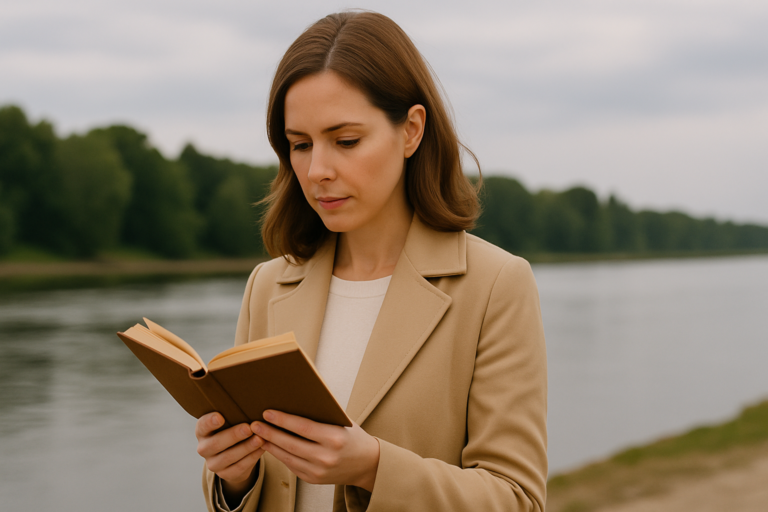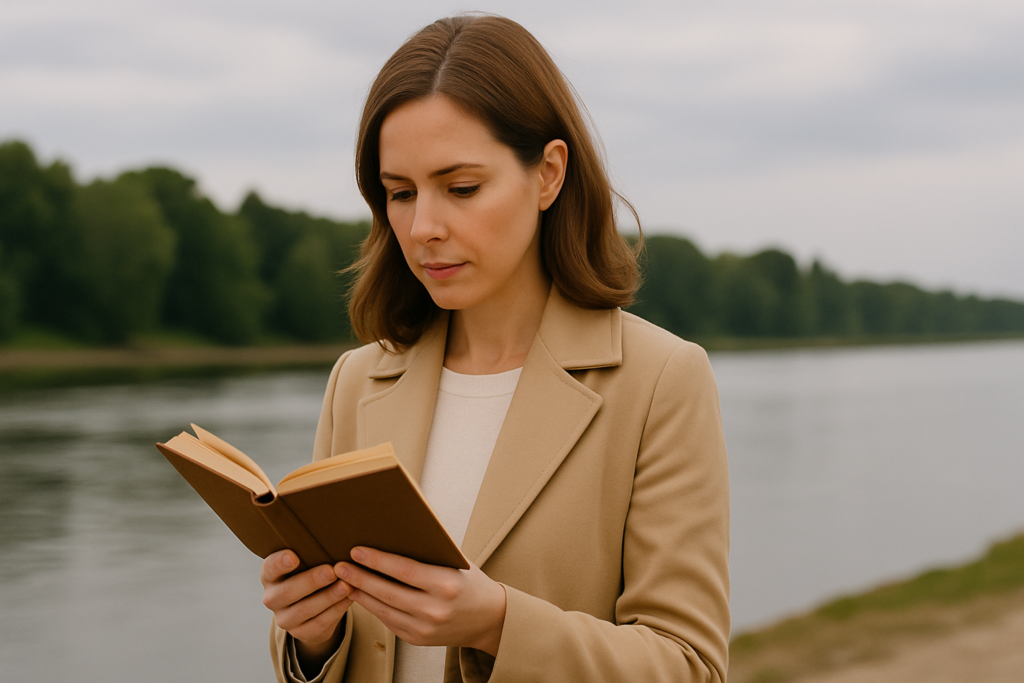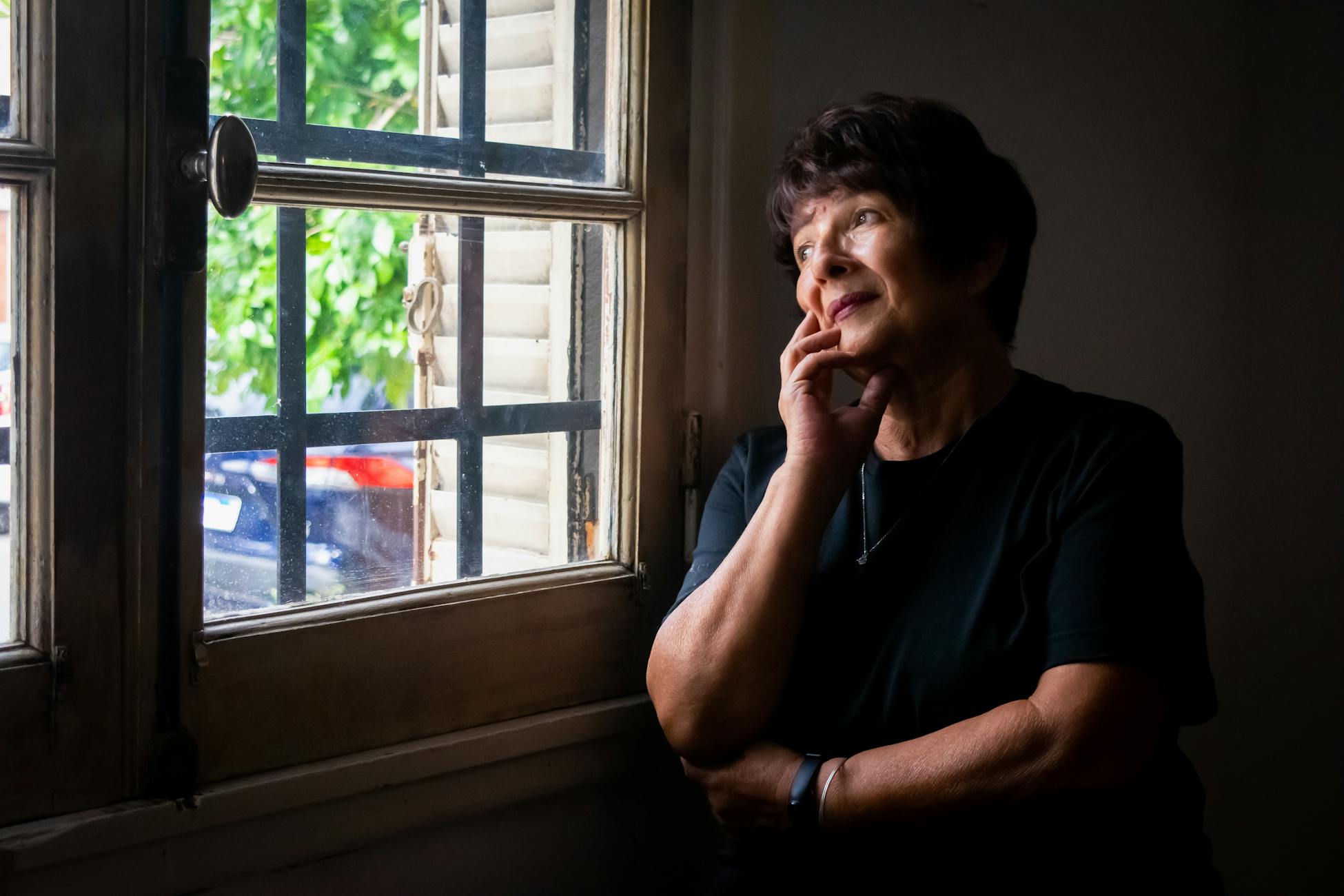
For the first few weeks after she retired, Margaret felt exactly how she thought she would feel.
Relieved.
No more early alarms. No more meetings. No more pressure to keep up, show up, decide, manage, respond, and hold everyone else’s needs in her head.
She had worked hard for decades. She had raised children, built a successful career, paid off the house, saved carefully, and done all the sensible things we’re told to do to prepare for retirement.
On paper, she was one of the lucky ones. And in many ways, she knew she was.
But four months later, after a lovely relaxing morning at home, she found herself thinking:
Who am I now?
Not in a dramatic way. Not in a crisis that anyone else could see.
Just in that quiet, unsettling way that can creep in when the structure of your old life disappears and the new one hasn’t quite taken shape yet.
The strange thing was, nothing was exactly wrong.
She had time. She had security. She had people who loved her. She had a house she liked and a calendar that was finally her own.
But instead of feeling free, she felt strangely invisible.
Retirement can take away more than a job
We often talk about retirement as if it is mostly a financial event.
Have you saved enough?
Can you afford the lifestyle you want?
Have you planned for travel, healthcare, home maintenance, and the years ahead?
Of course, those questions matter deeply. Financial security gives people choices, and nobody should pretend it doesn’t.
But retirement is not only a financial transition.
It is also an identity transition.
For many people, work has quietly provided far more than income. It has provided rhythm, status, connection, confidence, usefulness, and a clear answer to the question, “What do you do?”
When the work ends, the answer can suddenly feel more complicated.
This can be especially true for people who have had long, successful careers. If you have spent 30 or 40 years being capable, needed, respected, and busy, it can be a shock to discover how much of your identity was held inside that role.
Margaret had been known as the organised one. The reliable one. The woman who could walk into a difficult situation and know what needed doing.
People came to her for answers.
Then retirement arrived, and almost overnight, nobody needed her in quite the same way.
At first, she enjoyed the quiet. Then the quiet started to feel like absence.
The first stage can feel like a holiday
I’ve noticed that many people move through retirement in stages.
The first stage often feels like a well-earned holiday. You sleep in. You catch up on little jobs. You meet friends for coffee. You relish not having to be somewhere by 8.30.
There can be a real sense of release.
And that matters. After decades of responsibility, many people need a period of rest, recovery, and decompression.
But after a few months, something else can begin to surface.
The house is tidier. The wardrobe is sorted. The first few lunches have happened. The novelty of empty weekdays has softened.
And then comes the deeper question.
What is this chapter actually for?
This is where some people start to feel confused. They may even feel guilty for feeling confused.
They think, “I should be grateful.”
And yes, gratitude is important. But gratitude does not cancel out the need for meaning.
You can be grateful for retirement and still feel lost inside it.
You can appreciate your freedom and still miss your old sense of purpose.
You can love your family and still wonder where you fit in the world now.
These things can all be true at the same time.
When achievement is no longer the measuring stick
One of the hardest parts of retirement is that the old measuring sticks often disappear.
During working life, there is usually some kind of external structure telling us whether we are doing well. There are deadlines, promotions, responsibilities, roles, feedback, income, and visible progress.
Even when work is stressful, it often gives us a sense of movement.
In retirement, that movement becomes less obvious.
Nobody is handing out performance reviews for how well you lived your Tuesday.
Nobody gives you a certificate for taking a meaningful walk, making a beautiful meal, helping a neighbour, having a thoughtful conversation, or finally giving yourself permission to slow down.
Yet these may be the very things that begin to matter most.
Margaret had been used to measuring her life through productivity. If she had achieved a lot, the day felt worthwhile. If she had been useful to others, she felt valuable.
So when her days became quieter, she didn’t know how to read them.
A slow morning felt lazy.
An empty afternoon felt like failure.
A week without a major task felt like she was becoming irrelevant.
This is one of the hidden adjustments of retirement: learning to measure life differently.
Not by how much you produce.
Not by how needed you are.
Not by how full your calendar looks.
But by how aligned your days are with what genuinely matters to you now.
The question underneath the question
When Margaret said to herself, “Who am I now?” she wasn’t really asking for a job title.
She was asking deeper questions.
What gives me purpose now?
Where do I belong?
What do I still have to offer?
What parts of me have been waiting for more space?
What kind of woman do I want to become in this next chapter?
These are not questions you answer in one sitting.
They are questions you live your way into.
And that is why I think reflection matters so much in retirement.
Not endless overthinking. Not analysing yourself into a corner. But gentle, honest reflection.
There is growing interest in the role of life review, journaling, and self-reflection in helping people make sense of major life transitions. Some research suggests that writing about our experiences may help us organise our thoughts and notice patterns that are difficult to see when they stay in our heads.
But even without the research, many of us know this from experience.
When you sit with a question long enough, something begins to shift.
Not always quickly. Not always neatly. But slowly, you begin to hear your own voice again.
Your old life still has clues
One mistake people sometimes make in retirement is thinking they need to start from scratch.
As if the person they were before retirement no longer counts.
But your old life is full of clues.
Margaret began by looking back, not to live in the past, but to understand what the past had been telling her.
She asked herself:
When did I feel most alive in my work?
What did people come to me for?
What strengths have followed me through my life?
What did I enjoy before responsibility took over?
What parts of me did I put aside because there was never enough time?
Related Stories from Jeanette Brown
- This remarkable centenarian is still contributing at 100 — and when I read his story, I realised he embodies all four ingredients of a truly fulfilling life
- I didn’t suddenly find myself alone in my 60s—the connections that had held my life together simply began to disappear
- Dolly Parton never let age decide what came next—her extraordinary second act shows us how purpose, connection, energy and vision can keep life moving forward
At first, her answers were practical. She liked organising, problem-solving, mentoring younger people, and creating calm in messy situations.
But underneath that, she noticed something deeper.
She loved helping people feel more capable.
That had been the thread running through her career, her parenting, her friendships, and even the volunteer roles she had done years earlier.
Her work title had disappeared.
But the thread had not.
This is such an important distinction.
Retirement may end a role, but it does not erase your strengths, values, skills, curiosity, or capacity to contribute.
Those things can be used in new ways.
Freedom needs shape
There is a lovely idea that retirement is all about freedom.
And it is.
But freedom without shape can become surprisingly uncomfortable.
Most of us need some kind of rhythm. Not the rigid structure of our working years, perhaps, but a gentle shape to the week.
Something to look forward to.
Something that stretches us a little.
Something that connects us with others.
Something that helps us feel useful.
Something that supports our health and vitality.
Something that keeps us growing.
Margaret slowly realised she didn’t need to fill every hour.
She needed anchors.
So she began creating a simple weekly rhythm.
Two mornings a week, she walked with a friend.
One afternoon, she volunteered with a local community reading program.
Friday became her “curiosity day,” when she tried something new, even if it was small.
Sunday afternoon became her time to reflect on the week ahead.
Nothing dramatic.
Nothing that would impress anyone from the outside.
But gradually, her days began to feel less empty.
Not because she was busy again.
Because she was connected again.
The next chapter is not found all at once
I think we sometimes put too much pressure on retirement to become instantly meaningful.
We imagine that once work ends, the “real life” will simply begin.
But often, retirement is less like opening a door and more like walking through a foggy landscape where the path appears one section at a time.
You may need to experiment.
You may try a class and realise it’s not for you. You may join a group and feel out of place. You may volunteer somewhere and discover it drains you rather than energises you. You may plan a big adventure and then realise what you really want is a quieter life closer to home.
That is not failure.
That is information.
In fact, one of the most useful attitudes in retirement may be curiosity.
Instead of asking, “What is my new purpose?” you might ask, “What feels worth exploring?”
Instead of asking, “What should I do with the rest of my life?” you might ask, “What would make the next few months feel more alive?”
Instead of asking, “Who am I now?” you might ask, “What parts of me are ready to come forward?”
Smaller questions often lead to better answers.
A simple reflection exercise
If Margaret’s story feels familiar, you might like to try this.
Sit somewhere quiet with a notebook and answer these questions without trying to make them perfect.
What do I miss about my working life that tells me something important about my needs?
What do I not miss at all?
When have I felt most useful, engaged, or alive in the past?
What strengths do I still want to use?
What values matter most to me at this stage of life?
Where do I want more connection?
What would I like to learn, try, revisit, or contribute to?
What is one small action I could take this week that would make my retirement feel more like mine?
The last question matters most.
Because clarity often comes through action, not before it.
You do not need a perfect retirement plan before you begin.
You just need one honest next step.
Retirement is not the end of who you were
Four months after wondering who she was, Margaret had not transformed her entire life.
She had not launched a business, moved overseas, written a book, or discovered one grand purpose that explained everything.
What she had done was quieter.
She had started listening to herself.
She had stopped treating her uncertainty as a problem and started seeing it as part of the transition.
She had begun to understand that the woman she had been was not gone. She was simply no longer wrapped in the structure of a career.
Underneath the job title, there was still wisdom. Still curiosity. Still kindness. Still capability. Still a deep desire to matter.
And perhaps that is the real work of retirement.
Not rushing to replace the old role with a new one.
Not filling the calendar so you don’t have to feel the emptiness.
Not proving that you are still productive, impressive, or useful in the old ways.
But slowly discovering how to belong to your own life again.
If you are in that in-between stage, wondering why retirement feels stranger than you expected, please know this: you are not failing at retirement.
You may simply be in the middle of becoming.
And this next chapter does not have to be figured out all at once.
It can begin at the kitchen table.
With one honest question.
One small experiment.
One walk.
One conversation.
One page in a journal.
One decision to stop asking, “Who am I without my career?” and start asking, “Who am I becoming now?”
And that question, asked gently and often enough, can open the door to a retirement that feels not just comfortable, but deeply and personally your own.
If you’re at the beginning of this transition and would like a place to start, I’ve created a free guide to help you reflect on what thriving in retirement could look like for you. You can download it here: https://jeanettebrown.net/op/thrive-in-your-retirement/
Related Stories from Jeanette Brown
- This remarkable centenarian is still contributing at 100 — and when I read his story, I realised he embodies all four ingredients of a truly fulfilling life
- I didn’t suddenly find myself alone in my 60s—the connections that had held my life together simply began to disappear
- Dolly Parton never let age decide what came next—her extraordinary second act shows us how purpose, connection, energy and vision can keep life moving forward
Navigating Life’s Transitions with Jeanette Brown
Jeanette Brown is here to guide you through life’s transitions.
On her YouTube channel, she offers practical advice and supportive strategies to help you manage personal and career changes effectively.
Her videos focus on fostering resilience and equipping you with the skills needed for self-coaching.
Subscribe here to start mastering your life transitions today.
Related Stories from Jeanette Brown
- This remarkable centenarian is still contributing at 100 — and when I read his story, I realised he embodies all four ingredients of a truly fulfilling life
- I didn’t suddenly find myself alone in my 60s—the connections that had held my life together simply began to disappear
- Dolly Parton never let age decide what came next—her extraordinary second act shows us how purpose, connection, energy and vision can keep life moving forward
Navigating Life’s Transitions with Jeanette Brown
Jeanette Brown is here to guide you through life’s transitions.
On her YouTube channel, she offers practical advice and supportive strategies to help you manage personal and career changes effectively.
Her videos focus on fostering resilience and equipping you with the skills needed for self-coaching.
Subscribe here to start mastering your life transitions today.