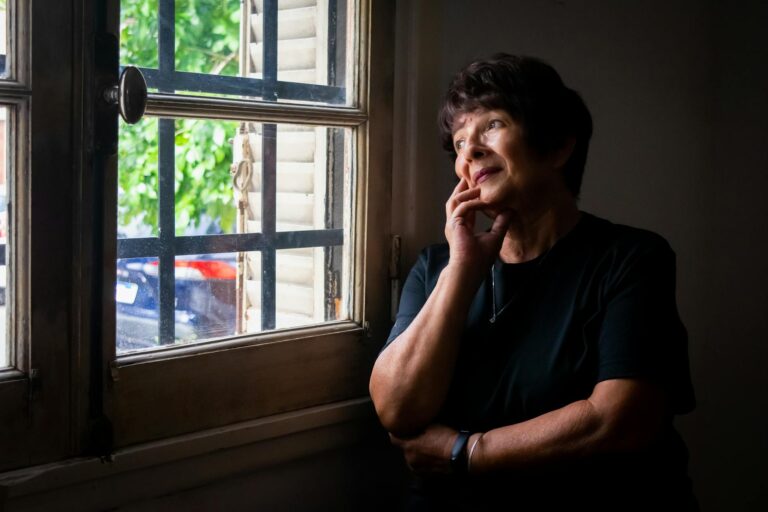
There’s a moment in retirement that can take people by surprise.
It may not happen on the first day, when there are still farewell cards on the kitchen bench and messages coming in from colleagues. It may not happen in the first few weeks, when there is relief, sleep, travel, gardening, sorting cupboards, catching up with friends, and enjoying the novelty of not being ruled by the clock.
It often comes later.
A quiet morning. A blank diary. A cup of tea that lasts longer than it used to. No emails to answer. No staff to support. No decisions waiting. No one needing your opinion before moving forward.
And then, almost out of nowhere, a question rises.
Who am I now?
Not in a dramatic way. Not necessarily in a crisis way. Just in that deeply human way that arrives when the role you carried for decades is no longer there to introduce you to yourself.
For some people, the hardest part of retirement isn’t the finances or the free time. It’s looking in the mirror without a job to finish the sentence: “I am a person who…”
For years, the answer may have been obvious.
I am a person who leads a school.
I am a person who manages a team.
I am a person who solves problems.
I am a person who is needed.
I am a person who knows what Monday is for.
And then retirement arrives, and the sentence hangs there unfinished.
The job was never just a job
We often talk about retirement as if work is mainly about income.
Of course, money matters. Financial security matters enormously. But work often gives us far more than a pay packet. It gives us structure, status, identity, connection, rhythm, purpose, and a reason to put on decent clothes in the morning.
It tells us where to be, who to talk to, what problems to solve, and what part of ourselves to bring forward each day.
This is why retirement can feel so strange, even for people who wanted it.
You can be grateful to be free from the pressure and still miss the shape your working life gave you. You can be relieved not to have deadlines and still miss the feeling of being useful. You can enjoy slow mornings and still feel unsettled by the quiet.
That doesn’t mean you made the wrong decision.
It may simply mean that your identity is catching up with your circumstances.
Many researchers and writers on life transitions have noted that major changes often involve an in-between stage — a period where the old identity no longer fits, but the new one has not fully formed. William Bridges called this the “neutral zone.” I think that phrase captures something important about retirement.
It is not just an ending. It is not immediately a new beginning either.
Sometimes it is a strange, tender, uncertain space in between.
Linda’s story: from principal to “I don’t know who I am”
Linda had been a school principal for many years.
She was the sort of person who seemed to know what needed to be done before anyone else had even named the problem. Parents knew her. Teachers relied on her. Students remembered her. She had spent decades making decisions, supporting staff, managing conflict, encouraging young people, dealing with emergencies, and holding a whole school community together.
When she retired, everyone told her how lucky she was.
“You’ll be able to relax now.”
“You’ve earned this.”
“You’ll have so much time.”
“You won’t know yourself.”
And that last sentence turned out to be truer than anyone realised.
At first, Linda enjoyed the freedom. She walked in the mornings. She caught up with friends. She cleaned out cupboards. She booked a short trip away with her husband. She joined a local exercise class.
But after a few months, a heaviness began to settle.
She wasn’t depressed, exactly. She was functioning. She was busy enough. She had people around her. But something felt missing.
One morning, she caught sight of herself in the hallway mirror and had a thought that frightened her a little.
I don’t know who I am when I’m not a principal.
Not “I used to be a principal.”
Not “I had a wonderful career.”
But something deeper.
If I’m not the person people come to for answers, who am I?
That was the question she had to live with for a while.
Why identity loss can feel so unsettling
One of the reasons this stage can feel so uncomfortable is that identity is not just an idea in our heads. It is built through repetition.
For years, our brains and bodies get used to certain cues and patterns.
The alarm goes off. The work clothes go on. The emails begin. The phone rings. The meetings happen. The problems arrive. The day has a shape.
Over time, these repeated patterns become part of how we understand ourselves.
Research into habits and identity suggests that what we do repeatedly can become tied to who we believe we are. This is not about being trapped forever in an old role. It is simply a reminder that identity is often formed through lived experience, daily rituals, relationships, and repeated evidence.
If for forty years your life gave you evidence that you were competent, useful, respected, and needed, and then that evidence suddenly disappears, it makes sense that something inside you might feel disoriented.
This is why people sometimes rush to fill retirement with activity.
Committees. Volunteering. Travel. Babysitting. Clubs. Courses. Home projects. Social events.
Some of this can be wonderful. But sometimes busyness becomes a way of avoiding the deeper question.
Who am I when I am not performing usefulness?
Linda didn’t find herself by staying busy
Linda tried the busy route first.
She said yes to almost everything. She joined two committees. She helped at a community fundraiser. She offered to mentor a younger educator. She took on more family responsibilities. She filled the diary because an empty diary made her uneasy.
But after a while, she realised she had created a softer version of the same old life.
She was still organising. Still managing. Still being the reliable one. Still stepping in before anyone asked.
And although these things mattered, they did not answer the question underneath.
So Linda did something that felt almost unnatural to her.
She slowed down.
She began a period of deep reflection and soul searching, not as a dramatic reinvention project, but as a series of honest conversations with herself.
She started journaling in the mornings. At first, she wrote practical things: what she had done the day before, what she needed to do, what she was grateful for. But slowly, the questions became deeper.
What do I miss about my work?
What do I not miss at all?
When do I feel most alive now?
What did I love before my career became so demanding?
What part of me has been waiting patiently in the background?
Where do I feel useful without feeling consumed?
What would I do even if no one applauded me for it?
The answers did not come quickly.
They rarely do.
The real passions were quieter than she expected
Linda expected that her next chapter would somehow look like a continuation of education.
Perhaps tutoring. Consultancy. School board work. Leadership mentoring.
And some of that still interested her. But what surprised her was that the things that brought her alive were quieter.
Related Stories from Jeanette Brown
- This remarkable centenarian is still contributing at 100 — and when I read his story, I realised he embodies all four ingredients of a truly fulfilling life
- I didn’t suddenly find myself alone in my 60s—the connections that had held my life together simply began to disappear
- Dolly Parton never let age decide what came next—her extraordinary second act shows us how purpose, connection, energy and vision can keep life moving forward
She loved helping children read, not because she wanted to run a literacy program, but because she loved the intimacy of sitting beside one child and watching confidence grow.
She loved gardening, not because it was productive, but because it put her back in touch with patience and seasons.
She loved local history, especially the stories of women in her region whose lives had never been properly recorded.
She loved writing. Not policy documents. Not newsletters. But reflective pieces about childhood, education, community, and what schools had taught her about human beings.
At first she dismissed these interests as too small.
But over time, she began to see something.
Her identity had not disappeared. It had been narrowed by the demands of her role.
Retirement was not asking her to invent a completely new person. It was inviting her to recover parts of herself that had been waiting beneath the title.
You may not need a new identity — you may need a wider one
This is one of the great misunderstandings about retirement.
We sometimes think we have to “reinvent ourselves” as if the old self must be thrown away and replaced with a shiny new version.
But many people do not need a total reinvention.
They need a widening.
You are not only the job you did. But the job may have revealed real parts of you.
If you were a principal, perhaps you still care about learning, growth, young people, fairness, leadership, and community.
If you were a nurse, perhaps you still carry compassion, steadiness, skill, and care.
If you ran a business, perhaps you still love creativity, problem-solving, independence, and building something from nothing.
If you raised children while working, perhaps you still have deep reserves of patience, practicality, and love.
Retirement does not erase these qualities.
It asks: where do they want to live now?
That is a very different question from “What should I do with my time?”
Try finishing the sentence differently
If the old sentence was “I am a person who works as…” then retirement asks us to build a deeper sentence.
Not based on a job title.
Based on values, strengths, interests, and the way we want to show up in the world.
Try these:
I am a person who notices…
I am a person who cares about…
I am a person who feels most alive when…
I am a person who wants to contribute by…
I am a person who is learning to…
I am a person who no longer needs to…
I am a person who still longs for…
I am a person who is becoming…
These questions may seem simple, but they can open a door.
They move identity from role to essence.
That is where the deeper work of retirement often begins.
Why reflection matters more than rushing
In a culture that loves quick answers, deep reflection can feel inefficient.
But identity does not usually reorganise itself on command.
It needs time. It needs space. It needs repeated noticing. It needs experiments. It needs some false starts. It needs permission to not know.
This is where journaling, walking, quiet conversations, creative projects, and intentional pauses can be so helpful. Not because they magically solve everything, but because they give the inner life room to speak.
Linda did not wake up one morning with a perfect new purpose.
She found it through paying attention.
She noticed which commitments drained her and which ones left her feeling quietly satisfied. She noticed when she was helping from love and when she was helping from habit. She noticed that she did not want to lead everything anymore. She wanted to contribute without carrying the whole weight.
Eventually, she created a life that looked less impressive on paper but felt more honest.
She volunteered one morning a week helping children with reading. She joined a small local history group. She began writing short reflections about education and community. She spent more time in her garden. She remained connected to people, but she no longer needed to be at the centre of everything.
She did not become less useful.
She became more herself.
A gentle place to begin
If you are in this stage, please don’t rush to label it as failure, boredom, or lack of gratitude.
It may be transition.
It may be the old identity loosening its grip.
It may be the beginning of a more truthful life.
A gentle place to start is with one question:
What part of me had to go quiet so I could keep doing the life I was doing?
That question can be tender. It can also be freeing.
Perhaps your creative side went quiet.
Perhaps your adventurous side did.
Perhaps your playful side did.
Perhaps your spiritual side, your curious side, your reflective side, your deeply social side, or your need for solitude was put away for later.
Retirement may be the later you were waiting for.
Related Stories from Jeanette Brown
- This remarkable centenarian is still contributing at 100 — and when I read his story, I realised he embodies all four ingredients of a truly fulfilling life
- I didn’t suddenly find myself alone in my 60s—the connections that had held my life together simply began to disappear
- Dolly Parton never let age decide what came next—her extraordinary second act shows us how purpose, connection, energy and vision can keep life moving forward
Feeling lost or unfulfilled?
Jeanette Brown’s “Your Life Review” video is designed to help you identify key areas in your life that need improvement.
Through a simple yet powerful exercise, you’ll assess your current satisfaction across different life domains, allowing you to pinpoint specific areas for growth.
This life review forms the foundation for creating a clear vision, setting aligned goals, and developing a personalized action plan.
Take the first step towards a more satisfying life. Start your Life Review now and gain immediate access to this transformative exercise.
Related Stories from Jeanette Brown
- This remarkable centenarian is still contributing at 100 — and when I read his story, I realised he embodies all four ingredients of a truly fulfilling life
- I didn’t suddenly find myself alone in my 60s—the connections that had held my life together simply began to disappear
- Dolly Parton never let age decide what came next—her extraordinary second act shows us how purpose, connection, energy and vision can keep life moving forward
Feeling lost or unfulfilled?
Jeanette Brown’s “Your Life Review” video is designed to help you identify key areas in your life that need improvement.
Through a simple yet powerful exercise, you’ll assess your current satisfaction across different life domains, allowing you to pinpoint specific areas for growth.
This life review forms the foundation for creating a clear vision, setting aligned goals, and developing a personalized action plan.
Take the first step towards a more satisfying life. Start your Life Review now and gain immediate access to this transformative exercise.