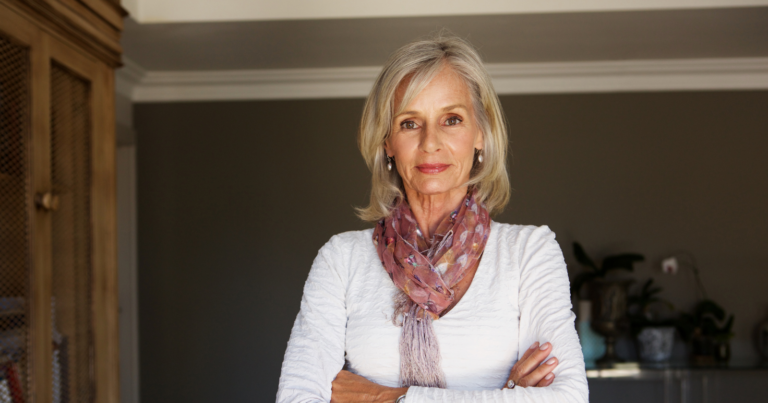
There’s a quiet divide I’ve noticed over the years.
Some people move into their 60s and beyond with energy, curiosity and a sense of direction. They’re not necessarily busier. They’re not necessarily wealthier. But they feel alive.
Others, just as capable and intelligent, slowly shrink their lives. The days blur. The structure disappears. Confidence dips. They survive… but they don’t quite thrive.
I’ve have come across hundreds of people in this stage of life. I’m in it myself. And I’ve learned something important:
The difference isn’t dramatic reinvention.
It’s small, consistent habits.
And neuroscience backs this up. Tiny daily behaviors shape our mood, identity and even the structure of our brain through neuroplasticity. After 60, that still matters. In fact, it may matter even more.
Here are 9 small habits that separate people who thrive after 60 from those who just survive.
1. They start the day on purpose
People who thrive don’t wake up and immediately drift into news, emails or scrolling.
They create a deliberate first 10 minutes.
For me, that’s morning light and breathwork. Within 30 minutes of waking, I step outside and breathe in a simple rhythm — in for 3, hold for 4, out for 5.
This isn’t just “wellness fluff.”
Morning light regulates your circadian rhythm. It signals your brain to stop producing melatonin and begin producing cortisol at the right time — improving mood, energy and sleep later that night.
Breathwork calms the autonomic nervous system. It shifts you from fight-or-flight into rest-and-digest.
It’s a small habit.
But it sets the tone for everything that follows.
2. They protect their cognitive energy
Thriving after 60 isn’t about doing more.
It’s about doing what matters — and doing it well.
Research on ultradian rhythms shows our brains operate in roughly 90-minute cycles of focused attention followed by a natural dip.
They focus deeply for a block of time. Then they rest.
They walk. Stretch. Dance. (Yes, I often put music on and move — it resets my whole system.)
People who just survive tend to push through exhaustion — and pay for it later with brain fog and irritability.
Energy management is the new productivity.
3. They move in small bursts
You don’t need marathon training to age well.
But you do need movement.
Tiny bursts — 2 to 5 minutes every hour — improve blood flow to the brain, activate your vestibular system and support balance (which becomes increasingly important as we age).
Movement is not just about muscles.
It boosts BDNF (brain-derived neurotrophic factor), a protein that supports learning and memory.
People who thrive weave movement into their day instead of waiting for the “perfect” workout window.
4. They deliberately calm their nervous system
Anxiety doesn’t magically disappear at 60.
In fact, life transitions — retirement, health scares, adult children moving on — can heighten it.
One tool I often share is the 5-4-3-2-1 grounding method:
5 things you can see
4 things you can touch
3 things you can hear
2 things you can smell
1 thing you can taste
This shifts activity away from the limbic system (your threat detector) and back toward the prefrontal cortex — where clarity and calm live.
People who thrive don’t pretend stress doesn’t exist.
They learn to regulate it.
5. They redefine identity — consciously
This one is big.
For decades, identity is often tied to work, parenting, achievement.
Then suddenly… that role changes.
If identity is not consciously redesigned, it defaults to loss.
People who thrive ask:
Who am I now?
What do I want this chapter to stand for?
What do I still want to contribute?
Identity shapes behavior. Behavior shapes neural pathways. Over time, this becomes your lived reality.
This is why I created my free guide, Thrive in Your Retirement Years. It helps you shift from “retiring from” to “retiring into.” If you haven’t downloaded it yet, you can get it here.
Because thriving doesn’t happen by accident.
It happens by design.
6. They cultivate curiosity
Curiosity is cognitive fuel.
Studies show novelty and learning stimulate dopamine — the neurotransmitter associated with motivation and engagement. They also support cognitive resilience.
Related Stories from Jeanette Brown
- The older some people get, the more they realize the job wasn’t just a job — it was the container that held their friendships, their routine, and their reason to get up
- The art of thriving in chaos: 5 essential skills for your second act
- The people thriving in their seventies aren’t the ones who crammed their calendars — they’re the ones who stopped running from stillness, and met the person they’d been too busy to know their entire life
People who thrive try new things. A language app. A walking group. A different genre of books. A class they once thought was “not for them.”
Curiosity keeps the brain flexible.
And flexibility — psychologically and neurologically — is one of the strongest predictors of well-being in later life.
7. They invest in connection — even when it’s uncomfortable
Here’s something I’ve learned the hard way.
Connection doesn’t maintain itself.
Especially if, like me, you’ve moved cities multiple times over the years.
Long-term friendships require effort. New friendships require vulnerability.
People who thrive initiate.
They invite someone for coffee. They join a group. They send the message.
Loneliness isn’t just emotional. Chronic loneliness increases inflammation and affects the brain’s threat detection system, making social situations feel even harder.
Connection is medicine.
But it requires small acts of courage.
8. They protect sleep like it’s sacred
Sleep used to be my biggest struggle.
Racing thoughts. 3am wake-ups. Mental replay.
What changed wasn’t a pill.
It was ritual.
Dimming lights at the same time each night. No screens late. Chamomile tea. A few minutes of journaling. A simple closing sentence: The day is done. Let it be.
The brain loves predictability.
Consistent cues trigger melatonin production and reduce evening cortisol.
People who thrive understand this:
Sleep is not indulgent.
It’s foundational.
9. They review and reset regularly
This may be the most important habit of all.
Thriving people pause.
They reflect. They recalibrate. They ask what’s working and what isn’t.
Without reflection, days become months. Months become years.
I’ve spent over 20 years journaling, and I can tell you this: self-awareness compounds. It strengthens the neural pathways associated with intentional decision-making and emotional regulation.
Survival mode is reactive.
Thriving is reflective.
Even five minutes a week can change your trajectory.
Small habits, big rewiring
Here’s the beautiful truth neuroscience keeps confirming:
Your brain is always adapting.
Through neuroplasticity, repeated behaviors strengthen specific neural circuits. The habits you practice today become your default tomorrow.
After 60, this doesn’t slow to zero.
It continues — if you give it something to work with.
Thriving isn’t about grand gestures.
It’s about:
• Morning light
• Small movement
• Nervous system regulation
• Curiosity
• Identity design
• Connection
• Reflection
And above all, intention.
If you’re in your 60s or beyond I want you to know something:
This chapter can be expansive.
But it won’t expand on its own.
If you’d like support in designing this next stage with clarity and purpose, download my free guide, Thrive in Your Retirement Years. It walks you through simple, science-backed steps to move from drifting to deliberate living.
You don’t have to overhaul your life.
Start with one small habit.
Practice it for a week.
And notice what shifts.
Because the line between surviving and thriving after 60 is often thinner — and more hopeful — than you think.
Related Stories from Jeanette Brown
- The older some people get, the more they realize the job wasn’t just a job — it was the container that held their friendships, their routine, and their reason to get up
- The art of thriving in chaos: 5 essential skills for your second act
- The people thriving in their seventies aren’t the ones who crammed their calendars — they’re the ones who stopped running from stillness, and met the person they’d been too busy to know their entire life
Feeling lost or unfulfilled?
Jeanette Brown’s “Your Life Review” video is designed to help you identify key areas in your life that need improvement.
Through a simple yet powerful exercise, you’ll assess your current satisfaction across different life domains, allowing you to pinpoint specific areas for growth.
This life review forms the foundation for creating a clear vision, setting aligned goals, and developing a personalized action plan.
Take the first step towards a more satisfying life. Start your Life Review now and gain immediate access to this transformative exercise.
Related Stories from Jeanette Brown
- The older some people get, the more they realize the job wasn’t just a job — it was the container that held their friendships, their routine, and their reason to get up
- The art of thriving in chaos: 5 essential skills for your second act
- The people thriving in their seventies aren’t the ones who crammed their calendars — they’re the ones who stopped running from stillness, and met the person they’d been too busy to know their entire life
Feeling lost or unfulfilled?
Jeanette Brown’s “Your Life Review” video is designed to help you identify key areas in your life that need improvement.
Through a simple yet powerful exercise, you’ll assess your current satisfaction across different life domains, allowing you to pinpoint specific areas for growth.
This life review forms the foundation for creating a clear vision, setting aligned goals, and developing a personalized action plan.
Take the first step towards a more satisfying life. Start your Life Review now and gain immediate access to this transformative exercise.