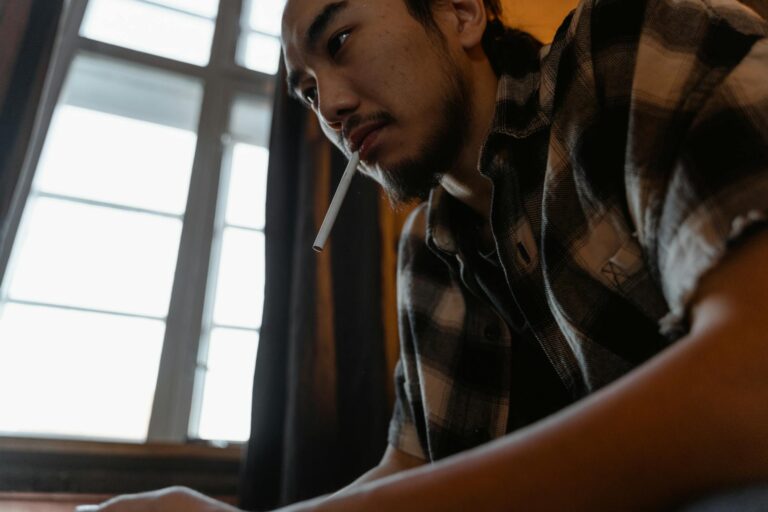
Contentment is the most effective disguise loneliness has ever invented. A man who occupies the same chair at the same café every morning at 7:15, who nods at the barista and reads his paper and leaves a decent tip — he registers to the world as someone who has his life together. Routine reads as stability. Predictability reads as peace. And almost nobody thinks to ask whether the person who always shows up is showing up because he wants to, or because the chair and the coffee and the familiar counter are the only places left where anyone expects him at all.
Most people picture loneliness as the woman staring out a rain-streaked window, the widower eating dinner alone at a table set for one. We imagine it announces itself — with tears, with withdrawal, with visible suffering. That picture captures one version. But the version that does the most damage over decades is the kind that looks, from every angle, like a man who’s doing just fine.
What I’ve observed — in my own life, in the lives of men I’ve known well enough to see past the surface — is that this invisible loneliness operates on a completely different frequency. And understanding that frequency matters more now than it has in a long time.
The seat that holds more than a body
Routine, in the psychological literature, often gets framed as healthy. Structure gives the brain a sense of order. Research suggests that predictability can help regulate stress responses. All true. But routine can also become a scaffolding that holds a life in place when nothing else does — when the relationships have thinned, when the phone doesn’t ring, when the calendar has nothing on it except the next morning’s drive to the same chair.
Former Surgeon General Vivek Murthy has called attention to loneliness as an epidemic in America. What struck me about his framing wasn’t the scale — it was the invisibility. He wasn’t describing people who looked lonely. He was describing a country full of people who appeared connected enough to pass every casual inspection while experiencing a slow, cellular-level deprivation of real human contact.
That man in the café seat? He might have a wife at home. He might have grown children. He might have neighbors who wave. None of that inoculates against the particular kind of unseen-ness I’m describing.
Being seen is different from being observed. People observe him. The barista knows his order. The other regulars recognize his face. But being seen means someone knows what you’re carrying — what worries you at 3 a.m., what you lost that you haven’t talked about, what you’re proud of that nobody asks about anymore. That kind of seeing requires vulnerability. And vulnerability, for many men who came of age in a certain era, was trained out of them so thoroughly they don’t even recognize its absence.
Why men vanish in plain sight
The male loneliness epidemic has gotten some attention in recent years, though the framing often focuses on younger men and dating. Studies suggest that older men face a quieter and, in many ways, more structurally entrenched version of this isolation.
A man retires. The colleagues who used to populate his days scatter. The conversations that once happened organically — in hallways, over project reviews, during lunch — evaporate overnight. Writers on this site have explored how workplace community often masquerades as real belonging, and the truth of that only surfaces when the badge gets turned in.
Research indicates that women, on average, tend to maintain wider social networks outside of work. They call friends. They organize dinners. They process emotions verbally and build intimacy through disclosure. Many men — and I want to be careful about generalizing, but the pattern is consistent enough to name — built their social lives on proximity and shared tasks rather than shared vulnerability. When the task ends, the connection ends.
So the café becomes the replacement. The gym. The hardware store. The bench in the park. Places where a man can be around people, recognized by people, without the exposure that real connection demands.
The neuroscience of being unseen
The brain doesn’t distinguish cleanly between physical pain and social pain. Neuroscience research suggests that similar brain regions respond to both physical discomfort and experiences of social exclusion. Studies on social cognition have demonstrated that our need to belong registers in the brain as a fundamental need.
What this means practically: a man can be physically comfortable, financially stable, medically healthy, and still be experiencing a form of chronic pain that he has no language for and that nothing in his daily routine addresses. His brain is starving for a nutrient his life no longer provides. He might not call it loneliness. He might call it boredom, or tiredness, or just getting old.
The National Academies of Sciences have studied the health dimensions of social isolation in older adults extensively, and research indicates staggering downstream effects — cardiovascular disease, cognitive decline, and significantly increased mortality risk. Recent research has even linked loneliness and social isolation to non-alcoholic fatty liver disease, suggesting the body absorbs disconnection in ways we’re only beginning to map.
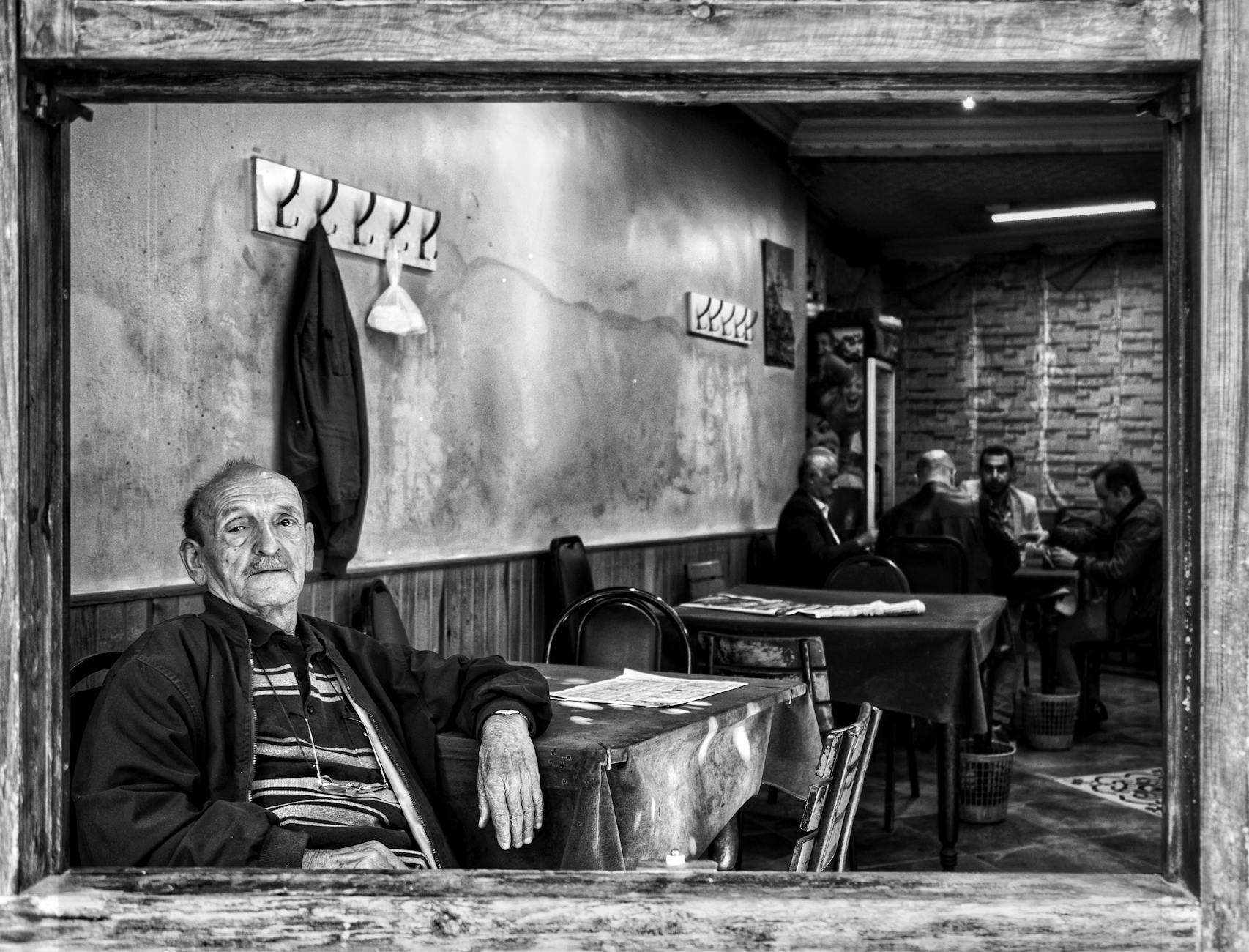
The man in the chair isn’t lazy. He isn’t antisocial. His brain is solving the problem the only way it knows how — by seeking out any environment where his presence is expected, even minimally. The chair becomes a social anchor. Take it away, and what’s left?
Contentment as camouflage
I walk most mornings. Early, before anyone else in my neighborhood is moving. I do it because mornings alone with my thoughts clarify everything — not because I’m avoiding people, but because I’ve learned to tell the difference between solitude that restores and isolation that corrodes. They feel almost identical from the outside.
That distinction matters enormously here. The man in the chair may genuinely enjoy his coffee and his paper. He may find real peace in the ritual. Contentment and loneliness are not opposites. They can coexist in the same body, in the same morning, in the same chair. A person can be grateful for the quiet while also aching, somewhere underneath the gratitude, for a conversation that goes deeper than “the usual?”
This is where our cultural understanding falls short. We treat loneliness as a binary — either you’re lonely or you’re not. Either you’re suffering or you’re fine. The reality, for millions of people over 60, is far more layered. You can build a life that looks perfectly content from every external measure and still carry an unmet need so persistent it shapes your health, your cognition, your sense of why today matters.
In my recent piece on how thriving in retirement has nothing to do with money, I explored the non-financial dimensions that actually predict wellbeing. Social wealth — real, reciprocal, emotionally honest relationships — appears to be among the most important factors. And it’s the one most people invest in least.
What reaching someone actually requires
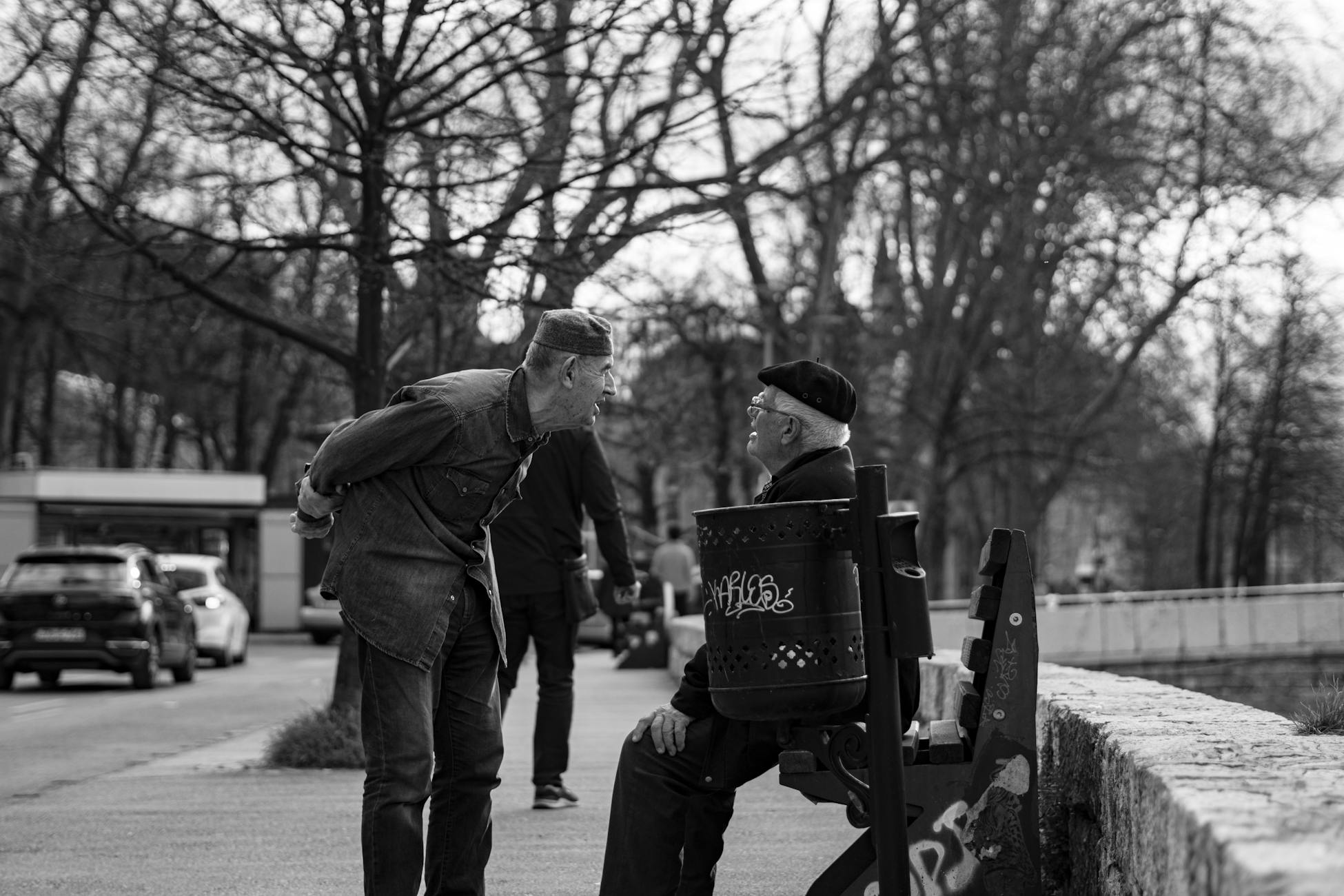
If you recognize this man — maybe he’s your father, your neighbor, your husband, yourself — the instinct is to fix it. Invite him to something. Suggest a group. Push him toward connection.
That instinct, while kind, usually backfires. A person who has been operating in unseen mode for years doesn’t suddenly respond to a group dinner invitation. The exposure feels enormous. The social muscle has atrophied.
What works is smaller and more specific. It’s remembering what he mentioned last week and following up. It’s asking a question that goes one layer below the surface — not “how are you” but “what have you been thinking about lately?” It’s showing up consistently enough that your presence becomes expected, the way the chair is expected.
I believe in showing up for people. I remember birthdays. I send notes. I ask the follow-up question. These aren’t grand gestures. They’re micro-investments in making another person feel seen, and they compound over time in ways that a single dramatic intervention never can.
The man in the chair doesn’t need a social calendar. He needs one person who notices when he’s not there.
The choice that separates fading from flourishing
I’ve watched peers shut down after retirement and I’ve watched peers light up. The difference, as far as I can tell, comes down to a willingness to be uncomfortable — to walk into a room where nobody knows your professional title, to admit you’re struggling with the transition, to ask for something you’ve spent decades providing to others.
That’s a hard pivot for someone whose identity was built on competence and self-sufficiency. Vulnerability feels like weakness. Asking for connection feels like admitting failure.
I filmed a video recently about the retirement fear no one talks about, and it’s exactly this—the way the social structures we’ve relied on for decades can just vanish, leaving us surrounded by people but profoundly alone. The comments on that video broke my heart because so many people saw themselves in it.

But the brain doesn’t care about your pride. It needs what it needs. Research suggests that brain regions responsible for meaning-making, future planning, and social reasoning can be affected by prolonged isolation. Challenging your brain through genuine social engagement, through conversations that require you to think and respond and care, is protective in ways that crossword puzzles and solo golf rounds simply aren’t.
The loneliness that looks like contentment is particularly dangerous because it removes the urgency. Nobody intervenes. Nobody worries. The man himself may not even identify what’s happening until it’s been years — until the café closes, or the barista leaves, or his health shifts in a way that breaks the routine and reveals how little else was holding the structure together.
Growing social disconnection in America is well-documented, but documentation isn’t the same as intervention. Knowing the statistics doesn’t warm the room.
A different kind of showing up
The man in the chair doesn’t need to be fixed. He needs to be found. And sometimes he needs to participate in finding himself — to recognize that the ritual he’s built, comfortable as it is, may be serving as a substitute for something his brain and body actually require.
Real belonging isn’t the same as regular attendance. Regular attendance is a start. A place to build from. But the gap between being a recognized face and being a known person is the gap where this particular loneliness lives.
If you’re reading this and you see yourself in the chair — or you see someone you love — the question worth sitting with isn’t “am I lonely?” Most people in this position would honestly answer no. The better question is: who really knows me right now? Not who recognizes me. Not who would notice my absence from a seat. Who knows what I’m carrying?
If the answer takes too long to arrive, that silence is information.
I’ve put together a free guide called Thrive In Your Retirement that addresses, among other things, how to rebuild the kind of connection that actually registers in your nervous system. Because thriving after 60 requires more than a good routine. It requires being seen by at least one person who isn’t paid to be there.
I built Your Retirement Your Way because I kept meeting people who’d reached this life stage only to discover they’d never actually considered what they wanted it to look like—who they wanted to be when no one was watching. It’s about designing a life that feels full even when the old structures fall away.
The chair will always be available. The question is whether it stays a starting point or becomes the whole story.