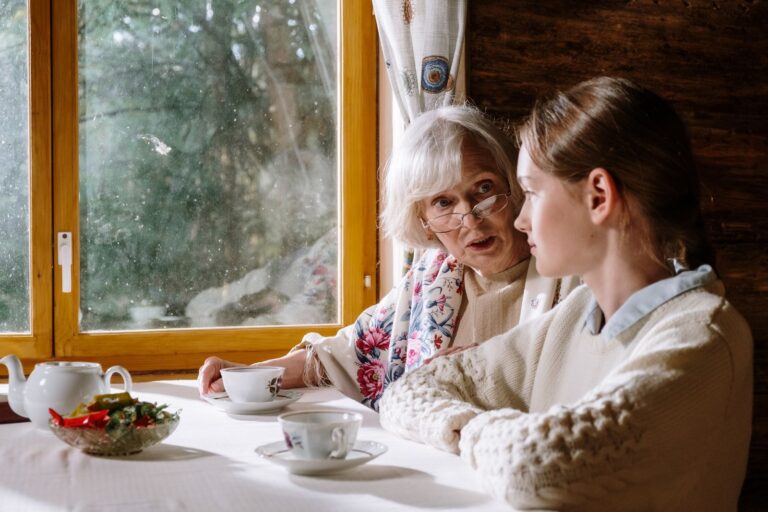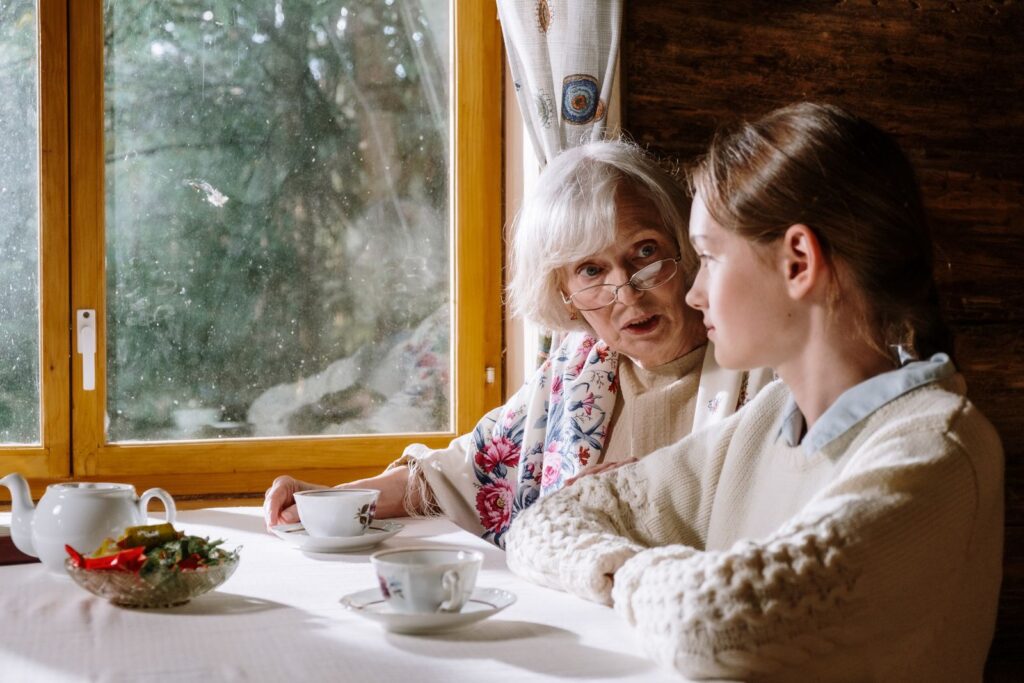
Most of us can remember a handful of conversations that changed something. A long talk with a parent near the end of their life. A late night with an old friend when the real story finally came out. A walk with a grown child where, for once, neither of you was in a hurry.
These are heart-to-hearts: honest, unhurried conversations about what actually matters. They are also the conversations many of us put off. We tell ourselves the timing isn’t right, that it might be awkward, that the other person won’t want to go there. Research on how people talk to each other suggests those fears are often misplaced, and that the conversations themselves matter more than we might think.
We expect deep conversations to go worse than they do
One reason we avoid heart-to-hearts is that we predict they’ll be uncomfortable. A series of experiments by Michael Kardas, Amit Kumar and Nicholas Epley, published in the Journal of Personality and Social Psychology, tested that prediction directly.
Across 12 experiments with more than 1,800 participants, mostly strangers paired up to talk, people were asked to discuss either shallow questions, such as what they thought of the weather, or deeper ones, such as describing a time they had cried in front of another person. Beforehand, they predicted how awkward and how enjoyable the conversation would be. Afterwards, they reported how it had actually gone.
The deep conversations were less awkward than people expected, and they produced more enjoyment and a stronger sense of connection than the shallow ones. Participants also consistently underestimated how interested their partner would be in hearing their deeper thoughts and feelings.
“If you share something meaningful and important, you are likely to get something meaningful and important exchanged in return,” Epley said. These were conversations between strangers. Whether the same holds with people we already know well wasn’t what the experiments tested. With someone we love the stakes feel higher, but it seems a reasonable bet that they, too, would welcome hearing what we really think and feel.
Substance, not just small talk
Everyday chat has its place. But the kind of conversation we have seems to matter for how we feel about our lives.
In 2010, a team led by psychologist Matthias Mehl recorded short snippets of people’s everyday conversations to estimate how much time they spent alone, how much they talked, and how much of their talk was small talk or something more substantive. A larger follow-up published in Psychological Science in 2018, led by Anne Milek, combined the original sample with three further groups of adults, giving a total of 486 participants. People who were more satisfied with their lives spent less time alone, talked more, and had more substantive conversations.
The follow-up also found something reassuring: small talk was not linked to lower life satisfaction. Chatting about the weather does no harm. It’s the meaningful conversations that seem to add something, and the study can’t say which way the link runs. Happier people may simply be more likely to talk about things that matter.
Closeness can grow faster than we think
Heart-to-hearts don’t need decades of history behind them. In a well-known 1997 study, Arthur Aron and colleagues paired people who didn’t know each other and gave them 45 minutes of questions that gradually became more personal. Compared with pairs who made small talk for the same time, those who worked through the escalating, personal questions reported feeling closer.
Related Stories from Jeanette Brown
- Asking more questions and talking a little less about ourselves can make conversations more meaningful, and research suggests people may like us more for it
- Our children never stop needing to be heard, and research suggests that listening well to grown children may matter more than the advice we’re tempted to give
- When someone you love starts pulling away as they age, it isn’t always a worry, but some changes are worth noticing, and reaching out may mean more than you think
The list later became famous as the “36 questions,” but the principle behind it is simple. Closeness grows when two people take turns being a little more open, and each response invites the next. That may offer a useful starting point for a grandparent and a teenage grandchild, or for two old friends who haven’t talked properly in years, although the study did not test those particular relationships.
Relationships and a long life
The reason heart-to-hearts matter goes beyond a pleasant afternoon. The Harvard Study of Adult Development has followed the same group of men since 1938, starting with 724 participants, and has since added their children. Its best-known finding is about relationships. As the study’s director, psychiatrist Robert Waldinger, has put it: “Good relationships keep us happier and healthier.” The people who were most satisfied in their relationships at age 50 were the healthiest at age 80.
The study began with men only, from Boston, and like most long-running research it shows associations rather than proof. But satisfying relationships rarely run on small talk alone. They are built, at least in part, on the conversations where people say what they really think and feel.
The heart-to-hearts worth having
Later life brings its own set of conversations that are easy to postpone:
- With a partner, about how retirement is really going, what each of you wants from the years ahead, and what you would want if one of you became unwell.
- With grown children, about the things you have never quite said, the family stories they may not know, or old hurts that could still be put right.
- With old friends, to catch up properly rather than just swapping news.
- About the end of life, which many families avoid until a crisis forces it.
That last one is especially common. In a national audit of the health records of more than 4,000 older people, Advance Care Planning Australia found that about 70% of Australians aged 65 and over had no advance care planning document, and that many of the documents that did exist were incomplete or not legally binding. Paperwork is only part of it. The conversation with the people who might one day have to make decisions for you is just as important, and it is far easier to have while everyone is well.
Advance Care Planning Australia’s guidance suggests talking with the person you would want to make decisions for you about what is important to you and any preferences you have, sharing copies of any documents with family and your GP, and revisiting the conversation when health or circumstances change. Framed that way, it becomes less a conversation about dying and more one about what a good life means to you, right to the end.
How to start a heart-to-heart
There is no script, but a few things tend to help:
- Pick the right moment. A quiet time with no rush works better than the middle of a busy family gathering. Some people find it easier to talk side by side, on a walk or a drive, than face to face across a table.
- Go first. Sharing something of your own, even something small, makes it easier for the other person to open up. That was the pattern in both the Aron and Epley research.
- Ask open questions. “What’s been on your mind lately?” or “What do you miss most about work?” leave room for a real answer in a way that “How are you?” rarely does.
- Listen more than you fix. Most people want to be heard more than they want advice.
- Don’t expect one conversation to do everything. A heart-to-heart can open a door. The next one is usually easier.
Better than we expect
Heart-to-hearts can feel like a risk. We worry about awkward silences, about saying the wrong thing, about the other person not wanting to go there. The research suggests we overestimate those risks and underestimate the rewards.
The conversation you have been putting off may well be the one the other person has been hoping for.
Related Stories from Jeanette Brown
- Asking more questions and talking a little less about ourselves can make conversations more meaningful, and research suggests people may like us more for it
- Our children never stop needing to be heard, and research suggests that listening well to grown children may matter more than the advice we’re tempted to give
- When someone you love starts pulling away as they age, it isn’t always a worry, but some changes are worth noticing, and reaching out may mean more than you think
Navigating Life’s Transitions with Jeanette Brown
Jeanette Brown is here to guide you through life’s transitions.
On her YouTube channel, she offers practical advice and supportive strategies to help you manage personal and career changes effectively.
Her videos focus on fostering resilience and equipping you with the skills needed for self-coaching.
Subscribe here to start mastering your life transitions today.
Related Stories from Jeanette Brown
- Asking more questions and talking a little less about ourselves can make conversations more meaningful, and research suggests people may like us more for it
- Our children never stop needing to be heard, and research suggests that listening well to grown children may matter more than the advice we’re tempted to give
- When someone you love starts pulling away as they age, it isn’t always a worry, but some changes are worth noticing, and reaching out may mean more than you think
Feeling lost or unfulfilled?
Jeanette Brown’s “Your Life Review” video is designed to help you identify key areas in your life that need improvement.
Through a simple yet powerful exercise, you’ll assess your current satisfaction across different life domains, allowing you to pinpoint specific areas for growth.
This life review forms the foundation for creating a clear vision, setting aligned goals, and developing a personalized action plan.
Take the first step towards a more satisfying life. Start your Life Review now and gain immediate access to this transformative exercise.