Most people like to feel in charge of their lives. They plan, prepare and try to steer events in the direction they want. Yet anyone who has lived a few decades knows how often life ignores the plan. Health changes without warning. Children make their own choices. Markets rise and fall. Loved ones fall ill.
Research distinguishes between what we can actually influence, how much control we believe we have, and how we adapt when a goal becomes unreachable. These ideas overlap, but each asks a different question. Together they offer ways to think about directing effort as circumstances change.
The illusion of control
In 1975, psychologist Ellen Langer, then at Yale University, published a series of studies in the Journal of Personality and Social Psychology under the title “The Illusion of Control.” She was interested in why people so often behave as if they can influence events that are purely down to chance.
In one well-known experiment, office workers were offered $1 tickets in a lottery. Some were allowed to choose their own ticket, while others were simply handed one. Later, the participants were asked how much they would want in exchange for giving up their ticket. Those who had chosen their ticket asked, on average, for more than $8. Those who had been handed a ticket asked for about $2. Every ticket had exactly the same chance of winning, yet having chosen it seemed to make people feel it was more likely to succeed.
Langer argued that when chance situations include features that normally signal skill, such as choice, familiarity or practice, people tend to feel more in control than the odds justify.
The interpretation has been influential, especially in discussions of gambling. But in 2021, Joowon Klusowski, Deborah Small and Joseph Simmons reported 17 experiments involving more than 10,000 participants that directly challenged it. Choosing among functionally identical options generally did not create a belief that winning was more likely. Preferences for a particular ticket and pre-existing beliefs offered alternative explanations for earlier findings.
Why feeling in control still matters
Believing we can influence our lives is a different question from believing that choosing a lottery ticket changes its odds. Research on perceived control examines that broader sense of agency.
The Midlife in the United States (MIDUS) study, led for many years by psychologist Margie Lachman of Brandeis University, has followed thousands of adults. In that research, people with a stronger sense of control over their lives reported greater life satisfaction and a more optimistic outlook. One analysis of more than 6,000 participants aged 25 to 75 found that a strong sense of control was linked with lower risk of dying over 14 years among people with less education, even after accounting for health, health habits and mood.
The same research shows that, on average, the sense of control declines with age, especially in areas such as health and memory. That makes sense. Later life often brings changes that genuinely cannot be undone. The question then becomes how to keep a healthy sense of agency when some things are out of reach.
Two kinds of control
Psychologists Jutta Heckhausen and Richard Schulz have spent decades studying this question. Their life-span theory of control distinguishes between two broad strategies.
Primary control means changing the world to fit personal goals: working harder, finding solutions, seeking help or trying a different approach.
Secondary control means changing oneself to fit the world: adjusting expectations, finding a new way to see a situation, or letting go of goals that are no longer realistic.
Related Stories from Jeanette Brown
- Failure can be a stepping stone, but research suggests it works that way mainly for those who keep going and learn from each attempt
- When self-worth depends on work, retirement can be harder emotionally, a Swedish study suggests
- The phrases that put people at ease help them feel understood and cared for, and research offers clues about why they matter
Heckhausen and Schulz argue that primary control works best when opportunities are plentiful, such as in early adulthood. As people age and some opportunities narrow, secondary control strategies such as positive reappraisal become increasingly useful. The skill lies in knowing which approach a situation calls for.
A 2016 study by Schilling and colleagues followed 364 older adults diagnosed with age-related macular degeneration, a condition that gradually and irreversibly affects vision. Changes in how they used both kinds of control, including selectively investing effort in what still mattered and adjusting their outlook, were linked with changes in their happiness and depressive symptoms over time.
Knowing when to let go
Psychologist Carsten Wrosch of Concordia University in Montreal has studied what happens when people face goals that have become unattainable. His research suggests that the ability to step back from such goals, and to take up new ones, matters for both wellbeing and health.
In a 2007 report in Personality and Social Psychology Bulletin, Wrosch and colleagues described three studies linking the ability to disengage from unattainable goals with better self-reported health and healthier daily patterns of the stress hormone cortisol. Being able to take up new goals was linked with positive feelings and a greater sense of purpose in life.
A later longitudinal study by Wrosch and colleagues followed older adults as their physical abilities changed. Among those who experienced increasing functional disability, the capacity to withdraw effort and commitment from goals that had become unattainable helped protect them from long-term increases in depressive symptoms.
Letting go, in this research, does not mean giving up on life. It means recognising when continued struggle is unlikely to succeed and redirecting energy toward goals that are still within reach. A keen tennis player whose knees no longer allow singles might switch to doubles, lawn bowls or coaching grandchildren. A traveller who can no longer manage long-haul flights might explore closer to home.
Finding the balance
The research points to a balanced approach to control in later life:
- Act where action helps. Many things remain within personal influence, such as exercise, diet, medical check-ups, staying in touch with friends and planning finances. A strong sense of control in these areas is linked with better outcomes.
- Accept what cannot change. Chronic illness, losses and other people’s choices often lie beyond personal control. Constantly fighting them can drain energy and add to distress.
- Adjust goals rather than abandon purpose. When one goal becomes unreachable, finding a meaningful alternative can preserve a sense of direction.
- Watch for false control. Being aware that chance plays a large role in many outcomes, from lotteries to markets, can protect against costly overconfidence.
- Reframe where possible. Looking for new meaning in changed circumstances, such as more time with family after giving up a demanding hobby, is a form of control in itself.
What the research cannot say
Many of the studies described here are correlational, so they cannot prove that a sense of control or goal disengagement causes better health. People in better health may simply feel more in control and find it easier to adapt. Much of the research comes from the United States and Canada, and individual circumstances vary widely. Some situations, such as abuse or serious illness, call for active help rather than acceptance.
A wiser kind of control
A useful starting point is to ask what action could realistically change, what help is available and whether a goal still fits your circumstances. The research on perceived control and goal adjustment suggests that both purposeful effort and flexibility can matter to wellbeing. Different situations call for different responses.
Research sources
- Langer, the illusion of control (1975)
- Klusowski, Small and Simmons, choice and control (2021)
- Turiano and colleagues, perceived control and mortality (2014)
- Schilling and colleagues, adaptation to vision loss (2016)
- Wrosch and colleagues, disengaging from unattainable goals (2007)
- Heckhausen and Schulz, life-span theory of control (1995)
- Dunne, Wrosch and Miller, disability and goal adjustment (2011)
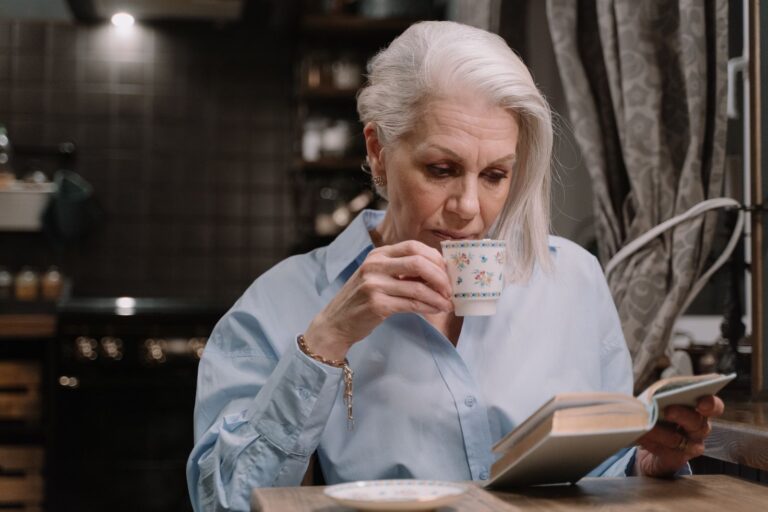
Photo: Mario Amé / Pexels (representative image)
Related Stories from Jeanette Brown
- Failure can be a stepping stone, but research suggests it works that way mainly for those who keep going and learn from each attempt
- When self-worth depends on work, retirement can be harder emotionally, a Swedish study suggests
- The phrases that put people at ease help them feel understood and cared for, and research offers clues about why they matter
Navigating Life’s Transitions with Jeanette Brown
Jeanette Brown is here to guide you through life’s transitions.
On her YouTube channel, she offers practical advice and supportive strategies to help you manage personal and career changes effectively.
Her videos focus on fostering resilience and equipping you with the skills needed for self-coaching.
Subscribe here to start mastering your life transitions today.