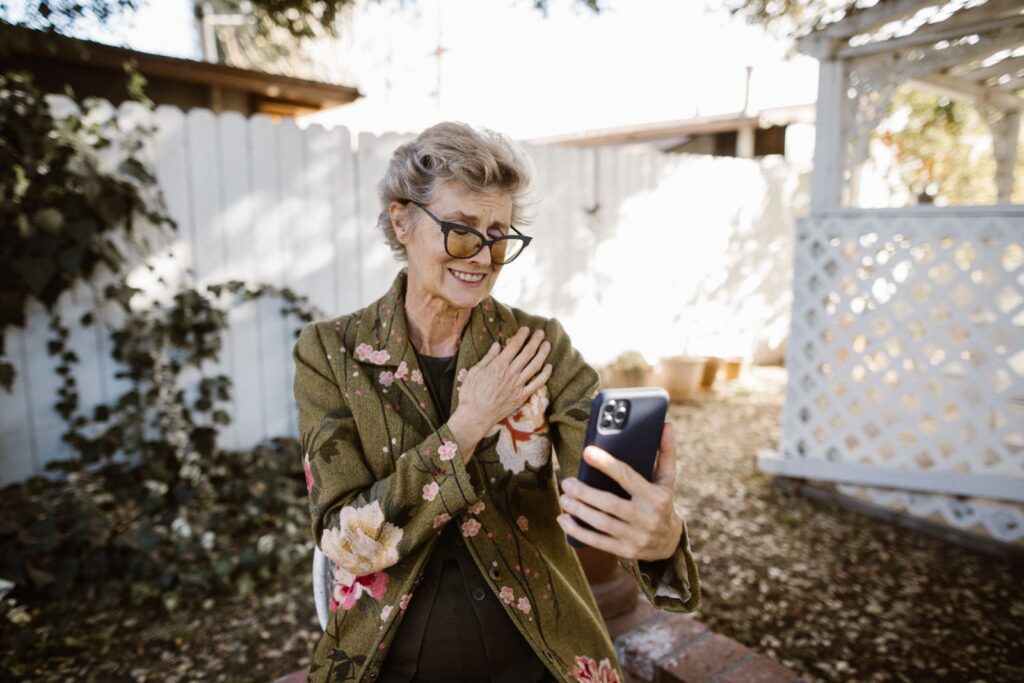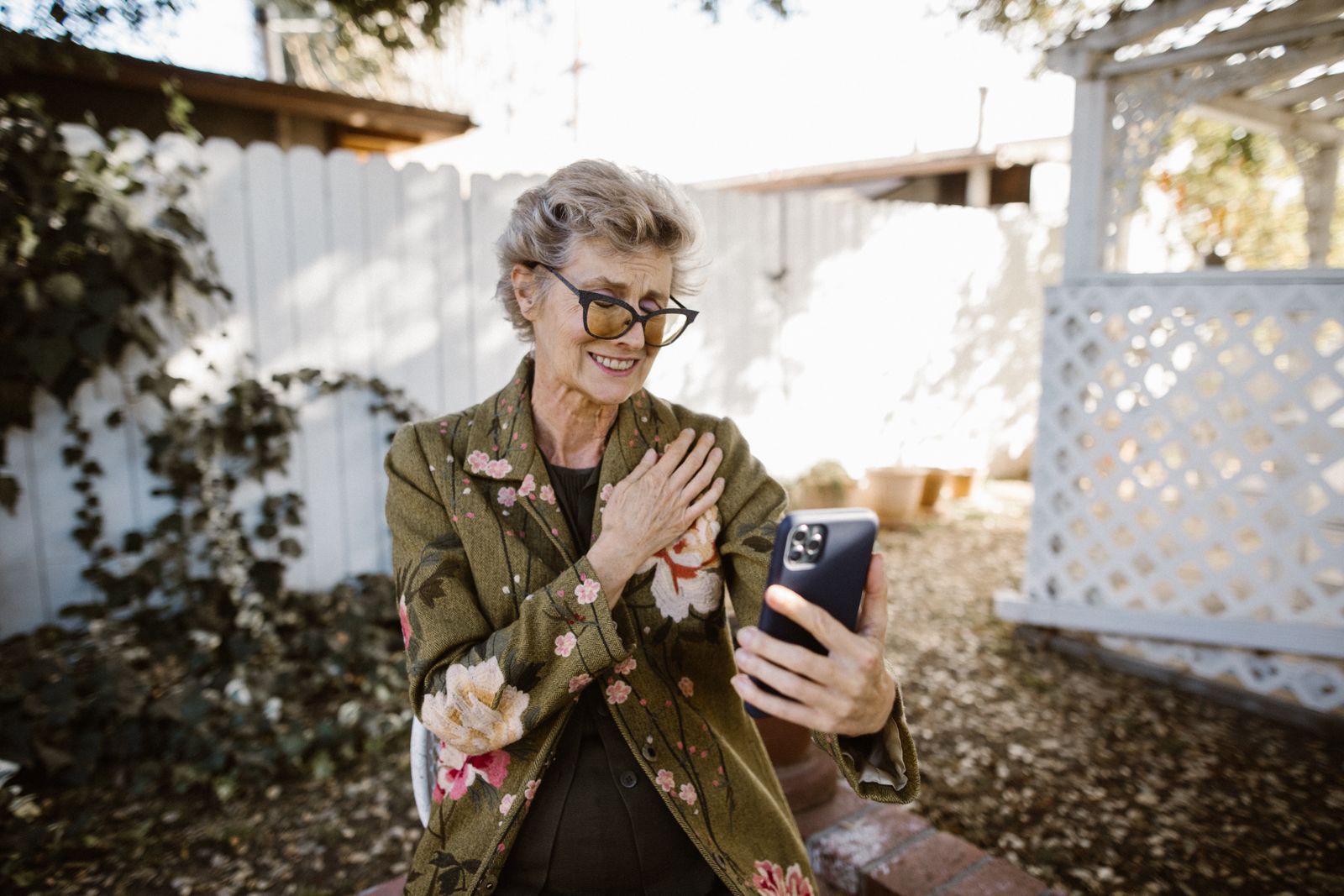
Social media has become part of daily life for most Australians, and older Australians are no exception. Many of us now check Facebook over morning coffee, swap photos with grandchildren on Instagram or WhatsApp, and keep up with old friends, community groups and the news through a screen. It is easy to feel that these platforms are simply something that happens to us: a stream of posts, opinions and advertisements that washes over us whether we like it or not.
Research offers a mixed picture. Social media can bring connection, enjoyment, comparison and frustration, with different effects for different people. Both the time we spend online and what we do there deserve attention.
Older Australians are very much online
The idea that social media is mainly for the young is out of date. In 2024, the aged care provider Benetas surveyed just over 1,000 Australians aged 65 and over about their use of technology. It found that 76 per cent of the women and 62 per cent of the men were on social media, and about one in two older Australians used it every day.
For many, the benefits are real. Social media can keep grandparents in touch with grandchildren who live interstate or overseas, reconnect old school friends and link people with shared interests, from gardening to local history. For someone living alone or with limited mobility, it can be a genuine lifeline.
The same survey found that 80 per cent of respondents worried about the security of their personal information online, and 17 per cent reported losing money to an online, email or text scam. These figures describe the surveyed group and underline the value of keeping personal and financial information secure.
Scrolling versus connecting
One of the most useful distinctions in the research is between passive and active use. Passive use means scrolling through other people’s posts, photos and updates without interacting. Active use means posting, commenting, sending messages and having conversations.
In a 2015 study published in the Journal of Experimental Psychology: General, psychologists Philippe Verduyn of the University of Leuven in Belgium and Ethan Kross of the University of Michigan examined how these two styles affected people’s moods. In a laboratory experiment, people who were asked to browse Facebook passively felt worse over time than those asked to use it actively. In a second study, the researchers texted participants several times a day to track their Facebook use and feelings in everyday life.
Passive scrolling predicted declines in how good people felt over the following hours, and the main reason appeared to be envy. Watching a steady stream of other people’s holidays, celebrations and achievements made participants feel worse about their own lives. Active use, such as messaging friends and commenting on posts, did not have the same effect. The researchers also noted that people spent most of their time on Facebook scrolling passively rather than interacting.
These findings describe particular studies of Facebook. A 2024 review of 141 studies found mostly small or negligible associations between active or passive use and wellbeing. Effects varied, and both kinds of use were associated with feeling supported online. Scrolling and interacting can each be enjoyable or upsetting depending on the person, content and circumstances.
What happens when people cut back
Other studies have tested what happens when people deliberately change how much they use social media.
In 2018, psychologist Melissa Hunt and colleagues at the University of Pennsylvania asked 143 university students either to carry on as usual or to limit their use of Facebook, Instagram and Snapchat to 10 minutes per platform per day, about 30 minutes in total, for three weeks. Those who cut back showed significant reductions in loneliness and symptoms of depression compared with those who did not. Interestingly, both groups reported less anxiety and less fear of missing out by the end of the study, which the researchers put down to the simple act of paying attention to their own habits.
A larger experiment by economists Hunt Allcott, Luca Braghieri, Sarah Eichmeyer and Matthew Gentzkow, published in the American Economic Review in 2020, paid a group of American Facebook users to deactivate their accounts for four weeks before the 2018 US midterm elections. Compared with people who kept using the platform, those who stepped away spent more time on offline activities, including socialising with friends and family. They also reported small but significant improvements in happiness, life satisfaction, depression and anxiety. Many of them used Facebook less after the experiment ended, suggesting the break helped them reconsider how much they really valued it.
Related Stories from Jeanette Brown
- Writing your own obituary sounds morbid, but research suggests facing the end can sharpen what matters most in the years you have left
- If you’d rather think a problem through than be handed the answer, research suggests that habit of mind may be doing you more good than you realise
- What the book,The Age Rebellion, made me think about the four ingredients of a fulfilling retirement
The student trial and the broader Facebook experiment were not designed specifically to establish what works for older Australians. Reducing use helped some participants, while the wider evidence gives us reason to pay attention to our own experiences.
We are what we pay attention to
There is an old idea, found in many philosophical and religious traditions, that we become what we repeatedly pay attention to. Social media puts that idea to the test every day. What we choose to look at, share, like and comment on shapes our mood, our view of the world and, over time, our sense of ourselves.
Features such as notifications and personalised feeds can make it easy to spend longer online than we intended. It can help to notice which parts of our use feel enjoyable and which leave us tired or unsettled.
Choices that make a difference
Drawing on the research, here are some practical choices worth considering.
Make room for the contact you enjoy. A message, video call or thoughtful comment may help you keep in touch. Notice which online activities leave you feeling connected.
Notice how you feel. The Pennsylvania researchers suggested that monitoring habits might help explain improvements seen in both groups, but the study did not establish that explanation. You can use your own experience to decide whether to mute, unfollow or leave a page that regularly upsets you.
Set gentle limits. A set time each day, or a rule of no scrolling at meals or in bed, can stop social media crowding out sleep, conversation and other things you enjoy.
Remember what you are seeing. Most people post their highlights, not their hard days. Comparing your everyday life with someone else’s best moments is rarely a fair contest.
Protect yourself. Be wary of messages asking for money or personal details, even if they seem to come from someone you know. Free government resources such as the eSafety Commissioner’s Be Connected program can help older Australians build confidence and stay safe online.
Let it help you make plans. Social media can help you arrange a coffee, join a local group or plan a visit. Online contact can also matter in its own right, especially when distance or mobility makes meeting difficult.
Defined by our choices
Social media is not going away, and for many older Australians it brings genuine joy and connection. But it is not neutral. Every time we pick up the phone, we make small choices about where our attention goes, whether we connect or simply watch, and whether we let the feed shape us or shape our use of it.
Try noticing what you enjoy, what feels draining and whether time online is crowding out other things you value. Small adjustments can help you find a pattern that suits your life.
Related Stories from Jeanette Brown
- Writing your own obituary sounds morbid, but research suggests facing the end can sharpen what matters most in the years you have left
- If you’d rather think a problem through than be handed the answer, research suggests that habit of mind may be doing you more good than you realise
- What the book,The Age Rebellion, made me think about the four ingredients of a fulfilling retirement
Feeling lost or unfulfilled?
Jeanette Brown’s “Your Life Review” video is designed to help you identify key areas in your life that need improvement.
Through a simple yet powerful exercise, you’ll assess your current satisfaction across different life domains, allowing you to pinpoint specific areas for growth.
This life review forms the foundation for creating a clear vision, setting aligned goals, and developing a personalized action plan.
Take the first step towards a more satisfying life. Start your Life Review now and gain immediate access to this transformative exercise.
Related Stories from Jeanette Brown
- Writing your own obituary sounds morbid, but research suggests facing the end can sharpen what matters most in the years you have left
- If you’d rather think a problem through than be handed the answer, research suggests that habit of mind may be doing you more good than you realise
- What the book,The Age Rebellion, made me think about the four ingredients of a fulfilling retirement
Navigating Life’s Transitions with Jeanette Brown
Jeanette Brown is here to guide you through life’s transitions.
On her YouTube channel, she offers practical advice and supportive strategies to help you manage personal and career changes effectively.
Her videos focus on fostering resilience and equipping you with the skills needed for self-coaching.
Subscribe here to start mastering your life transitions today.