“Always do your best” sounds like something we learnt at school, and most of us did. It was written on report cards and repeated at sports days. For a long time it probably meant something fairly simple: try hard, don’t give up, aim high.
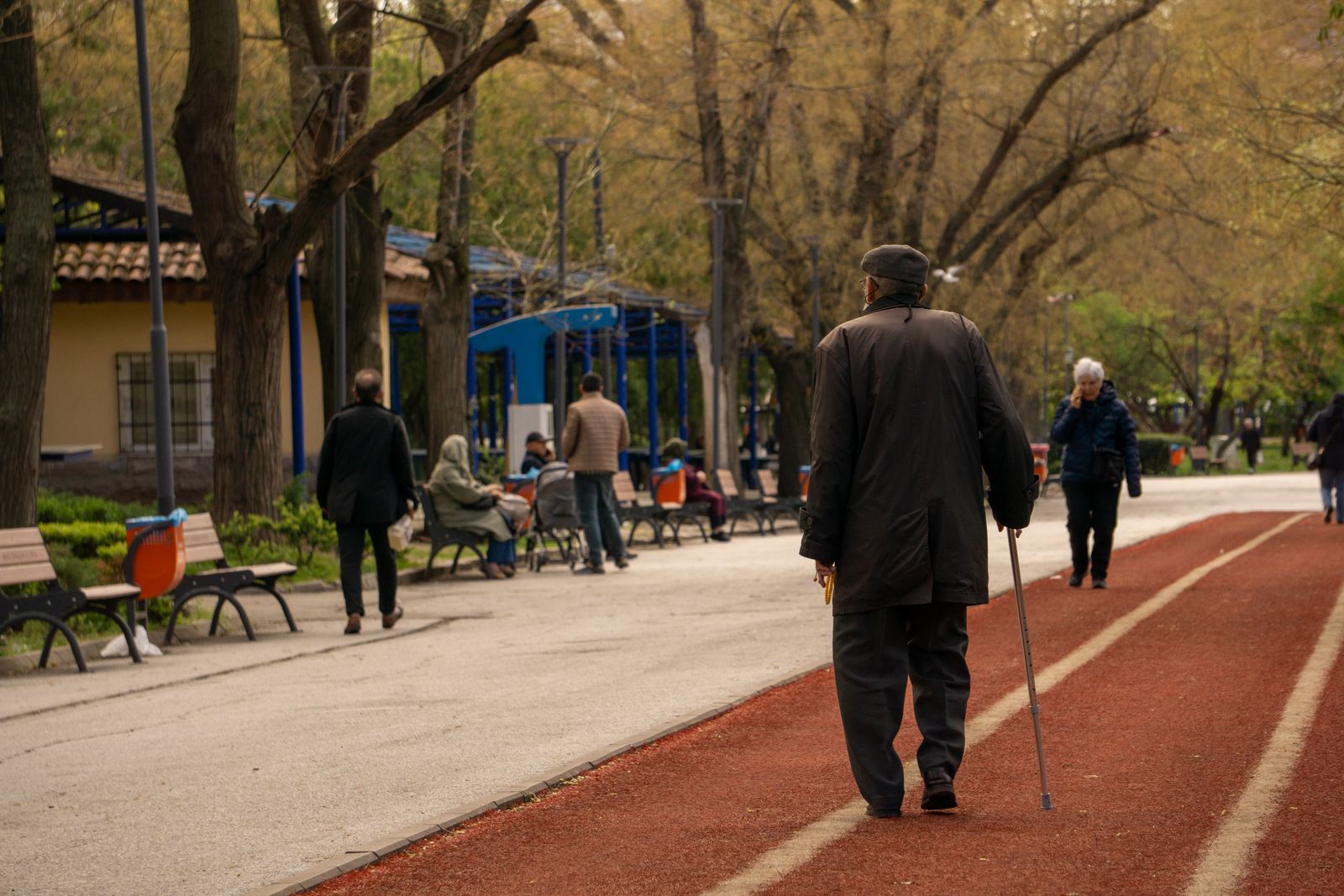
Later in life, the same advice can start to feel complicated. What does doing your best mean when your knees won’t manage the bushwalk you used to do, when you’re caring for a partner who is unwell, or when a bad night’s sleep has left you with half the energy you had yesterday? Is a slower, smaller version of something still your best, or is it a kind of giving up?
Some of the most useful answers come from an unlikely mix of sources: a popular self-help book, a Greek philosopher who was once a slave, a famous pianist and a handful of studies on how older people think about themselves.
Your best is allowed to change
The phrase “always do your best” is the fourth of the four principles in Don Miguel Ruiz’s 1997 book The Four Agreements. What makes his version helpful is that it builds change into the definition.
“Your best will be different when you are healthy as opposed to sick,” he writes in a passage published by his publisher, Amber-Allen. “When you wake up refreshed and energized in the morning, your best will be better than when you are tired at night.” His point is that doing your best is not about reaching a fixed standard. It is about giving what you genuinely have on a given day, no more and no less.
That small shift matters. If “my best” means “what I could do at 45,” then almost everything after 70 will feel like falling short. If it means “what I can do today, with the body and the energy I have today,” then a gentle walk around the block after an illness can be every bit as much your best as a half-marathon once was.
Ruiz also suggests that if you don’t manage it one day, you simply begin again the next.
An old idea: play the part you’ve been given
The idea is far older than Ruiz. Almost 2,000 years ago, the Stoic philosopher Epictetus, who was born into slavery and later taught in Greece, is remembered for a distinction that still rings true. The Enchiridion, a short handbook of his teachings, opens with it. In George Long’s 19th-century translation, it begins: “Of things some are in our power, and others are not.” Our opinions, desires and actions are in our power, he argued. Our bodies, property and reputation, in the end, are not.
Later in the same handbook he compared life to a play. “Remember that thou art an actor in a play, of such a kind as the teacher (author) may choose,” he wrote, “if short, of a short one; if long, of a long one.” Whether the part is that of a poor man, a lame man or a magistrate, “this is your duty, to act well the part that is given to you; but to select the part, belongs to another.”
Read today, that is a fairly good description of doing your best no matter your situation. We rarely choose the illness, the loss or the change in circumstances. What remains ours is how well we play the part we’ve been handed.
Doing less, but doing it well
Psychologists have found a practical version of the same idea. In 1990, Paul and Margret Baltes described a model of successful ageing called selective optimisation with compensation. In plain terms: choose what matters most, put your effort into getting better at those things, and find new ways around the losses that come with age.
Psychology textbooks often illustrate it with the pianist Arthur Rubinstein, who kept performing on stage until the age of 89. As his speed declined, he chose a smaller number of pieces, practised them more often, and played the slow passages more slowly than he had when he was young, so that the fast passages still sounded fast by contrast.
Related Stories from Jeanette Brown
- A fulfilling retirement needs both pleasure and purpose, something my former colleague discovered after 18 months of travel
- We’re told to keep moving as we age to protect our bodies, but Kelly McGonigal’s work suggests it may protect something equally precious — our capacity for joy
- We assumed happiness and unhappiness sat at opposite ends of the same scale, the way hot and cold do on a thermometer — brain imaging research suggests they are better understood as two instruments playing at the same time
Rubinstein wasn’t doing what he did at 30. He was doing his best at 85. The same approach works on a much smaller scale: one or two hobbies kept up properly instead of six done half-heartedly, a shorter walk taken every day, a hearing aid or a walking pole used without embarrassment so that the things you love stay possible.
Your best is not the same as perfect
There is a version of “always do your best” that turns into something harsher: never good enough, never finished, never allowed to rest. That version may carry a cost.
In a study published in the Journal of Health Psychology in 2009, Prem Fry and a colleague followed 450 people aged 65 to 87 in southern Alberta, Canada, for about six and a half years. Those who scored high on perfectionism, with a strong drive to be perfect and an all-or-nothing way of thinking, were about 51 percent more likely to have died during that time than those with more reasonable expectations of themselves. People high in conscientiousness, extraversion and optimism, on the other hand, had a lower risk.
It was one study, it shows an association rather than proof of cause, and perfectionism may travel with other things that affect health. But it suggests a useful distinction. Conscientiousness, caring about doing things properly, went along with a lower risk. Perfectionism, demanding flawlessness, went the other way. Doing your best sits much closer to the first than the second.
Being kind to yourself matters most when things are hard
If perfectionism is the harsh version of doing your best, self-compassion is the gentle one: treating yourself with the understanding you would offer a friend who was struggling.
In two studies published in the journal Self and Identity in 2012, a team at Duke University that included psychologist Mark Leary looked at self-compassion among older adults. In the first, with 132 people aged 67 to 90, those in good physical health reported high wellbeing whatever their level of self-compassion. But among those in poorer health, self-compassion was linked to greater wellbeing. In other words, it mattered most for the people dealing with pain, illness or medical problems.
In the second study, with 71 people aged 63 to 97, those who were more self-compassionate were more willing to use a walker when they needed one and less bothered about needing help. Both studies were snapshots in time and relied on people’s own reports, so they can’t show that self-compassion causes better wellbeing. But the pattern fits Ruiz’s point neatly. Accepting that your best has changed, rather than berating yourself for it, seems to make it easier to keep going.
What doing your best can look like
Put together, these ideas suggest a few questions worth asking on any given day:
- What is in my control right now? Not the diagnosis or the weather, but how I spend this morning and how I treat the people around me.
- What matters most? If energy is limited, choose the one or two things worth spending it on.
- What would help me do it well? A rest beforehand, a different time of day, a piece of equipment, or someone to share the load.
- Would I say this to a friend? If the voice in your head is harsher than anything you would say to someone you love, it is probably not helping.
For someone caring for an ill partner, doing their best might mean accepting help with the shopping so there is energy left for conversation. For someone recovering from surgery, it might mean doing the boring physiotherapy exercises properly. For someone who is simply having a flat day, it might mean a cup of tea in the garden and an early night, with a fresh start tomorrow.
A best that fits the day
The old school-report version of “do your best” measured us against a fixed standard. The more forgiving version, found in Epictetus, in Ruiz and in the research on ageing well, measures us against the day we are actually having.
That is not lowering the bar. It is putting it where it belongs, and then reaching for it with whatever we have.
Related Stories from Jeanette Brown
- A fulfilling retirement needs both pleasure and purpose, something my former colleague discovered after 18 months of travel
- We’re told to keep moving as we age to protect our bodies, but Kelly McGonigal’s work suggests it may protect something equally precious — our capacity for joy
- We assumed happiness and unhappiness sat at opposite ends of the same scale, the way hot and cold do on a thermometer — brain imaging research suggests they are better understood as two instruments playing at the same time
Feeling lost or unfulfilled?
Jeanette Brown’s “Your Life Review” video is designed to help you identify key areas in your life that need improvement.
Through a simple yet powerful exercise, you’ll assess your current satisfaction across different life domains, allowing you to pinpoint specific areas for growth.
This life review forms the foundation for creating a clear vision, setting aligned goals, and developing a personalized action plan.
Take the first step towards a more satisfying life. Start your Life Review now and gain immediate access to this transformative exercise.