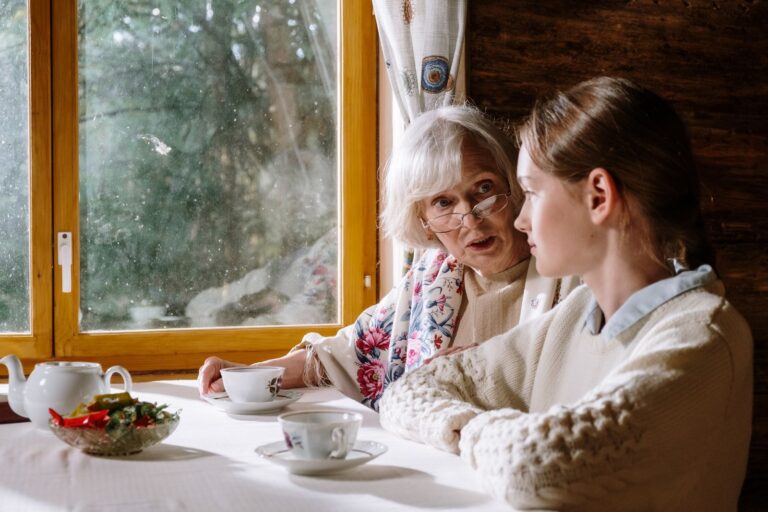
Most of us know the feeling, even if it’s rare. You’re with someone and there’s no need to explain yourself. They laugh at the same things, notice when something’s wrong without being told, and don’t seem to mind the version of you that turns up on a bad day. You can simply be yourself.
Finding people like that can get harder with age. Work friendships fade after retirement, old friends move away or pass on, and the easy ways of meeting people that came with school, sport or young children are long gone. Yet the evidence suggests these friendships matter more, not less, as we get older, and that there are some practical ways to find them.
Why friends who get you matter more with age
In a 2017 study published in the journal Personal Relationships, psychologist William Chopik of Michigan State University analysed survey data from 271,053 people of all ages in nearly 100 countries. Both family and friendships were linked to better health and happiness, but only friendships became a stronger predictor at older ages. A second study of 7,481 older Americans found that supportive friendships went with greater happiness, while friendships that caused strain went with more chronic illness.
“Keeping a few really good friends around can make a world of difference for our health and well-being,” Chopik said. Like most research of its kind, the study shows associations rather than proof. But the message is clear enough: in later life, the quality of our friendships counts.
What being understood actually does
Feeling understood can change how an interaction feels. In a small study published in 2014, Morelli and colleagues showed young adults responses from people who supposedly had watched them describe important life experiences. Participants liked those who made them feel understood more. The brain-imaging analysis involved just 19 young adults, so it cannot establish how friendships work in later life. Still, the experience of warming to someone who seems to understand us will be familiar to many readers.
Relationship researchers have a name for what those understanding responses do. They call it responsiveness: the words and gestures that make someone feel, in the definition used by researcher Harry Reis and colleagues, “supported, cared for, and validated”. It is, in effect, the scientific description of someone who gets you.
Being yourself comes more easily with the right people
There’s a reason you can relax around some people and not others. In a 2017 study in Personality and Social Psychology Bulletin, Venaglia and Lemay asked 176 people to report on more than 4,600 everyday social interactions as they happened. Interactions with close partners went with a better mood than those with more distant ones, and the difference was explained by two things: people felt more accepted and more authentic, more like their true selves. They were also warmer and less shy.
So being yourself and being close tend to go together. The question is how to find the people who make that possible.
1. Go where people like you already are
Friends tend to see the world in similar ways, sometimes remarkably so. In a 2018 study in Nature Communications, Carolyn Parkinson, Adam Kleinbaum and Thalia Wheatley at Dartmouth College mapped the friendships among 279 graduate students, then scanned the brains of 42 of them as they watched the same set of videos. Friends’ brains responded most similarly, more so than friends of friends, and more again than people further apart in the network.
The researchers couldn’t say whether people choose friends who think like them or become more alike over time, and it was a small group of young students. But the practical lesson is sensible: you’re more likely to meet someone who gets you in a place built around something you genuinely care about. That might be a walking club, a choir, a book group, a community garden, a volunteer program or a class in a subject you love. Shared interests give you something to talk about from the start, and they tend to bring together people who see the world in similar ways.
2. Give it time, and make it relaxed time
Close friendships take longer to build than most of us expect. In research published in the Journal of Social and Personal Relationships in 2018, Jeffrey Hall of the University of Kansas studied adults who had recently moved and were looking for new friends, along with first-year university students. He estimated that it takes about 40 to 60 hours together to go from acquaintance to casual friend, 80 to 100 hours to become friends, and more than 200 hours to become close friends.
Related Stories from Jeanette Brown
- Asking more questions and talking a little less about ourselves can make conversations more meaningful, and research suggests people may like us more for it
- A heart-to-heart can feel daunting, but research suggests the deeper conversations we put off tend to go better than we expect, and matter more than we think
- Our children never stop needing to be heard, and research suggests that listening well to grown children may matter more than the advice we’re tempted to give
Not all time counted equally. Casual, low-pressure time, such as hanging out, joking and chatting, mattered most. Time spent working together counted for less. “You can’t snap your fingers and make a friend,” Hall said.
His participants were younger than most retirees, but the principle travels well. Regular contact helps, so a weekly group is often better than a one-off event. And moving from the activity to something more social, a coffee after the walk or lunch after the class, can turn a friendly face into a friend.
3. Let people see the real you, a little at a time
It is hard to be understood if you never let anyone in. Many of us hold back, worried that opening up will feel awkward or that other people won’t be interested. Research suggests those worries are overblown.
In a series of experiments by Michael Kardas, Amit Kumar and Nicholas Epley, people who had deeper conversations with strangers found them less awkward and more connecting than they expected, and consistently underestimated how interested the other person would be. “If you share something meaningful and important, you are likely to get something meaningful and important exchanged in return,” Epley said.
That doesn’t mean telling your life story on the first morning tea. It means letting a conversation go a little deeper than the weather, sharing something real about yourself, and seeing whether the other person meets you there.
4. Notice who makes you feel understood, and be that person too
The research on responsiveness offers a useful test. After time with someone, ask yourself: did I feel listened to? Did they take what I said seriously? Did they seem to care? People who consistently leave you feeling that way are worth investing in.
It works in the other direction as well. Most of us are drawn to people who make us feel understood, and the Morelli study found people liked those who understood them more. Listening properly, asking follow-up questions and remembering what someone told you last time are among the simplest ways to become someone else’s person who gets them.
5. Keep the good ones, and let the draining ones go
Chopik’s second study is a reminder that not every friendship helps. Supportive friends went with greater happiness, while strained friendships went with more chronic illness. Later life is a good time to be honest about which relationships leave you feeling more like yourself and which leave you feeling smaller, and to spend your time accordingly.
And if it’s a partner you’re looking for
The studies above were mostly about friends, but much of the same thinking applies to finding a partner later in life. Responsiveness, feeling supported, cared for and validated, is a central idea in research on couples too. Shared interests, relaxed time together and gradual openness are sensible starting points, and feeling that someone really understands you is as good a sign in a new partner as in a new friend.
Worth the effort
Finding someone who gets you can’t be rushed, and it rarely happens by accident. It usually takes showing up somewhere regularly, giving it time, and letting a little more of yourself be seen than feels comfortable at first.
The reward is the kind of friendship where you no longer have to try. On the evidence, that is well worth the hours.
Related Stories from Jeanette Brown
- Asking more questions and talking a little less about ourselves can make conversations more meaningful, and research suggests people may like us more for it
- A heart-to-heart can feel daunting, but research suggests the deeper conversations we put off tend to go better than we expect, and matter more than we think
- Our children never stop needing to be heard, and research suggests that listening well to grown children may matter more than the advice we’re tempted to give
Navigating Life’s Transitions with Jeanette Brown
Jeanette Brown is here to guide you through life’s transitions.
On her YouTube channel, she offers practical advice and supportive strategies to help you manage personal and career changes effectively.
Her videos focus on fostering resilience and equipping you with the skills needed for self-coaching.
Subscribe here to start mastering your life transitions today.
Related Stories from Jeanette Brown
- Asking more questions and talking a little less about ourselves can make conversations more meaningful, and research suggests people may like us more for it
- A heart-to-heart can feel daunting, but research suggests the deeper conversations we put off tend to go better than we expect, and matter more than we think
- Our children never stop needing to be heard, and research suggests that listening well to grown children may matter more than the advice we’re tempted to give
Feeling lost or unfulfilled?
Jeanette Brown’s “Your Life Review” video is designed to help you identify key areas in your life that need improvement.
Through a simple yet powerful exercise, you’ll assess your current satisfaction across different life domains, allowing you to pinpoint specific areas for growth.
This life review forms the foundation for creating a clear vision, setting aligned goals, and developing a personalized action plan.
Take the first step towards a more satisfying life. Start your Life Review now and gain immediate access to this transformative exercise.