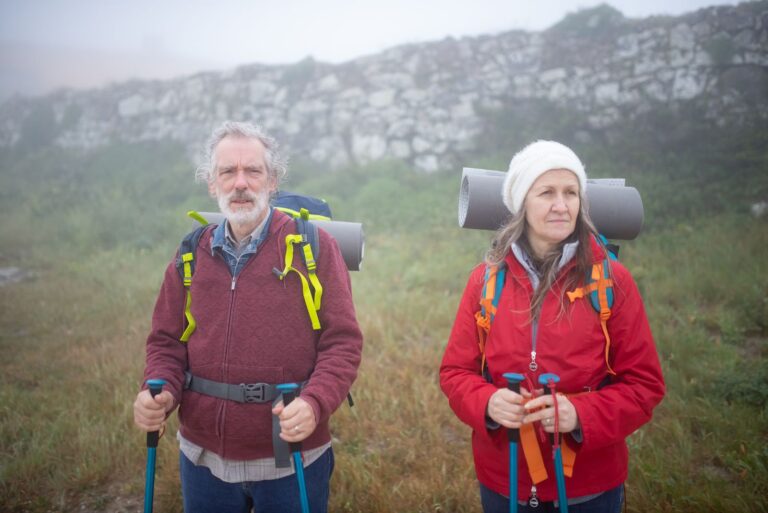
Slow travel has no official definition, but the idea is simple: fewer places, longer stays, and more of the journey spent on the ground. A month in one Portuguese town instead of six cities in a fortnight. A train across a country rather than a flight over it. A week in a rented flat with a local market down the street.
For many people it only becomes possible after work ends. Annual leave tends to come in two- and three-week blocks, and the pressure to see everything in that window is real. Retirement removes the window.
No study has set out to test “slow travel” as such, so there is no single piece of research that proves it is better. But several lines of evidence, on how holidays affect wellbeing, how the body clock copes with long flights and how people feel when they talk to strangers, point in the same direction.
It takes time to unwind
Holidays do make people feel better, though the effect is smaller and shorter than most of us would like. A 2009 review led by Jessica de Bloom pooled seven studies and found that health and wellbeing improved modestly on holiday and that the gains soon faded once people went back to work.
Her team then followed 54 employees through holidays of more than two weeks, which lasted 23 days on average, asking them about their health and wellbeing before, during and after. Health and wellbeing peaked on the eighth day of the holiday, according to the study, published in the Journal of Happiness Studies in 2013. Within the first week back at work, they had returned to where they started.
This was a small study of working people, not retirees, and it didn’t compare fast travel with slow. Still, a peak on day eight sits awkwardly with the classic one-week trip, though the study can’t say how a shorter holiday would have unfolded. A longer, slower trip at least leaves room for the good part.
Retirees also have no work week waiting for them at the end. Whether that helps the benefits last longer was outside the scope of these studies.
Your body clock needs days, not hours
For Australians, almost any trip to Europe or North America means crossing many time zones, and the body clock adjusts slowly. The US Centers for Disease Control and Prevention’s guide for travel health professionals puts the average rate of adjustment at about an hour and a half a day after flying west and about an hour a day after flying east. Westward travel is the easier direction.
Brisbane is nine or ten hours ahead of London, depending on the season. At an hour and a half a day, a traveller’s body clock could take close to a week to catch up after arriving. The CDC lists poor sleep, daytime sleepiness, difficulty thinking clearly, general malaise and stomach upsets among the symptoms of jet lag.
Related Stories from Jeanette Brown
- People who chose work over pleasure felt more regret the further back the choice lay, in studies by Columbia University researchers, one reason not to leave the hobby, the trip or the bushwalk waiting for retirement
- People who thrive after retirement don’t simply keep busy — they build a life that still challenges them, connects them and gives them a reason to turn up
- People who thrive in their retirement years often adopt these 8 daily habits
On a packed itinerary, much of that first week is spent tired. On a slow trip, the first few days can be given over to walks, early nights and nothing in particular, and a stopover on the way can split the time change into two smaller steps. Anyone with a health condition or medication schedule that is affected by long flights is best placed to talk it through with their GP before going.
Slower journeys mean more conversations
Trains, buses and long stays in one place create something a rushed trip rarely does: time next to people you don’t know. Many people would rather keep to themselves. The research suggests that instinct is often wrong.
In a series of nine experiments published in 2014, Nicholas Epley and Juliana Schroeder of the University of Chicago asked commuters on trains and buses either to talk to a stranger, to keep to themselves or to do whatever they normally would. People who struck up a conversation reported the most positive journeys. Asked beforehand, participants predicted the opposite, and they underestimated how willing other people were to talk.
These were short commutes in Chicago, not holidays. But the same misjudgement is easy to make on a long train ride through Italy or in the corner café of a small French town. Slow travel offers more chances to get it right.
A lighter footprint, especially on the ground
How you move between places matters for emissions as well as for wellbeing. Using UK government figures for 2022, Our World in Data estimates that a domestic flight produces about 246 grams of greenhouse gases for every passenger kilometre, an average petrol car about 170, a national train in the UK about 35, and the Eurostar between London and Paris about 4.
The long flight from Australia is hard to avoid for most people. What happens after landing is more flexible. Choosing trains over short hops between cities, and staying longer in each place, cuts the number of short flights, which carry the highest emissions per kilometre.
Getting to know a place
Some benefits of slow travel are harder to measure. Learning which bakery opens first, being recognised by the woman at the fruit stall, finding a walk you want to do again. None of this fits neatly into a study, and nobody needs research to tell them it is pleasant.
What the evidence does suggest is that the things that make travel restorative all take time: rest, a settled body clock and contact with other people. Slow travel is one way of giving them that time.
Related Stories from Jeanette Brown
- People who chose work over pleasure felt more regret the further back the choice lay, in studies by Columbia University researchers, one reason not to leave the hobby, the trip or the bushwalk waiting for retirement
- People who thrive after retirement don’t simply keep busy — they build a life that still challenges them, connects them and gives them a reason to turn up
- People who thrive in their retirement years often adopt these 8 daily habits
Feeling lost or unfulfilled?
Jeanette Brown’s “Your Life Review” video is designed to help you identify key areas in your life that need improvement.
Through a simple yet powerful exercise, you’ll assess your current satisfaction across different life domains, allowing you to pinpoint specific areas for growth.
This life review forms the foundation for creating a clear vision, setting aligned goals, and developing a personalized action plan.
Take the first step towards a more satisfying life. Start your Life Review now and gain immediate access to this transformative exercise.