Long hours can leave little time for friends, and colleagues are not always easy to confide in. In some senior and technical roles, women are also more likely to be one of very few women in the room.
Loneliness is not the same as being alone. It is the painful feeling that relationships are not meeting a person’s needs, and it can affect people who are surrounded by others all day. Research offers some insight into why ambitious women can feel lonely, and into the strategies that seem to help.
The strain of being “the only one”
For many women, one source of isolation at work is simply being outnumbered. In 2018, the Women in the Workplace study by McKinsey and LeanIn.Org, which surveyed about 64,000 employees at 279 North American companies, asked women how often they were the only woman, or one of very few, in the room.
One in five women said this was a common experience for them, compared with 7 per cent of men. Among women of colour, the figure rose to 45 per cent. Women in senior and technical roles were about twice as likely as other women to be in this position, at about 40 per cent.
Being an “only” came with a cost. According to a McKinsey summary of the findings, women who were often the only woman were more likely than women in more balanced groups to have their judgement questioned (49 per cent compared with 32 per cent) and to be mistaken for someone more junior (35 per cent compared with 15 per cent). They were also more likely to have considered leaving their jobs.
Feeling scrutinised, misunderstood and different from those around you can be isolating, even in a busy office.
Is it really lonely at the top?
The phrase “lonely at the top” is so familiar that many people assume power and loneliness go together. Research suggests the picture is more complicated.
In a series of eight studies published in 2015 in Organizational Behavior and Human Decision Processes, Adam Waytz of Northwestern University, Eileen Chou, Joe Magee and Adam Galinsky found that feeling powerful was actually linked to feeling less lonely. When the researchers made people feel more powerful, for example by asking them to recall a time they had power or by giving them control over resources, they reported less loneliness. Feeling powerless had the opposite effect.
The researchers found that power seemed to reduce people’s need to belong. “Humans have a fundamental need to belong to groups, and when people attain power, it satisfies that need,” Waytz explained.
These experiments tested how feeling powerful affected loneliness. They leave open how seniority, workplace culture and being outnumbered interact for women in particular.
Why loneliness can feed on itself
Loneliness at work affects more than mood. In a study published in the Academy of Management Journal in 2018, Hakan Ozcelik of California State University, Sacramento, and Sigal Barsade of the Wharton School followed 672 employees and their 114 supervisors in two organisations.
Related Stories from Jeanette Brown
Employees who felt lonelier at work performed worse, according to their supervisors. Part of the reason was that lonely employees seemed less approachable to their colleagues, and they were less committed to their organisations. The researchers also noted that loneliness affected colleagues, not just the lonely person.
The authors proposed that loneliness can make it harder to connect with colleagues, even when someone wants more contact. The study covered employees in two organisations.
What a small professional circle can offer
One of the most striking findings about how successful women connect comes from research on leadership. In a study published in the Proceedings of the National Academy of Sciences in 2019, Yang Yang and Brian Uzzi of Northwestern University and Nitesh Chawla of the University of Notre Dame analysed 4.5 million emails exchanged among graduate business students, and tracked the leadership positions they went on to win.
For men, being well connected across the whole network predicted getting a senior role. For women, being well connected helped too, but the most successful women had something extra: a close inner circle made up mostly of other women. More than three-quarters of the highest-placing women had a female-dominated inner circle, or strong ties with two or three women with whom they communicated often.
Women who combined a wide network with this close circle of women had expected job placements 2.5 times higher than women with smaller networks and inner circles dominated by men. Women whose networks looked like those of the most successful men did not do as well.
The study links the make-up of professional networks to job placement. It did not assess whether those networks reduced loneliness.
Practical ways to maintain connection
- Build an inner circle. Two or three trusted women, inside or outside work, can provide understanding, honest advice and support.
- Seek out others who share the experience. Professional networks, mentoring groups and industry associations for women offer a chance to speak with others in similar roles.
- Stay approachable. When under pressure, it is tempting to withdraw. Small gestures, such as a coffee, a quick chat or a word of thanks, keep connections alive.
- Schedule friendship. Busy people often put friends last. Booking regular catch-ups, just like meetings, can protect them.
- Invest in life outside work. Relationships, interests and communities beyond the job provide connection and a sense of identity that does not depend on a title.
- Lift other women. Mentoring or sponsoring younger women can create connection and reduce the number of “onlys” in the next generation.
- Prepare for transitions. Retirement or a career change can remove daily contact with colleagues. Building friendships and interests beforehand can ease the shift.
- Seek support when needed. Persistent loneliness, low mood or burnout are worth discussing with a GP or counsellor.
What the research cannot say
Much of this research comes from the United States and focuses on corporate workplaces and business school graduates, so it may not reflect the experience of all women, or of women in Australia. The McKinsey surveys describe experiences but do not measure loneliness directly. The power and loneliness studies did not focus specifically on women, and the network study looked at job placement rather than wellbeing. More research is needed on how ambitious women experience loneliness across their careers and into later life.
Connection as part of success
The workplace survey documents the strain of being outnumbered, and the graduate-school study shows how professional networks can matter for career outcomes. Regular contact with trusted colleagues and friends outside work gives people who feel isolated a place to start.
Research sources
- McKinsey and LeanIn.Org, Women in the Workplace (2018)
- Sneader and Yee, One is the loneliest number (2019)
- Waytz and colleagues, power and loneliness (2015)
- Ozcelik and Barsade, workplace loneliness (2018)
- Yang, Chawla and Uzzi, networks and leadership placement (2019)
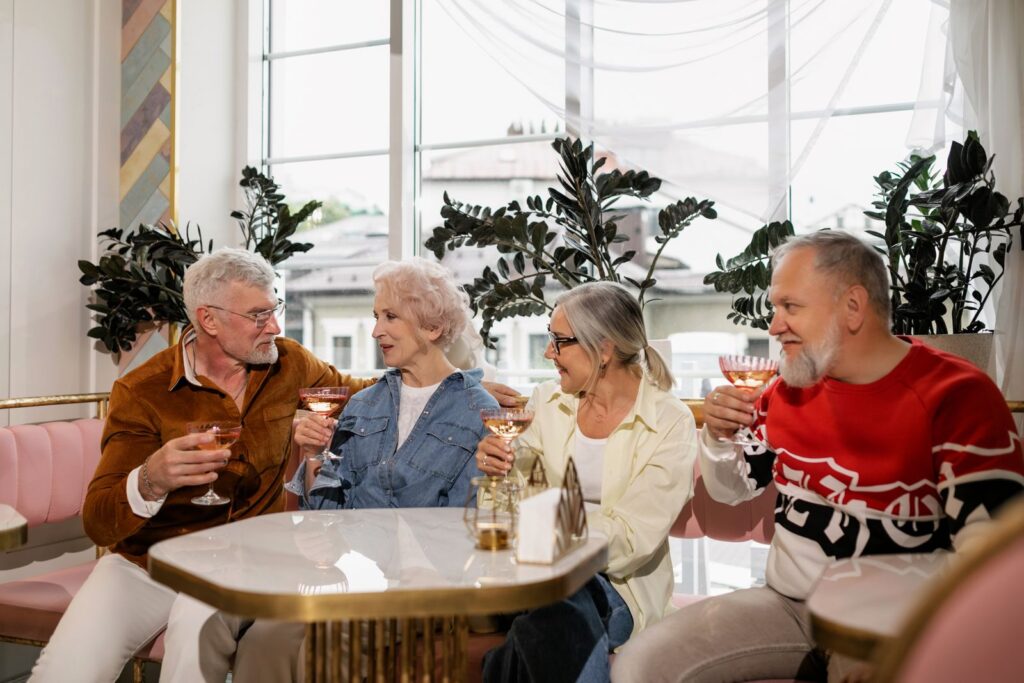
Photo: RDNE Stock project / Pexels (representative image)
Related Stories from Jeanette Brown
Feeling lost or unfulfilled?
Jeanette Brown’s “Your Life Review” video is designed to help you identify key areas in your life that need improvement.
Through a simple yet powerful exercise, you’ll assess your current satisfaction across different life domains, allowing you to pinpoint specific areas for growth.
This life review forms the foundation for creating a clear vision, setting aligned goals, and developing a personalized action plan.
Take the first step towards a more satisfying life. Start your Life Review now and gain immediate access to this transformative exercise.
Related Stories from Jeanette Brown
Navigating Life’s Transitions with Jeanette Brown
Jeanette Brown is here to guide you through life’s transitions.
On her YouTube channel, she offers practical advice and supportive strategies to help you manage personal and career changes effectively.
Her videos focus on fostering resilience and equipping you with the skills needed for self-coaching.
Subscribe here to start mastering your life transitions today.