Loneliness has a way of feeling like a private failure. It can arrive in a busy room, in a quiet house after a partner has gone, or in the weeks after a move, and it often comes with the nagging thought that everyone else has worked out something you have not. Research on loneliness tells a kinder story. Almost everyone feels it at some point, and the scientist who spent much of his career studying it believed it exists for a good reason.
A signal, not a flaw
The late John Cacioppo, a neuroscientist at the University of Chicago, argued that loneliness works much like hunger, thirst and physical pain. Each is an unpleasant feeling that prompts people to do something they need. Hunger sends people looking for food. Pain makes them look after an injury. In a 2014 paper with Stephanie Cacioppo and Dorret Boomsma, he described loneliness as a state that may have evolved to push people to change their behaviour, in this case to repair or rebuild their connections with others.
In Cacioppo’s evolutionary account, separation from the group presented risks and the discomfort of loneliness may have encouraged people to reconnect.
Cacioppo was blunt on this point. In a profile in the University of Chicago Magazine, he was described as arguing that loneliness is not a personality defect or a sign of weakness, and that people who get stuck in it have not done anything wrong. Nobody, in his view, is immune to it, any more than anyone is immune to hunger.
It also helps to be clear about what loneliness is. Researchers define it as the painful sense that your social needs are not being met, by the number or especially the quality of your relationships. It is about perceived connection, not head counts. Someone can live alone and feel content, or sit at a crowded family table and feel very alone.
You are in large company
Two big surveys give a sense of how common the feeling is.
In 2018, BBC Radio 4 worked with researchers from the University of Manchester, Brunel University London and the University of Exeter on the BBC Loneliness Experiment. More than 55,000 people aged 16 to 99 took part. According to Brunel University, 40 per cent of people aged 16 to 24 said they felt lonely often or very often, compared with 29 per cent of those aged 65 to 74 and 27 per cent of people over 75. Many respondents also took a nuanced view: 41 per cent thought loneliness could sometimes be a positive experience, and 83 per cent said they liked being on their own.
That survey had a limit worth noting. People chose to take part, so it may have attracted those with a particular interest in loneliness, and it cannot be read as an exact national measure.
A more representative picture came from a 2023 report by Meta and Gallup, based on surveys in 142 countries. Gallup reported that about a quarter of people felt very or fairly lonely, while 49 per cent said they did not feel lonely at all. Men and women reported the same overall rate. Young adults aged 19 to 29 were the loneliest group at 27 per cent, and people aged 65 and over the least lonely at 17 per cent.
Those figures run against a common assumption that loneliness belongs mainly to old age. It can strike at any stage of life. In the global poll, the share who described themselves as very or fairly lonely was lower among adults aged 65 and over than among the younger age groups surveyed.
When loneliness eases or persists
Christina Victor, one of the researchers behind the BBC survey, distinguishes temporary loneliness from loneliness that persists. Victor suggested that young people may struggle partly because the feeling is new to them, and they have not yet learned from experience that it often passes. The researchers’ concern was not loneliness itself but preventing it from becoming chronic.
That distinction matters. Short spells of loneliness, after a bereavement, a move or a change in routine, are a normal response to change. Loneliness that settles in for months or years is more concerning, because it is linked with poorer health, poorer sleep and low mood.
Why loneliness can make reaching out harder
There is a catch in the way the signal works. Hawkley and Cacioppo, in a 2010 review in the Annals of Behavioral Medicine, noted that feeling socially isolated increases vigilance for threat and heightens feelings of vulnerability, even as it raises the desire to reconnect.
In practice, this means a lonely mind can become more alert to slights and rejection. A friend who does not reply quickly, or a neighbour who seems distracted, can feel like confirmation that nobody cares. That watchful state can make people more hesitant to make the very contact that would ease the feeling.
This may help explain a finding from a large review of loneliness programmes. In a 2011 meta-analysis led by Christopher Masi, the most successful interventions in randomised trials were those that helped people notice and challenge unhelpful thoughts about social situations, rather than simply offering more chances to meet people.
People like you more than you think
One of the most useful findings for anyone feeling lonely comes from research on ordinary conversations. In a 2018 paper in Psychological Science, Erica Boothby and colleagues paired up strangers for conversations and then asked each person how much they liked the other, and how much they thought the other person liked them.
Time after time, people underestimated how much their conversation partners liked them and enjoyed their company. The researchers called this the liking gap. It showed up in short conversations, in longer ones and in a workshop setting, and it persisted for months among university students getting to know their dorm mates.
The studies point to a bias in how people assess conversations they have already had. A conversation that felt awkward to one person may still have been enjoyable for the other.
Small contact counts
Connection does not have to mean deep friendship to make a difference. Psychologists Gillian Sandstrom and Elizabeth Dunn tested this with something as ordinary as buying coffee. In their study, people who had a genuine social exchange with the barista, smiling, making eye contact and chatting briefly, reported more positive feelings and a greater sense of belonging than people who simply got their order as efficiently as possible.
In related work, the same researchers found that people felt happier and more connected on days when they interacted with more acquaintances than usual. The neighbour over the fence, the regular at the bakery and the volunteer at the library all contribute to a sense of belonging.
Ways to handle loneliness when it comes
Drawing these findings together, a few approaches stand out:
- Treat it as a message, not a verdict. Loneliness is a prompt to reconnect, not proof that you are unlikeable or that something is wrong with you.
- Allow for change. Loneliness can ease as circumstances change.
- Watch for the threat filter. When you notice yourself reading a slow reply or a short chat as rejection, consider the more generous explanation.
- Consider a small invitation. A message, a call or an invitation for coffee can create an opportunity to connect.
- Value small moments. A few warm words with a shopkeeper, a neighbour or a fellow walker can lift your sense of belonging on the day.
- Get support if it lingers. If loneliness has lasted for months, or comes with low mood or poor sleep, a GP is a good place to start.
Cacioppo’s theory offers one way to understand why loneliness can make people want to reconnect. The conversation studies add a narrower finding: people often underestimate how much others enjoyed talking with them.
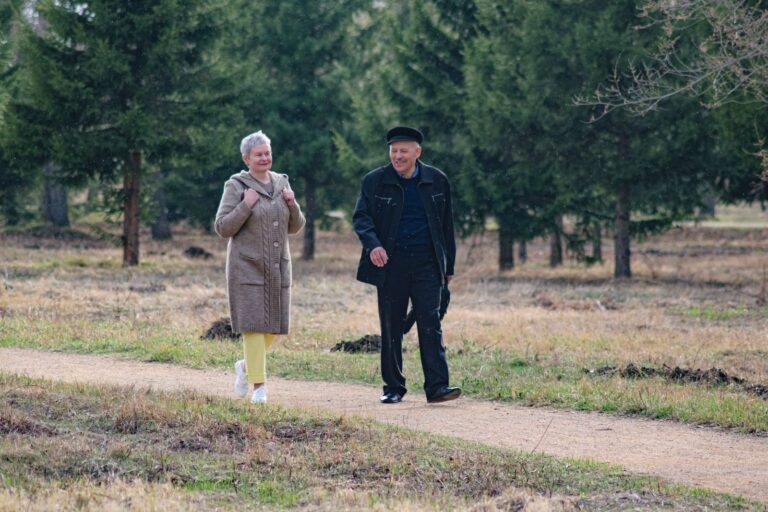
Photo: ege / Pexels (representative image)
Navigating Life’s Transitions with Jeanette Brown
Jeanette Brown is here to guide you through life’s transitions.
On her YouTube channel, she offers practical advice and supportive strategies to help you manage personal and career changes effectively.
Her videos focus on fostering resilience and equipping you with the skills needed for self-coaching.
Subscribe here to start mastering your life transitions today.
Feeling lost or unfulfilled?
Jeanette Brown’s “Your Life Review” video is designed to help you identify key areas in your life that need improvement.
Through a simple yet powerful exercise, you’ll assess your current satisfaction across different life domains, allowing you to pinpoint specific areas for growth.
This life review forms the foundation for creating a clear vision, setting aligned goals, and developing a personalized action plan.
Take the first step towards a more satisfying life. Start your Life Review now and gain immediate access to this transformative exercise.