Walking into a room and forgetting why, losing track of the car keys or struggling to recall a fact that was on the tip of the tongue a moment ago: these small lapses become more familiar for many people with age. They are usually a normal part of getting older, not a sign of something more serious.
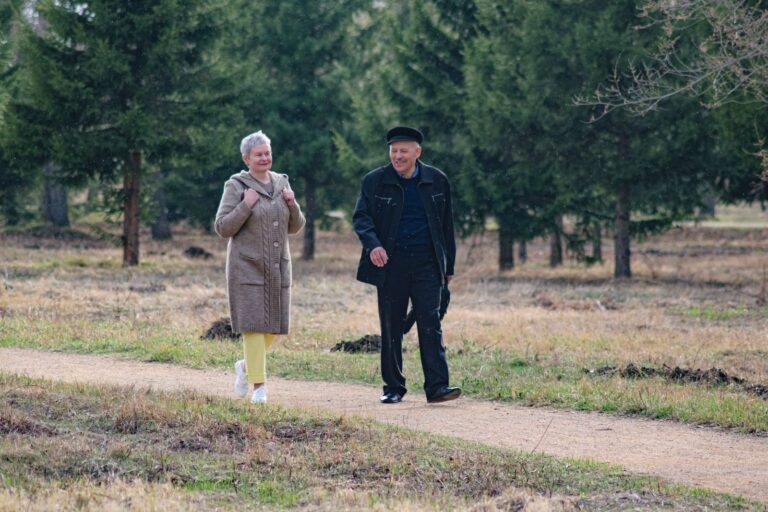
Experiments suggest that self-testing and drawing can help people remember new information. Research on walking has also found changes in a brain area involved in memory, with more mixed results on memory tests.
What a walking study found
The hippocampus is a part of the brain that plays a central role in forming new memories. It tends to shrink gradually in later life, and that shrinkage is linked to memory problems.
In a study published in 2011 in the Proceedings of the National Academy of Sciences, Kirk Erickson, then at the University of Pittsburgh, and Arthur Kramer of the University of Illinois led a team that recruited 120 inactive older adults without dementia. The walking group built up to 40 minutes per session, three days a week, during the year-long trial. The other half did stretching and toning exercises instead.
Brain scans showed a clear difference. In the walking group, the front part of the hippocampus grew by about 2 per cent over the year. In the stretching group, it shrank by about 1.4 per cent. The researchers estimated that the walking had effectively reversed one to two years of age-related shrinkage.
The memory results were more modest. Both groups improved on a memory test over the year, with no statistically significant advantage for the walking group. However, the researchers reported that among the walkers, larger increases in the size of the hippocampus went along with greater improvements in memory.
The study did not prove that walking will sharpen everyone’s memory, but it showed that the ageing brain can still respond to regular exercise. Walking also brings many other health benefits, which makes it an easy habit to recommend.
Test yourself instead of rereading
When people want to remember something, they often read it again, or repeat it over and over. But decades of research on learning suggest that a more effective approach is to practise recalling the information, a technique known as retrieval practice or the testing effect.
Older adults benefit too. In a study published in January 2020 in Frontiers in Psychology, Catherine-Noémie Alexandrina Guran and colleagues at the University of Lübeck in Germany found that retrieval practice improved memory in both younger and older adults, and the benefit held up over a week. The older group benefited somewhat less than the younger group, but the gain was still there.
Another 2019 study, published in Psychology and Aging by Bernhard Pastötter and Karl-Heinz Bäuml, tested adults aged 40 to 79. Being quizzed on earlier lists of words helped people learn a new list afterwards, and reduced the mix-ups between old and new information. The benefit was found regardless of age.
In everyday life, retrieval practice can be as simple as trying to recall the names of people met at a social event on the drive home, summarising a news story or chapter from memory before checking, or rehearsing a shopping list in your head and then checking the written list.
Draw it to remember it
A simple sketch may help more than a written note. Researchers at the University of Waterloo in Canada, led by Melissa Meade with Jeffrey Wammes and Myra Fernandes, published a series of experiments in Experimental Aging Research in 2018.
They asked younger and older adults to learn lists of everyday words. For some words, participants drew a quick picture. For others, they wrote the word out repeatedly or listed its physical features. When memory was tested afterwards, words that had been drawn were remembered better than words that had been written or described, in both age groups.
The researchers proposed that drawing combines visual, spatial, verbal and motor information. The experiments used simple sketches.
The lesson for daily life is to add a quick doodle to a reminder or a note, or sketch a map of where the car is parked or what is needed from the shops.
Practice needs to continue
Many people turn to brain-training programs to keep their memory sharp. The largest long-term trial of such training offers both encouragement and a caution.
The ACTIVE study in the United States followed 2,832 older adults, with an average age of about 74 at the start. Participants received 10 training sessions of about an hour each in memory, reasoning or speed of processing, or were placed in a comparison group. The 10-year results were published in 2014 in the Journal of the American Geriatrics Society, led by George Rebok of Johns Hopkins University.
Ten years later, those trained in reasoning and speed still showed benefits in those skills. For memory training, however, the gains had faded, and there was no longer any difference in memory performance compared with the control group. Participants in all three training groups did report less difficulty with everyday tasks than those who received no training.
The memory-training advantage was no longer detectable at ten years. Whether continued use of those strategies would have prolonged the benefit remains an open question.
Everyday habits that help
- Walk regularly. Choose an intensity that suits your health and mobility.
- Quiz yourself. Rather than rereading, try to recall names, facts or plans, then check.
- Sketch it. Add quick drawings to notes, reminders and lists.
- Space it out. Return to important information over several days rather than cramming it in one go.
- Pay attention at the start. Many memory lapses happen because information was never properly taken in. Pausing to focus, and repeating a new name aloud, can help.
- Keep a home for everyday items. A set spot for keys, glasses and the phone reduces the load on memory.
- Look after sleep, hearing and mood. Poor sleep, hearing loss, stress and low mood can all make memory feel worse, and many of these problems can be treated.
When to see a doctor
Occasional forgetfulness is normal. But memory problems that are getting worse, that interfere with daily life, or that family and friends have noticed, such as repeating the same questions, getting lost in familiar places or having trouble managing money, are worth discussing with a GP. Memory problems can have many causes, including medication side effects, vitamin deficiencies, thyroid problems, depression and dementia, and some of these can be treated.
What the research cannot say
Most of the studies described here were relatively small, short or carried out in laboratory settings using word lists or pictures, which are not quite the same as remembering appointments or names in daily life. The walking study showed clear brain changes but more mixed memory results. The ACTIVE trial found that memory training gains did not last a decade. None of these strategies has been shown to prevent dementia, and results vary from person to person.
Remembering new information
For remembering something new, the most direct findings here come from experiments on self-testing and drawing. Trying to recall an item before checking it or adding a quick sketch are two ways to apply those findings.
Research sources
- Erickson and colleagues, walking and hippocampal volume (2011)
- Guran and colleagues, retrieval practice (2020)
- Pastötter and Bäuml, testing and subsequent learning (2019)
- Meade and colleagues, drawing and recall (2018)
- Rebok and colleagues, ten-year ACTIVE results (2014)
Photo: Elina Volkova / Pexels (representative image)
Navigating Life’s Transitions with Jeanette Brown
Jeanette Brown is here to guide you through life’s transitions.
On her YouTube channel, she offers practical advice and supportive strategies to help you manage personal and career changes effectively.
Her videos focus on fostering resilience and equipping you with the skills needed for self-coaching.
Subscribe here to start mastering your life transitions today.