Most people would like to be liked. Whether it is a new neighbour, a member of a walking group, a son-in-law or someone met on a cruise, the wish to make a good impression does not fade with age. If anything, as social circles shift in later life through retirement, moving house or the loss of friends, the ability to build new connections can matter more than ever.
Research points to several ways people may build warmer connections, including sharing a little about themselves and responding with interest. These studies examine different outcomes, from liking to closeness and relationship satisfaction, so they do not offer a single formula for making people like us.
Here are five behaviours that psychological research connects with warmer, closer relationships.
1. Going beyond small talk
Conversations about the weather, the traffic or the latest cricket score have their place. They are easy and safe. But many people stay there far longer than they need to, out of a worry that anything more personal will feel awkward or intrusive.
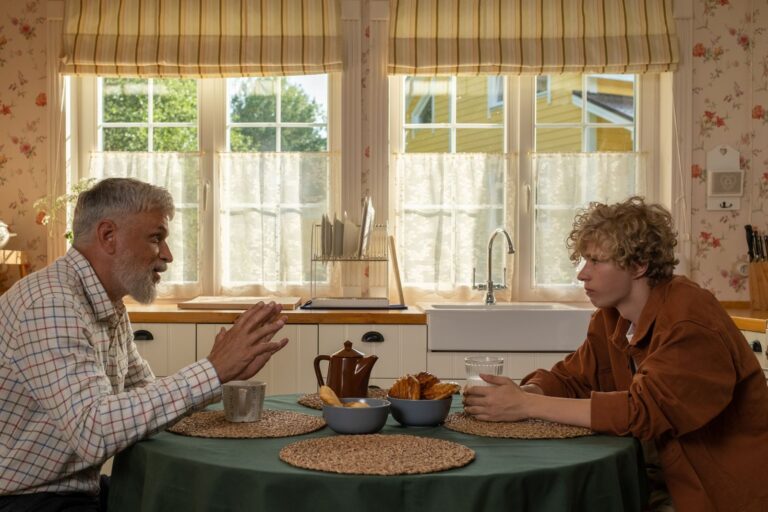
Research led by Michael Kardas, Amit Kumar and Nicholas Epley suggests that worry is often misplaced. In a series of 12 experiments involving more than 1,800 people, published in the Journal of Personality and Social Psychology, the researchers paired people, mostly strangers, and asked them to discuss either light topics or deeper ones. Shallow questions asked about things like favourite television shows. Deeper questions invited people to talk about matters such as a time they had cried in front of someone, or what they would most want to know if a crystal ball could tell them the truth about their life.
Both kinds of conversation went better than people expected. But the gap between expectation and reality was largest for the deeper conversations, which people had predicted would be especially awkward. In practice, deeper conversations felt less awkward than anticipated and left people feeling happier and more connected. When participants had one of each, many who expected to prefer the light chat ended up preferring the deeper one.
The researchers suggest that people underestimate how interested others are in what they think and feel. That mistaken belief keeps conversations shallower than they need to be.
Going deeper does not mean launching into life stories with a stranger in the supermarket queue. It can be as simple as following “Where did you grow up?” with “What do you miss most about it?” or asking someone what has been the best part of their year.
2. Opening up a little
Asking good questions is only half of a conversation. The other half is being willing to share something real in return.
In 1994, psychologists Nancy Collins and Lynn Miller published a review in the Psychological Bulletin that combined decades of research on self-disclosure, meaning the act of telling others about one’s own thoughts, feelings and experiences. They found three linked patterns. People who share more personal information tend to be liked more than those who keep things at a surface level. People tend to share more with those they already like. And people tend to like others more after they have opened up to them.
Taken together, the findings describe a cycle. Sharing something personal invites the other person to share in return, and each step can build a little more warmth.
The review found that the link depended on the kind of study and the type of information shared. A small, relevant personal detail can be an opening for a warmer conversation.
3. Cheering other people’s good news
A great deal of attention goes to how people support each other in hard times. Less attention goes to how they respond when things go right. Research suggests the second may matter just as much.
In a 2004 study published in the Journal of Personality and Social Psychology, Shelly Gable and colleagues examined what happens when people share good news, a process psychologists call capitalisation. Telling others about positive events was linked with better daily mood and wellbeing, over and above the effect of the good news itself.
But the listener’s response made a big difference. Gable described four broad ways people react. They can be enthusiastic and engaged, asking questions and sharing the excitement. They can be quietly supportive but low-key. They can point out the downsides. Or they can seem uninterested and change the subject. In close relationships where partners usually responded with genuine enthusiasm, people reported higher relationship wellbeing, including more intimacy and greater day-to-day satisfaction in marriage.
In practice, that might mean responding to a friend’s news about a new grandchild, a successful medical test or a garden prize with real interest: “That’s wonderful. How did you find out? What happens next?” rather than a brief “That’s nice” or a story about something similar that happened to someone else.
Much of this research has focused on couples and close relationships, so the findings may not apply in the same way to new acquaintances. But it is a simple habit that costs little and appears to strengthen bonds.
4. Expecting to be liked, and letting it show
Many people go into social situations bracing for rejection. Research suggests that expectation can shape what happens next.
Psychologists call this the “acceptance prophecy”. A study led by Danu Anthony Stinson, published in 2009 in the Personality and Social Psychology Bulletin, tested how it works. The researchers found that people who expected to be accepted tended to behave more warmly, smiling, engaging and showing interest, and that warmth in turn led others to accept them. People who expected rejection tended to behave more coldly, which made acceptance less likely.
Encouragingly, the study also found that when situations were set up to reduce the risk of rejection, people who were usually more pessimistic became warmer too, and were better accepted as a result.
The findings suggest that expectations can shape the warmth we show. A smile, a hello or an interested question may make an interaction easier. Acceptance still depends on the other person and the circumstances, and feeling anxious does not make someone responsible for rejection.
5. Showing up again and again
The final behaviour is the least glamorous and perhaps the most important. Liking and friendship take time.
Jeffrey Hall, a communication researcher at the University of Kansas, set out to estimate how many hours it takes to turn an acquaintance into a friend. In research published in the Journal of Social and Personal Relationships, he surveyed adults who had recently moved to a new city and university students in their first weeks at university about people they had met.
Across the studies, more time together was associated with closer friendship. Time spent on leisure activities and the kinds of conversations people had also mattered.
Hall’s studies relied on people’s own estimates of time spent together, and the participants were mostly younger adults, which limits how confidently the results can be applied to later life. But the broader point holds: friendships rarely appear overnight. They grow from repeated contact, such as joining the same weekly class, sitting with the same people at the club, or inviting a neighbour for a cuppa more than once.
For people building a new social circle later in life, this can be reassuring. If a new acquaintance does not feel like a friend after a few meetings, that is normal. It often just means more time is needed.
What the research cannot say
Most of these studies were carried out in the United States and Canada, and many involved university students or younger adults meeting strangers in a laboratory. Whether the effects are as strong for older Australians, or in long-standing friendships and family relationships, is less clear. Some findings, such as those on sharing good news, are based on people’s reports of their own relationships rather than experiments, so they show associations rather than proof of cause and effect.
No single behaviour guarantees being liked. Personalities differ, and not every pairing of people will click, however well each person behaves. The research is best seen as a set of nudges that improve the odds rather than a formula.
Putting it into practice
- Ask one deeper question. In the next conversation, follow a surface question with one that invites a real answer, such as what someone enjoys most about their week.
- Share something genuine. Offer a small, honest detail about life, and let the other person match it at their own pace.
- Celebrate out loud. When someone shares good news, ask a follow-up question and let the excitement last a little longer.
- Assume the best. Go into social settings expecting people to be friendly, and let that show in a smile and a hello.
- Keep turning up. A regular activity gives acquaintances more chances to talk and get to know each other.
The studies point to several ways of making room for closer relationships, including a more thoughtful question, an engaged response to good news, and opportunities to see the same people regularly.
Sources: Kardas, Kumar and Epley, Journal of Personality and Social Psychology (2022); Collins and Miller, Psychological Bulletin (1994); Gable, Reis, Impett and Asher, Journal of Personality and Social Psychology (2004); Stinson and colleagues, Personality and Social Psychology Bulletin (2009); Hall, Journal of Social and Personal Relationships (2019).
Photo: Alena Darmel / Pexels (representative image)
Feeling lost or unfulfilled?
Jeanette Brown’s “Your Life Review” video is designed to help you identify key areas in your life that need improvement.
Through a simple yet powerful exercise, you’ll assess your current satisfaction across different life domains, allowing you to pinpoint specific areas for growth.
This life review forms the foundation for creating a clear vision, setting aligned goals, and developing a personalized action plan.
Take the first step towards a more satisfying life. Start your Life Review now and gain immediate access to this transformative exercise.
Navigating Life’s Transitions with Jeanette Brown
Jeanette Brown is here to guide you through life’s transitions.
On her YouTube channel, she offers practical advice and supportive strategies to help you manage personal and career changes effectively.
Her videos focus on fostering resilience and equipping you with the skills needed for self-coaching.
Subscribe here to start mastering your life transitions today.